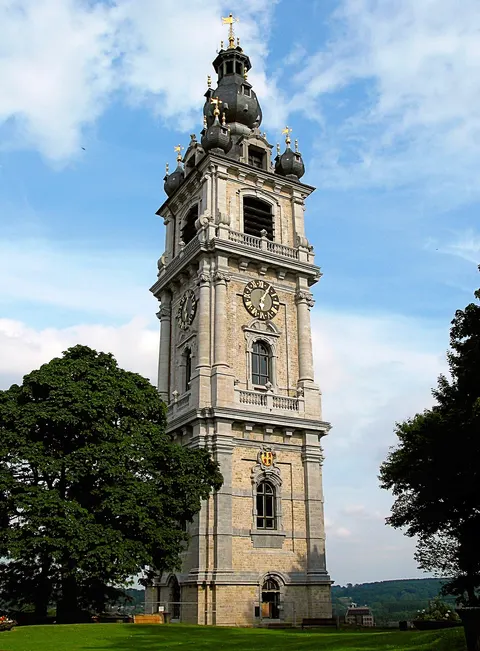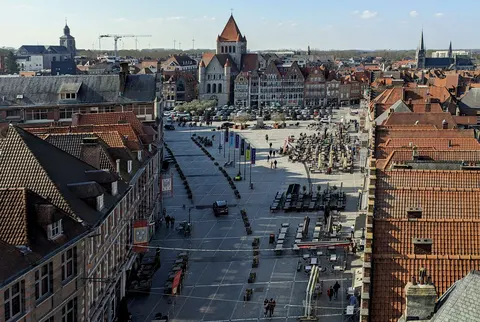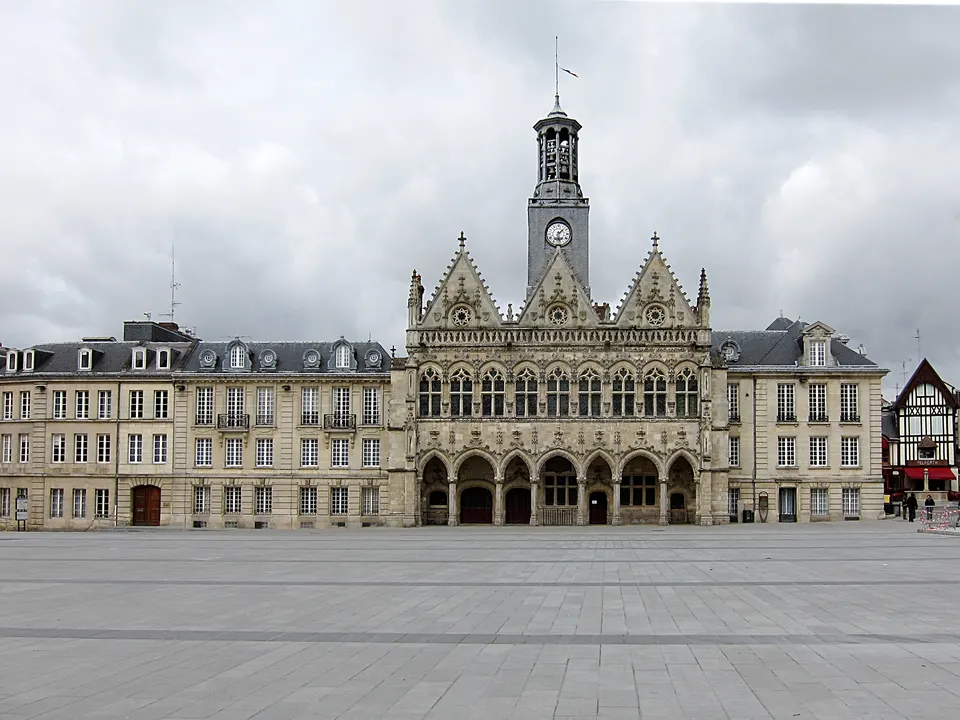

Saint-Quentin takes its name from Saint Quentin of Amiens, a martyr said to have died there, and the town keeps that story in its basilica. Before that, the place was known as Augusta Veromanduorum, a name from antiquity that still turns up in the histories of the region. Musée Antoine-Lécuyer adds a museum to the story, and the Saint-Quentin Franco-German Monument sits among the sights that tie the town to its wider past.
Saint-Quentin, in Hauts-de-France, France, is home to about 55,000 people and works as a rail hub.
Why go to Saint-Quentin?
Go to Saint-Quentin for the town's older name and its basilica, which gives the centre its focus. The Basilica of Saint-Quentin stands at the heart of the story of the martyr who gave the town its name, and the Musée Antoine-Lécuyer sets that story against the wider region. The Saint-Quentin Franco-German Monument and the Saint-Quentin german military cemetery are the two UNESCO sites listed for the town, and both belong on a visit that goes beyond the churches. City & Culture suits a short stay built around the museum, the church and the older history of the place. The old centre is compact enough to cover on foot.
When is the best time to visit Saint-Quentin?
In July and August the average high reaches 22 °C; in January and December it is closer to 6 °C. Any month suits city breaks.
How do I get to Saint-Quentin without flying?
Saint-Quentin has direct train links to 4 destinations. Within 14 hours, travellers from 2,138 destinations can get here without flying. The train from Paris with SNCF VOYAGEURS takes 1h 16m; that is about 0.3 kg of CO₂ per person. Amiens is 57 min away by train with SNCF Voyageurs EA, with about 0.2 kg of CO₂ per person. Travelling from Lille, allow 1h 44m by train with SNCF VOYAGEURS; that is about 0.2 kg of CO₂ per person.
What to do in Saint-Quentin
Basilica of Saint-Quentin
The basilica is the church at the centre of the town's story, named for the martyr who gave the place its name. Go in before you turn to the museum and the monuments.
Musée Antoine-Lécuyer
The museum sits in the same part of town as the basilica and gives the local story a second chapter. Use it to fill in the older history that the church only hints at.
Saint-Quentin Franco-German Monument
The monument is one of the two UNESCO sites listed for the town, and it is a place to pause and read what it marks. Walk on from here to the military cemetery.
Find tours and tickets: Saint-Quentin Franco-German Monument
Saint-Quentin german military cemetery
The cemetery is the second of the two UNESCO sites, and it sits close to the monument, so the two make a single visit. The town's wider history shows itself in both.
Find tours and tickets: Saint-Quentin german military cemetery