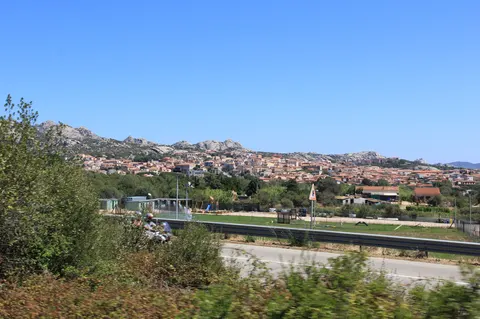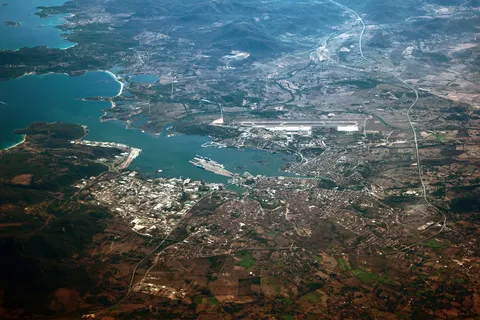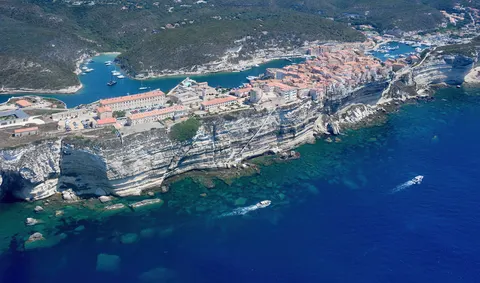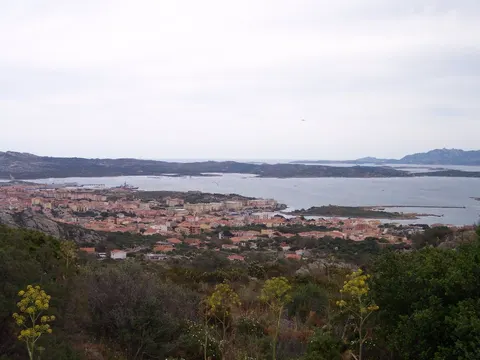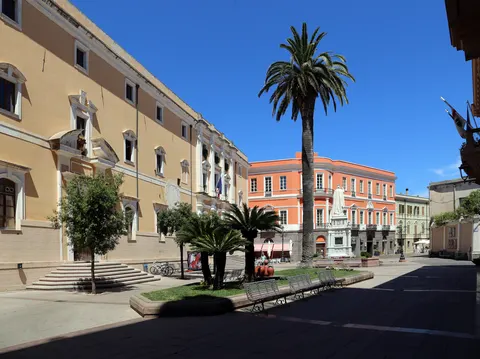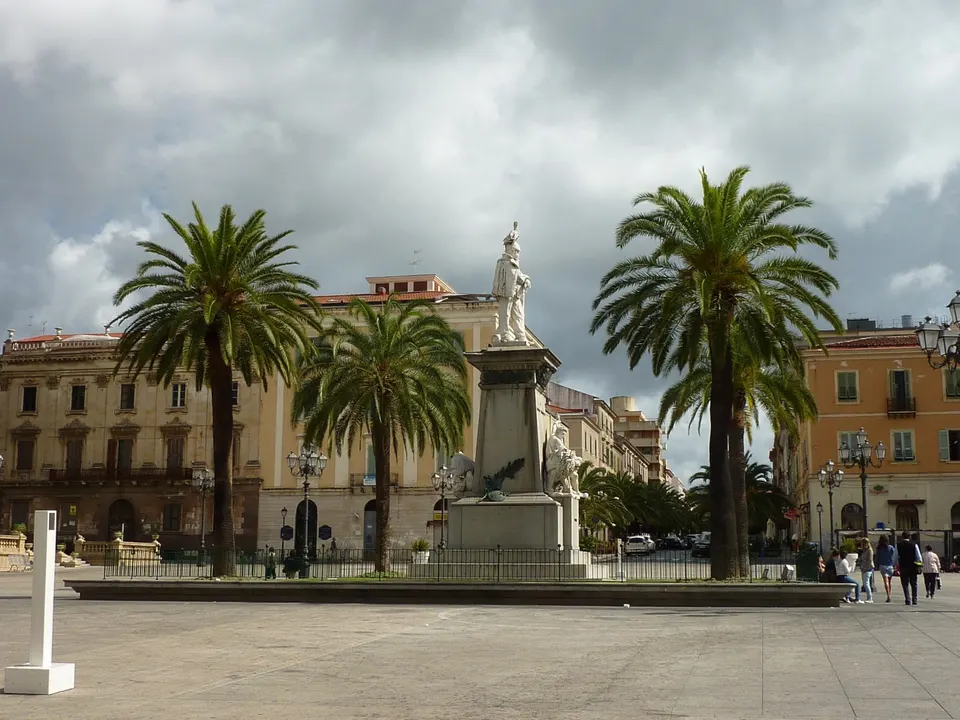

Few places on Sardinia have a longer record than Sassari, and the city carries its age in layers of churches, palaces and museums. It holds a considerable art collection, which the centre makes easy to see on foot. Walking the streets around the cathedral shows how the old town and the later city sit together. That history is easy to read in the buildings that line the centre.
Sassari, in Sardinia, Italy, is home to about 92,000 people and works as a rail hub.
Why go to Sassari?
Sassari suits a trip built around culture and history rather than a beach. The Cathedral of Sassari and the Basilica of the Sacred Heart are the churches that mark the centre, and the fountain of the Rosello is a monument to see on the way. The prehistoric sites of Domus de janas di Molafà and the Necropolis of Montalè reach back to the island's early people, and the Parco di Monserrato gives the city green space. San Pietro di Silki adds another church to the religious stops, and the Palazzo Ducale gives the streets a civic presence. April, May and October are the strongest months for the city side.
When is the best time to visit Sassari?
In July and August the average high reaches 27 °C; in January it is closer to 11 °C. Any month suits city breaks.
How do I get to Sassari without flying?
Sassari has direct train links to 4 destinations. Within 14 hours, travellers from 271 destinations can get here without flying. The train from Cagliari with Trenitalia takes 3h 00m; that is about 4 kg of CO₂ per person, 90% less than the 40 kg of a flight. Olbia is 1h 42m away by train with TRENITALIA, with about 1 kg of CO₂ per person. Travelling from Oristano, allow 1h 59m by train with TRENITALIA; that is about 1.1 kg of CO₂ per person.
What to do in Sassari
Cathedral of Sassari
Start with the cathedral, which anchors the centre, and then wander the streets that run off it. It is the fixed point of most walks through the old town.
G. A. Sanna National Museum
The national museum is where much of the city's art is kept, and it is the stop to make if you want the collections rather than the churches.
Domus de janas di Molafà
This prehistoric monument stands among the island's earliest remains, a reminder of the people who lived here long before the town's churches went up.
Palazzo Ducale
The Palazzo Ducale is one of the grander buildings in the centre, a civic palace that frames the life of the streets around it.