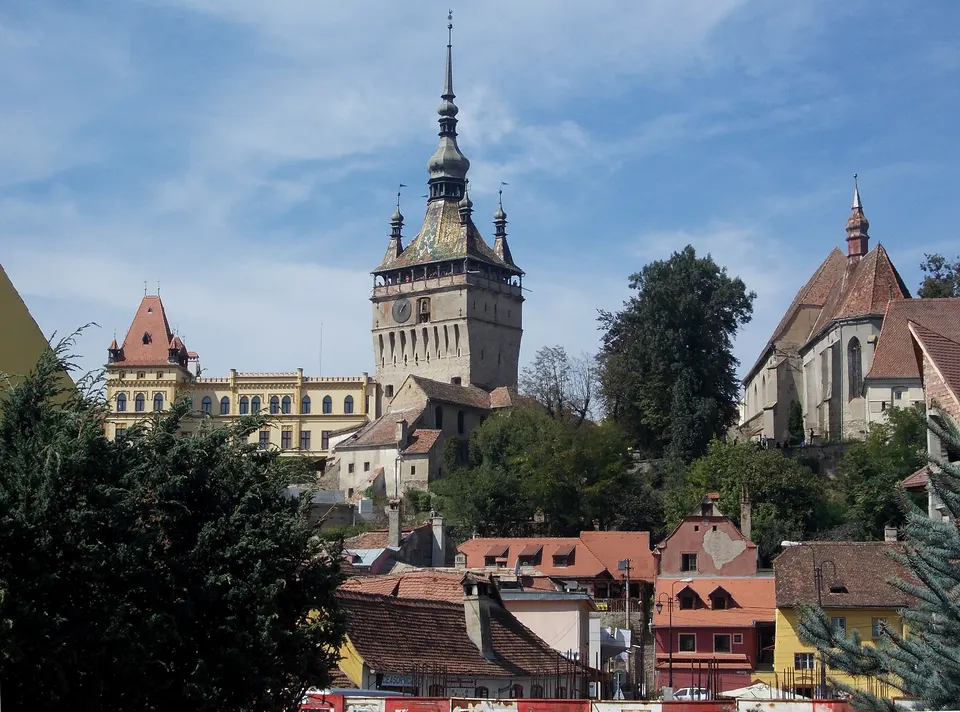

Sighișoara is a city on the Târnava Mare river in Mureș County, in the historic region of Transylvania in central Romania. Its old town is a UNESCO World Heritage Site, listed since 1999, and it draws visitors for its well-preserved walls and towers. The city has about 24,000 inhabitants.
Sighișoara, in Mureș County, Romania, is home to about 35,000 people.
Why go to Sighișoara?
The towers of the main Citadel are the old town's main attraction, and the Citadel Square holds houses that once belonged to noble families of the town. Transylvanian Saxon craftsmen built the fortifications and dominated the urban economy, and as many as 15 guilds worked here during the 16th and 17th centuries. Vlad Dracul lived here in exile and had coins minted in the town. The nearby plain of Albești was the site of the Battle of Segesvár, and the Hungarian poet Sándor Petőfi is generally believed to have been killed there. The city is also on the Via Transilvanica long-distance trail.
When is the best time to visit Sighișoara?
In July and August the average high reaches 25 °C; in January it is closer to 2 °C.
How do I get to Sighișoara without flying?
Sighișoara has direct train links to 2 destinations. Within 14 hours, travellers from 192 destinations can get here without flying. The train from Brasov with CFR Călători takes 3h 28m; that is about 0.9 kg of CO₂ per person. Mediaş is 19 min away by train with CFR Călători, with about 0.4 kg of CO₂ per person.
What to do in Sighișoara
Citadel towers
The towers of the main Citadel are the most distinctive feature of the walled old town.
Scholar's Stairs
An indoor wooden staircase in the old town.
Vlad Dracul's House
A historic house in the old town, linked to Vlad Dracul, who lived in exile in the city.
Venetian House
Also called the Green House, one of the old houses in the town listed as historical monuments.