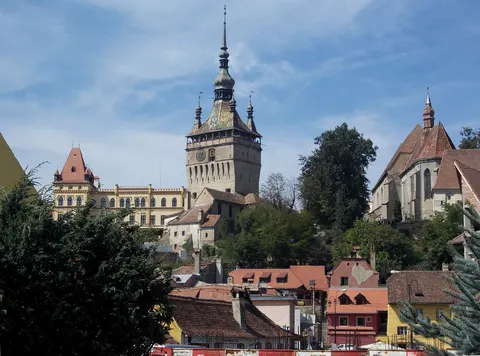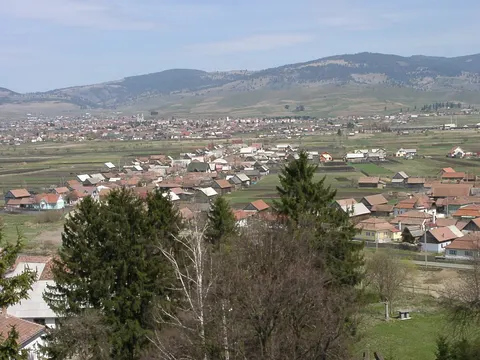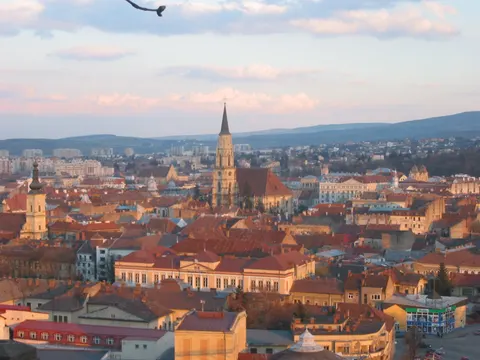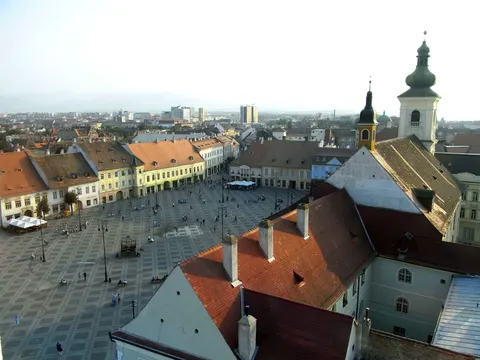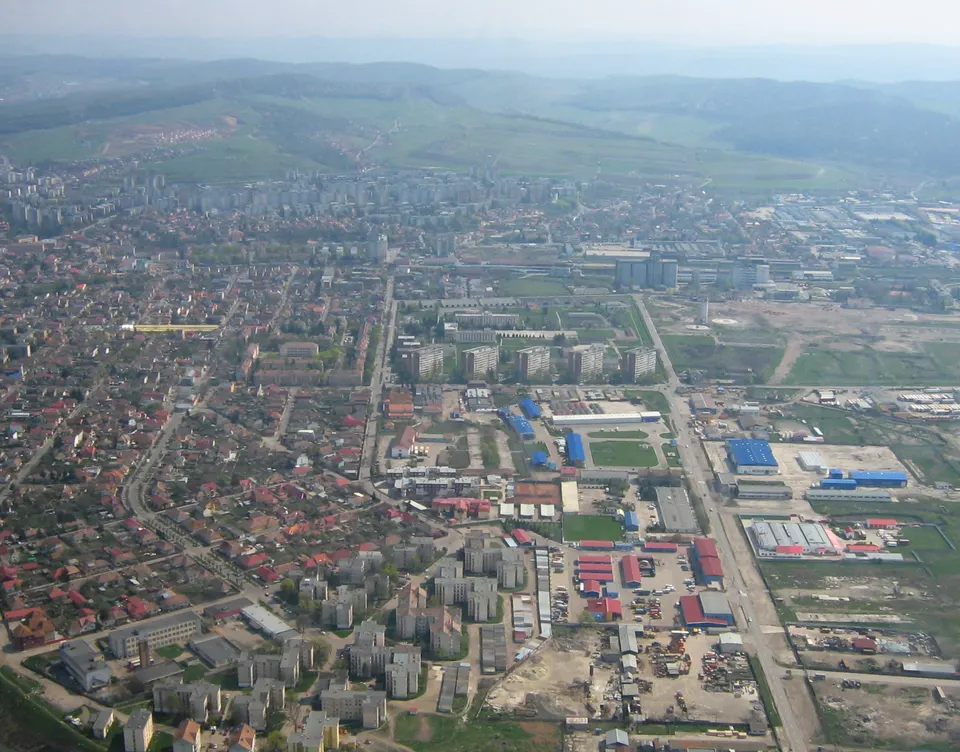

Târgu Mureș is the seat of Mureș County in the historical region of Transylvania, Romania. It lies on the Mureș River, the second-longest river in Romania, and spreads across both banks, although most of the city is on the left one. The town was first recorded in 1332, and it is one of the larger cities in the country.
Târgu Mureş is in Mureș County, Romania, and has a population of about 213,000; it is also a rail hub.
Why go to Târgu Mureş?
The Citadel is the most distinctive monument, a fortress with a pentagon plan and seven forts, five of them named after the guilds that supported its upkeep. The Palace of Culture, an Art Nouveau building begun on the initiative of mayor György Bernády, is decorated with coloured mosaics and carries a scene drawn from Hungarian folklore. The Teleki-Bolyai Library, founded by Count Sámuel Teleki, holds over 200,000 volumes, many of them rare. The old City Hall and the Fortress Church, a Gothic church built by the Franciscans, add to the historic centre.
When is the best time to visit Târgu Mureş?
July and August are the warmest, with highs of about 25 °C, and January is the coolest, at about 1 °C. City breaks work best in April, May and September.
How do I get to Târgu Mureş without flying?
From 6 destinations you can travel to Târgu Mureş directly by bus or train. Counting connections, 214 destinations can reach it within 14 hours without flying. Travelling from Brasov, allow 2h 31m by bus with FlixBus-eu; that is about 3.5 kg of CO₂ per person. From Cluj-Napoca, it takes 3h 04m by train with InterRegional Călători, with about 0.8 kg of CO₂ per person. The bus from Szolnok with FlixBus-eu takes 7h 47m; that is about 9.2 kg of CO₂ per person, 79% less than the 43 kg of a flight.
What to do in Târgu Mureş
The Citadel
A fortress with a pentagon plan and seven forts, five named after the leather dressers, tailors, butchers, ironmongers and coopers. Its gate fort now houses a museum of the town and the Citadel.
Teleki-Bolyai Library
A historic public library and museum, founded in 1802 by Count Sámuel Teleki. It was among the first institutions of its kind in the Habsburg-ruled Kingdom of Hungary.
Palace of Culture
An Art Nouveau building from 1911, its façades decorated with coloured mosaic panels and busts of Hungarians.
Old City Hall
Built after designs by Márcell Komor and Dezső Jakab, with a monumental staircase and vaults painted with spiralling plant motifs.