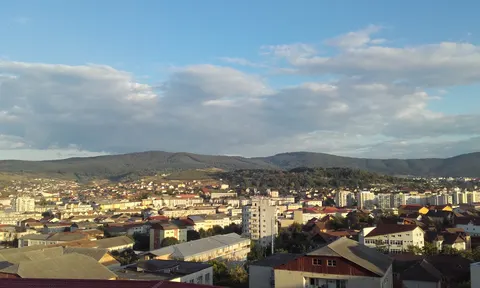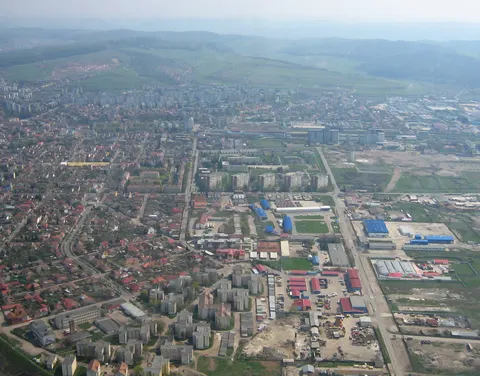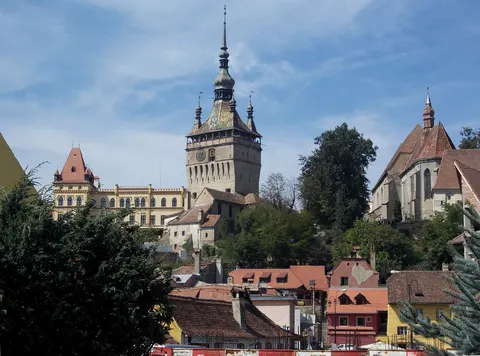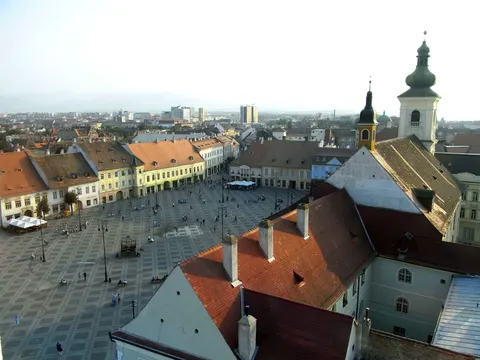

Cluj-Napoca, usually called Cluj, is a city in northwestern Romania and the seat of Cluj County. It is the second-largest city in the country and is considered the unofficial capital of Transylvania. It sits in the Someșul Mic river valley, surrounded on three sides by hills or mountains, and it is one of Romania's most important academic, cultural and business centres. Its university, Babeș-Bolyai, is the largest in the country.
Cluj-Napoca is in Cluj County, Romania, and has a population of about 287,000; it is also a rail hub.
Why go to Cluj-Napoca?
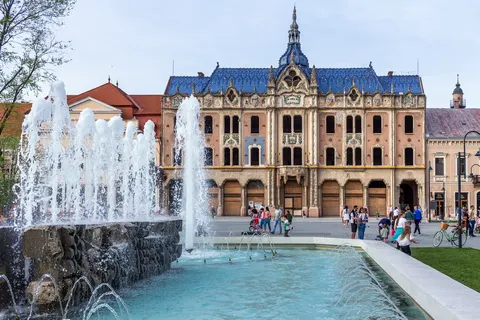
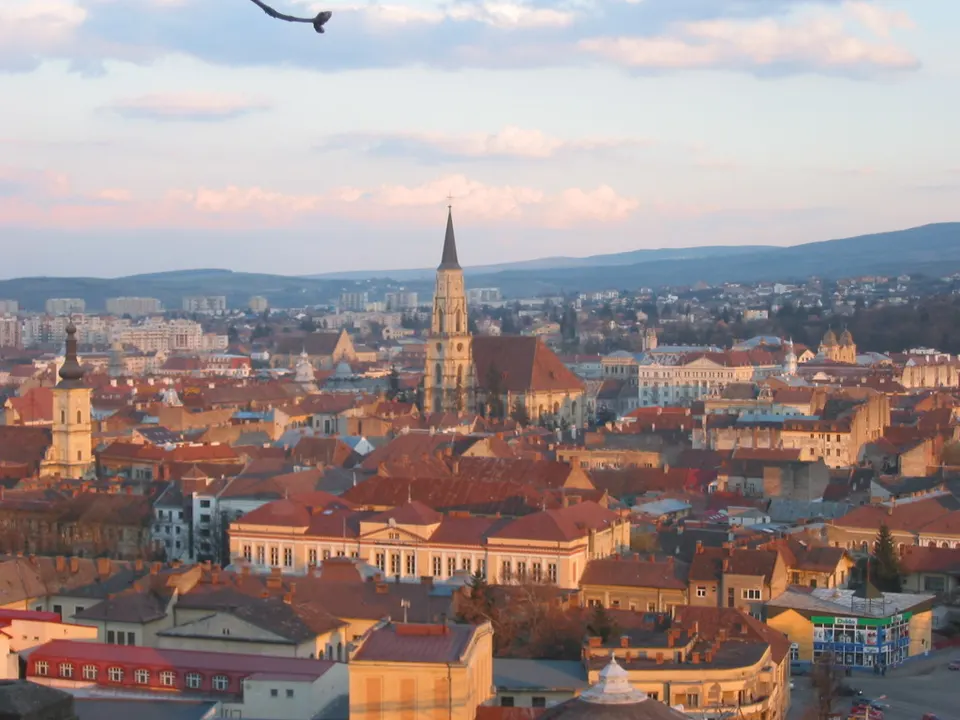
Cluj-Napoca's appeal lies in its layered history and its lively university life. St. Michael's Church in Unirii Square was built in the Gothic style at the end of the 14th century, and its Neo-Gothic tower, added in the 19th century, remains the tallest church tower in Romania. In front of it stands the equestrian statue of Matthias Corvinus, the locally born King of Hungary. Across Avram Iancu Square, the Palace of Justice, designed in an eclectic style by Gyula Wagner, sits in a grand ensemble with the National Theatre and the Palace of the Orthodox Metropolis. The botanical garden lies close to the centre, and Hajongard Cemetery holds the graves of many of the city's notable figures.
When is the best time to visit Cluj-Napoca?
July and August are the warmest, with highs of about 24 °C, and January is the coolest, at about 1 °C. City breaks work best in April, May and September.
How do I get to Cluj-Napoca without flying?
From 11 destinations you can travel to Cluj-Napoca directly by bus or train. Counting connections, 336 destinations can reach it within 14 hours without flying. Travelling from Budapest, allow 7h 30m by train with MAV/CFR; that is about 9 kg of CO₂ per person, 80% less than the 46 kg of a flight. From Bucharest, it takes 9h 00m by train with CFR, with about 12 kg of CO₂ per person against 74 kg for the flight, 84% less. The train from Sibiu with InterRegional Călători takes 3h 59m; that is about 1.2 kg of CO₂ per person.
What to do in Cluj-Napoca
St. Michael's Church
A Gothic church in Unirii Square, named after the Archangel Michael, the city's patron saint. Its tower is the tallest church tower in Romania.
Palace of Justice
Designed in an eclectic style by Gyula Wagner, it stands in Avram Iancu Square beside the National Theatre.
Ethnographic Museum of Transylvania
A large indoor collection of traditional objects, plus an open-air park that is the oldest of its kind in Romania.
National Museum of Transylvanian History
Its collection covers artefacts from prehistoric times, the Dacian era, the Middle Ages and the modern era.
Find tours and tickets: National Museum of Transylvanian History
Central Park
Home to the Chios Casino and a large statuary ensemble.