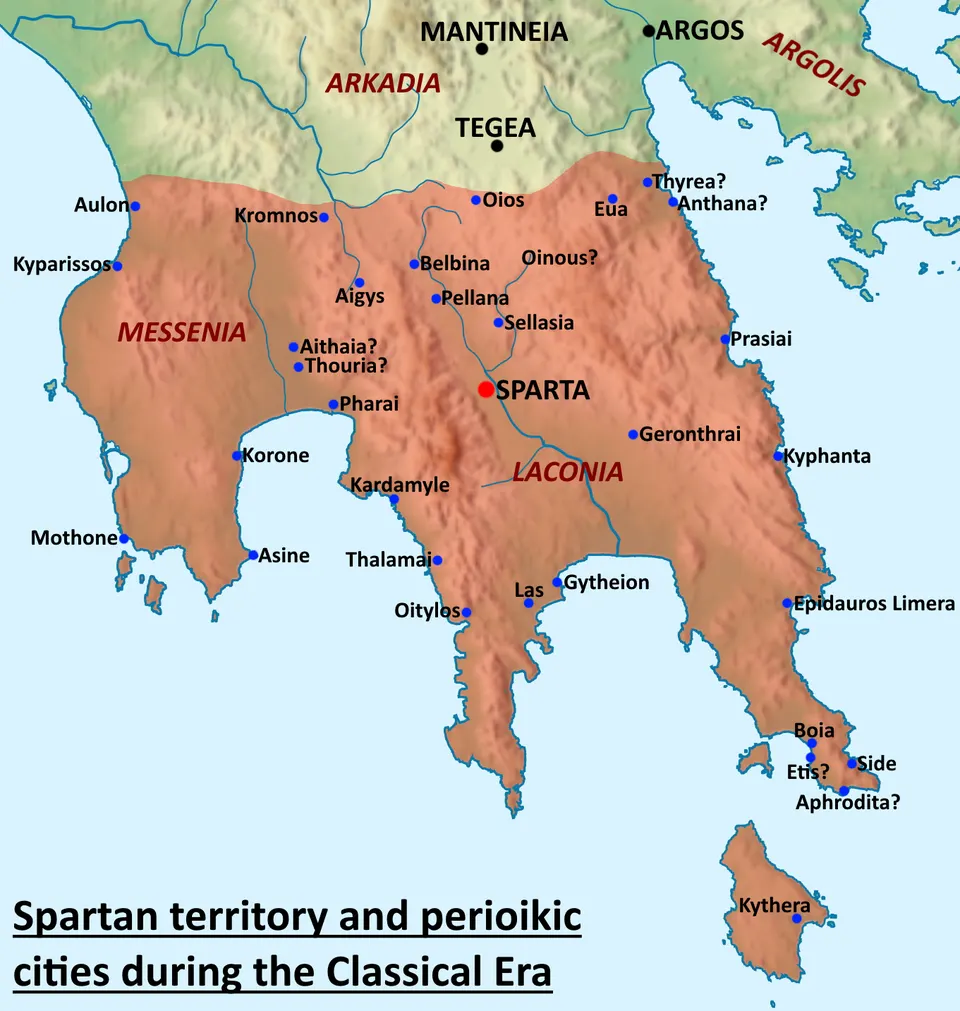

The Menelaion is the monument to begin with, a sanctuary that ties the town to its ancient past in the Evrotas valley. Sparta was once a prominent Greek polis in Laconia, and its modern streets sit in a green, open setting beneath the hills of the southern Peloponnese. The mood is calm and proud, and the ruins and museums give each walk a sense of the town's long military history.
With about 16,000 inhabitants, Sparta lies in Peloponnese, Greece.
Why go to Sparta?
Come to Sparta for a valley town where ancient history is never far from the streets. The Menelaion is the first stop, an old shrine on the hills, and the tomb of Leonidas adds a monument with a dramatic story. The Archaeological Museum of Sparta gives the town's story in clear displays, and the Museum of Olive and Greek Oil offers a different kind of visit to the region's traditions. The UNESCO site of Mystras sits a short distance away, a place of ruins and churches on a hillside that makes a rewarding outing. The town suits a slow, thoughtful visit of museums, ruins and open country.
When is the best time to visit Sparta?
Average highs range from 12 °C in January and February to 33 °C in July and August. March, April and November are the time for city breaks.
How do I get to Sparta without flying?
Only one direct bus link serves Sparta. Allowing for changes, 8 destinations are no more than 14 hours away without flying. Kalamata is 1h 30m away by bus with KTEL Lakonias, with about 0.8 kg of CO₂ per person.
What to do in Sparta
Menelaion sanctuary
Walk up to the Menelaion for a view across the valley and a sense of the ancient sanctuary. Take your time with the site and the paths around it.
Archaeological Museum of Sparta
The Archaeological Museum of Sparta gives the town's ancient story in clear, well-arranged displays. Allow an hour and take the rooms in order.
Tomb of Leonidas
Visit the tomb of Leonidas, a monument that marks one of the town's dramatic stories. Pause here and read the setting before you walk on.
Mystras day trip
Take a short trip to Mystras, the UNESCO site of hillside ruins and churches. Plan a full morning and wear comfortable shoes for the steep paths.