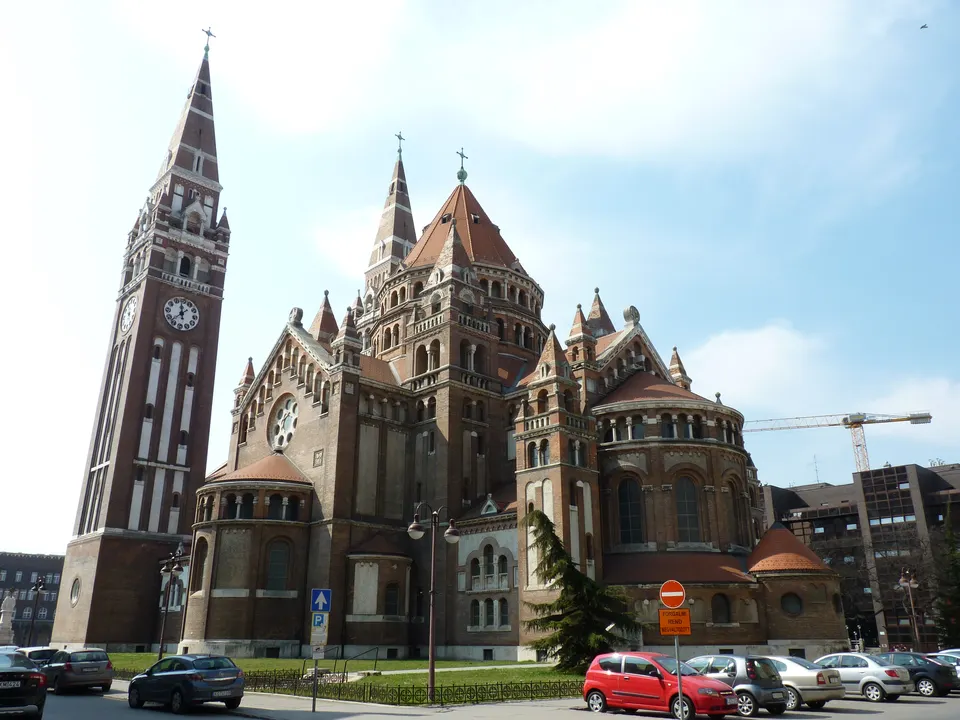

Szeged is the regional centre of the Southern Great Plain in Hungary and the county seat of Csongrád-Csanád. Its university gives the city a presence alongside the churches and the river, so the centre has two faces. The Old town bridge and the railway bridge cross the Tisza on one side, while the Votive Church of Szeged stands on the other.
Szeged is in Csongrád, Hungary, and has a population of about 161,000; it is also a rail hub.
Why go to Szeged?
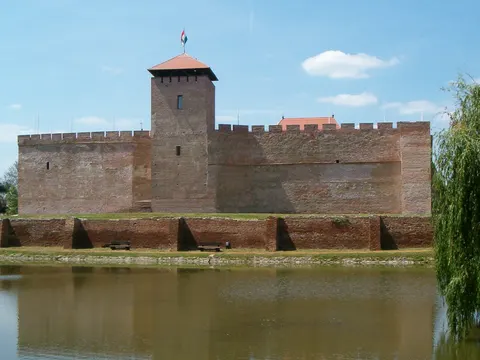
Szeged suits a City & Culture trip built around the university and the riverside. The Móra Ferenc Múzeum covers the city's collections, and the Botanical Garden of Szeged gives a green counterpoint to the streets. The Votive Church of Szeged and the Saint Nicholas Serbian Orthodox Church are two of the religious buildings that mark the town, and the Franciscan Church and Dömötör Tower add their own layers. Castrum Partiscum is one of the named sights, and it adds an older layer to the walk. Budapest, the national capital, is reachable as a longer trip from the city, and the Tisza gives the city its river setting.
When is the best time to visit Szeged?
July and August are the warmest, with highs of about 28 °C, and January is the coolest, at about 3 °C. City breaks work best in April, May and October.
How do I get to Szeged without flying?
From 7 destinations you can travel to Szeged directly by bus or train. Counting connections, 1,190 destinations can reach it within 14 hours without flying. Travelling from Prague, allow 10h 07m by bus with FlixBus-eu; that is about 16 kg of CO₂ per person, 79% less than the 77 kg of a flight. From Budapest, it takes 2h 12m by train with MAV, with about 3 kg of CO₂ per person against 37 kg for the flight, 92% less. The bus from Ljubljana with FlixBus-eu takes 7h 55m; that is about 12 kg of CO₂ per person, 79% less than the 56 kg of a flight.
What to do in Szeged
Votive Church of Szeged
The Votive Church of Szeged gives the skyline its main accent and is the building many visitors use as a reference point. Walk toward it from the river to see how the streets lead up to it.
Dömötör Tower
Dömötör Tower is a church tower in the centre and one of the older structures that mark the city. The Franciscan Church is another of the church buildings that give the streets their character.
Old town bridge
The Old town bridge crosses the Tisza and links the two sides of the city. Standing on it gives a view along the river, and the railway bridge stands further along the same water.
Móra Ferenc Múzeum
The Móra Ferenc Múzeum covers the history and collections of the city and the region around it. It makes a stop for anyone who wants context before walking the streets.