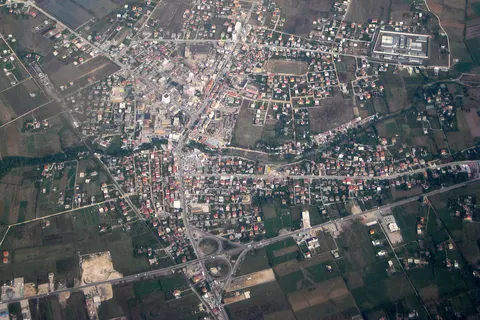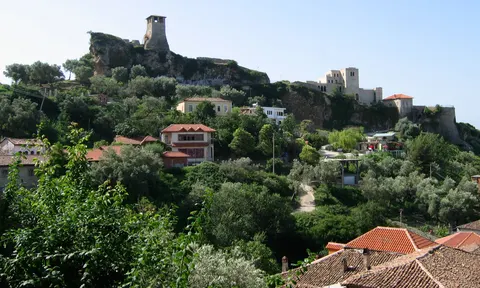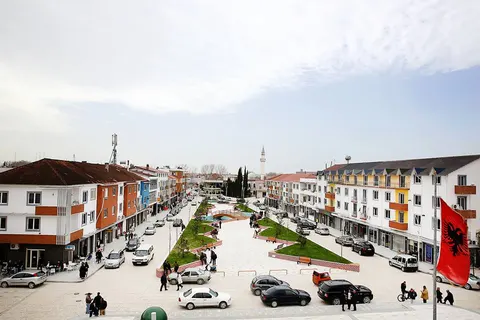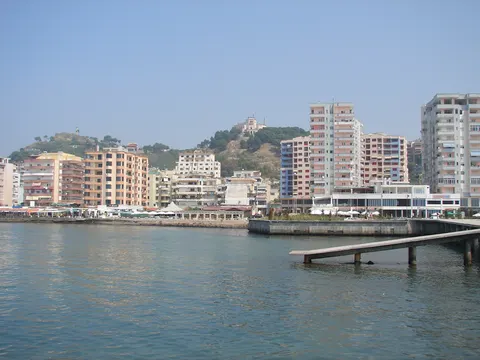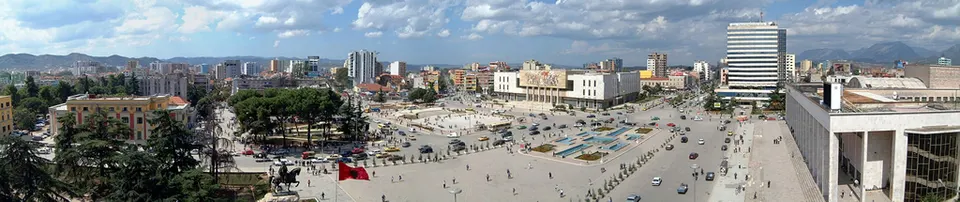

Tirana is the capital and largest city of Albania, in the centre of the country and enclosed by mountains and hills. Dajti rises to the east, and a valley to the northwest looks out towards the Adriatic Sea in the distance. The city was founded in 1614 by the Ottoman Albanian nobleman Sylejman Pasha Bargjini, and it became the capital after the Congress of Lushnjë in 1912.
With about 418,000 inhabitants, Tirana lies in Albania and is a rail hub.
Why go to Tirana?
Tirana blends traditional and modern life, with a lively scene of art, food, music and nightlife. The architecture shows two totalitarian regimes, the fascist period under Mussolini and the communist era under Enver Hoxha that followed. The Bunk'art museum occupies two bunkers built under Hoxha, and the National History Museum on Skanderbeg Square has a mosaic over its entrance. The Grand Park is the most important green space in the city, and Dajti National Park lies close to the city.
When is the best time to visit Tirana?
Average highs range from 10 °C in January to 30 °C in July and August. For city breaks, any month of the year works.
How do I get to Tirana without flying?
Direct bus services link Tirana with 5 destinations. Allowing for changes, 203 destinations are no more than 14 hours away without flying. Durres is 48 min away by bus, with about 1 kg of CO₂ per person. The bus from Shkoder takes 2h 00m; that is about 3 kg of CO₂ per person. From Vlore, it takes 2h 30m by bus, with about 4 kg of CO₂ per person.
What to do in Tirana
National History Museum
On Skanderbeg Square, the most representative museum in the city. Its mosaic above the entrance tells the story of the Albanian people's resistance to invasion.
Bunk'art
Two underground bunkers built under Enver Hoxha's direction, now a history museum and contemporary art gallery.
Grand Park
The city's most important green space, with playgrounds, sports facilities and landmarks including the Presidential Palace, the botanical gardens and the zoo.
National Art Gallery
The most important gallery in Albania, holding about 4,500 works, including the leading collection of Albanian art from the nineteenth and twentieth centuries.