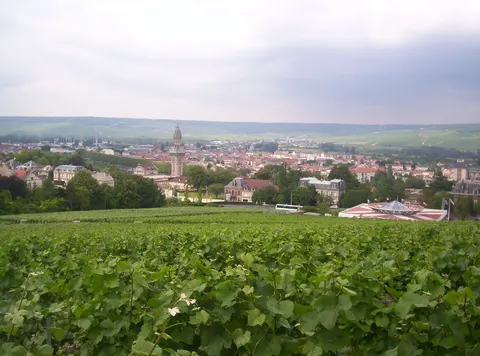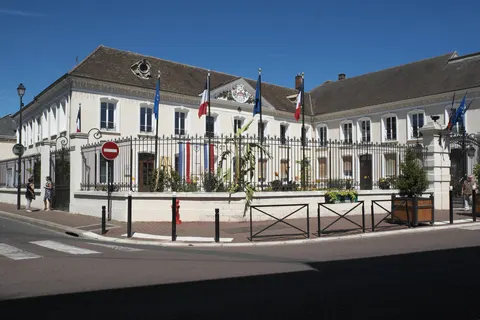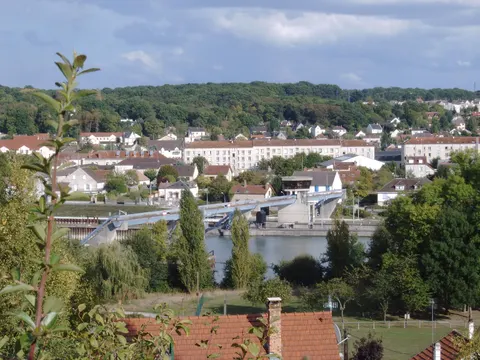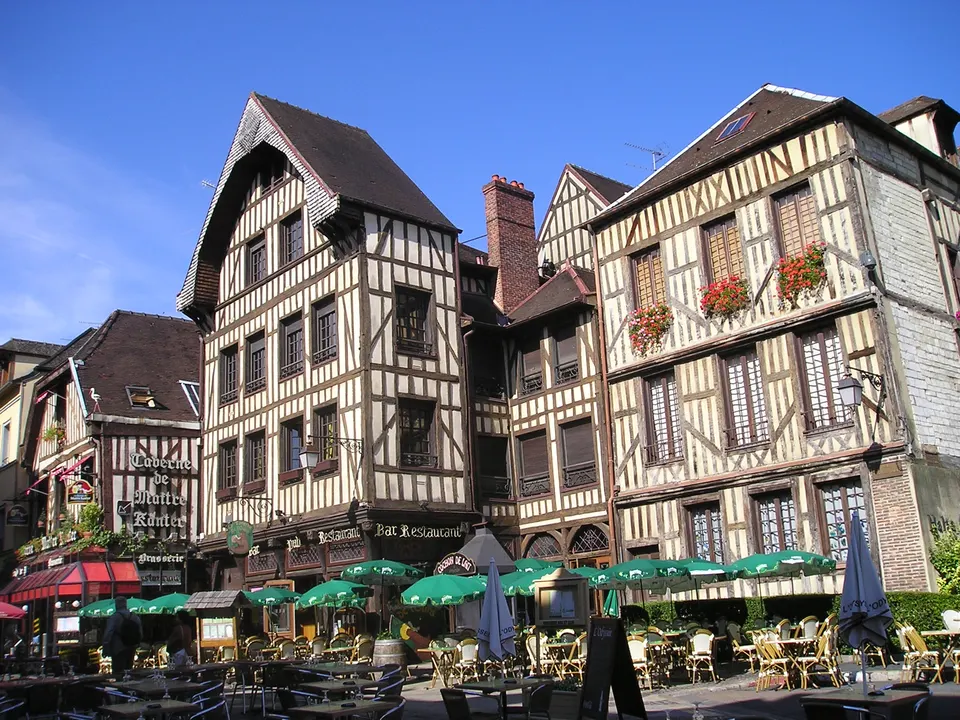

Troyes is the capital of the Aube department in the Grand Est region of northeastern France. It lies on the Seine about 140 km south-east of Paris, in the Champagne wine region and close to the Orient Forest Regional Natural Park. The old town is known for its half-timbered houses, mostly of the 16th century, and it has been designated a City of Art and History.
Troyes, in Grand Est, France, is home to about 61,000 people and works as a rail hub.
Why go to Troyes?
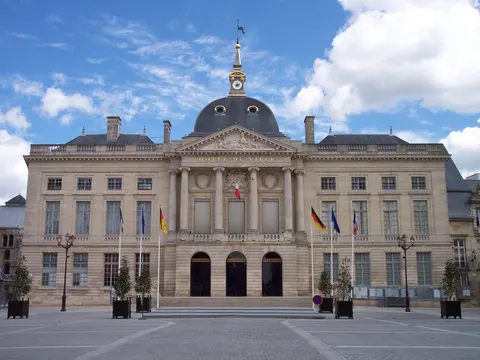
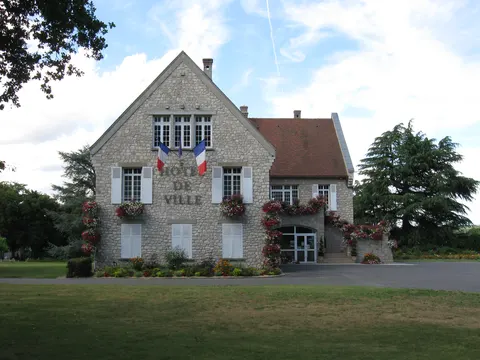
The old town is the main reason to come. Many half-timbered houses survive there, along with mansions called hôtels particuliers. The Hôtel de Ville on Place Alexandre Israël is an example of the Louis XIII style, with paired Corinthian columns on its central block. The town has museums of modern art and of fine arts. Troyes also has a long trading past. Its medieval Champagne fairs drew merchants from all over Christendom, and the town gave its name to troy weight, a standard of measurement for gold.
When is the best time to visit Troyes?
In July and August the average high reaches 24 °C; in January it is closer to 6 °C. Any month suits city breaks.
How do I get to Troyes without flying?
Troyes has direct bus or train links to 4 destinations. Within 14 hours, travellers from 2,120 destinations can get here without flying. The train from Paris with Société Nationale des Chemins de fer Français takes 1h 26m; that is about 0.4 kg of CO₂ per person. Dijon is 2h 18m away by train with SNCF VOYAGEURS, with about 0.3 kg of CO₂ per person. Travelling from Metz, allow 7h 05m by bus with FlixBus-eu; that is about 4.8 kg of CO₂ per person, 88% less than the 41 kg of a flight.
What to do in Troyes
Hôtel de Ville
The town hall on Place Alexandre Israël, a Louis XIII building with a marble medallion of Louis XIV in its Council Chamber.
Saint-Loup Museum
The museum of fine arts in Troyes.
Musée d'Art Moderne
The Museum of Modern Art in Troyes.
Hôtel-Dieu-Lecomte apothecary
A historic apothecary in the town, now open to visitors as a museum.