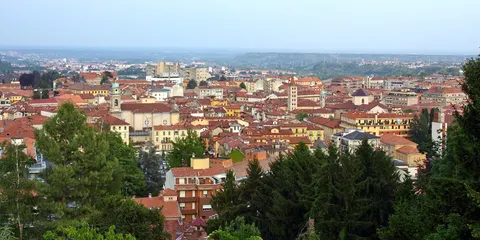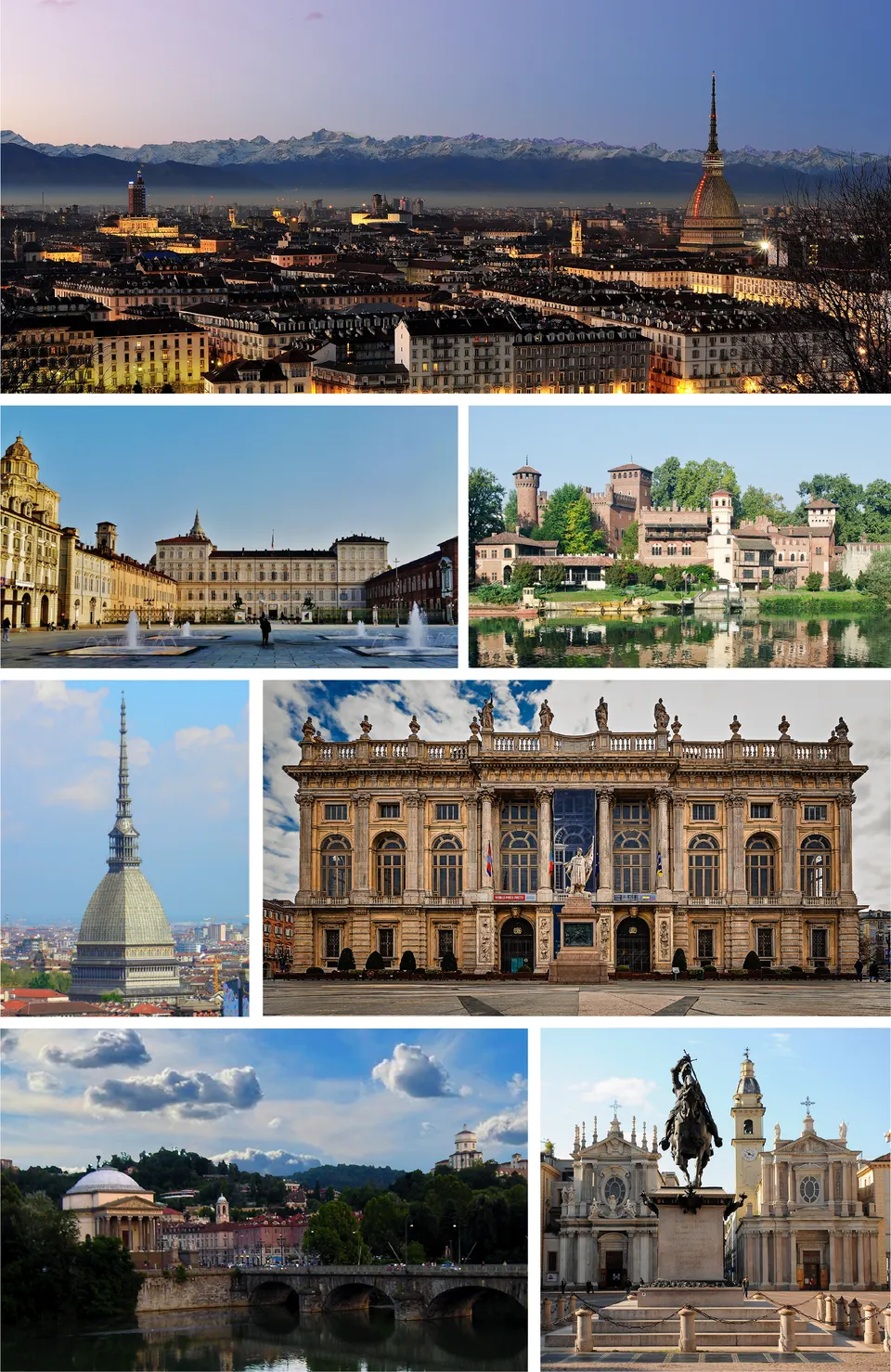

Turin is a city in northern Italy on the western bank of the River Po, with the Alps curving around it to the west and north. It is the capital of Piedmont and was the first capital of the Kingdom of Italy. For centuries it was the seat of the House of Savoy, and it is known for its Baroque and Art Nouveau architecture, its palaces, squares and museums. The city is also home to much of the Italian automotive industry.
Turin, in Piedmont, Italy, is home to about 847,000 people and works as a rail hub.
Why go to Turin?
Its palaces and squares were mostly built between the sixteenth and eighteenth centuries, and parts of the historic centre are a World Heritage Site under the name Residences of the Royal House of Savoy. The Egyptian Museum specialises in the art of ancient Egypt, with one of the largest collections of Egyptian antiquities outside Egypt. The Mole Antonelliana, the city's architectural symbol, houses the National Museum of Cinema. Turin is also famous for the Shroud of Turin, the gianduiotto chocolate and the football club Juventus, and it hosted the 2006 Winter Olympics.
When is the best time to visit Turin?
In July the average high reaches 28 °C; in January it is closer to 6 °C. Any month suits city breaks.
How do I get to Turin without flying?
Turin has direct bus or train links to 30 destinations. Within 14 hours, travellers from 2,188 destinations can get here without flying. The train from Milan with SNCF VOYAGEURS takes 1h 28m; that is about 1.6 kg of CO₂ per person. Bologna is 4h 30m away by bus with BlaBlaCar Bus, with about 8 kg of CO₂ per person against 68 kg for the flight, 88% less. Travelling from Sanremo, allow 3h 05m by bus with FlixBus-eu; that is about 3.8 kg of CO₂ per person.
What to do in Turin
Mole Antonelliana
The city's architectural symbol, which houses the National Museum of Cinema.
Egyptian Museum
The Museo Egizio specialises in ancient Egyptian archaeology and art, with one of the largest collections of Egyptian antiquities outside Egypt.
Palazzo Madama
A palace in the historic centre, built between the sixteenth and eighteenth centuries and part of the Residences of the Royal House of Savoy.
Valentino Castle
One of the Savoy residences in the city, part of the complex that UNESCO declared a World Heritage Site in 1997.