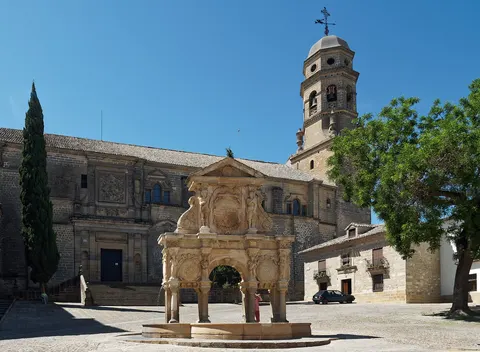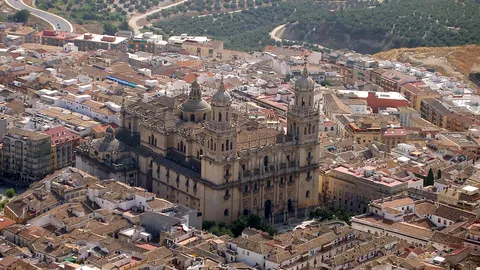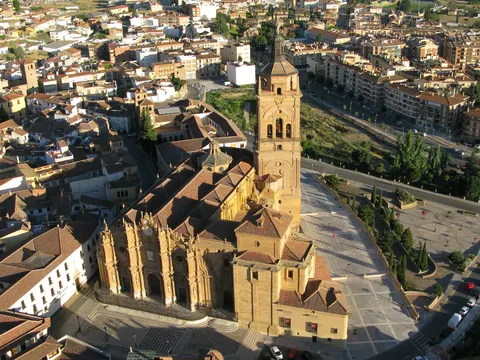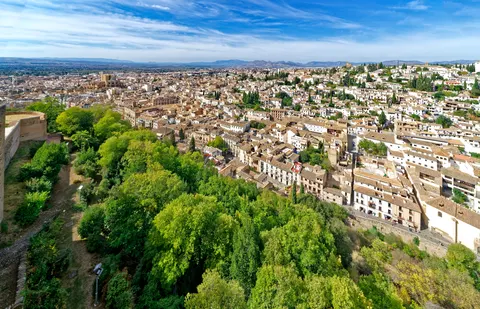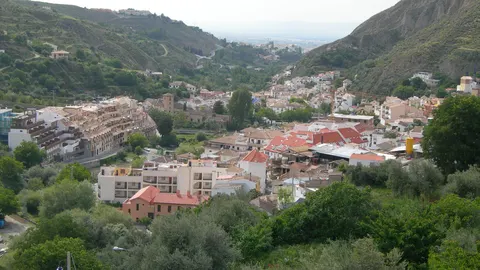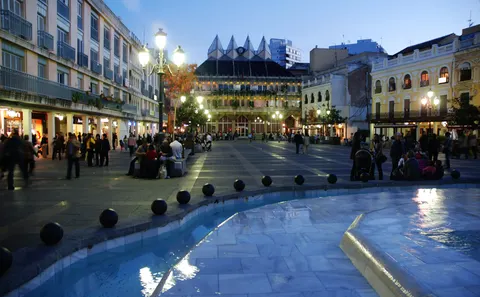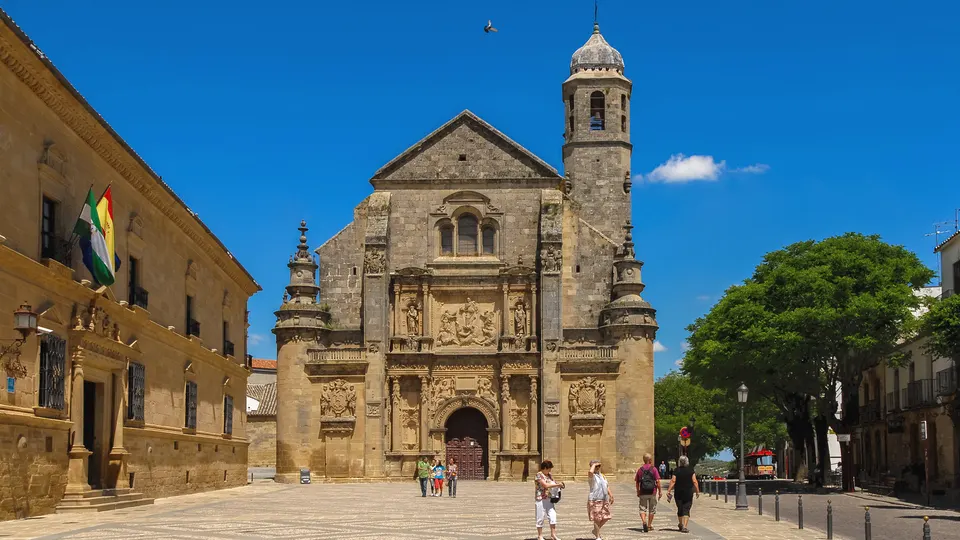

Úbeda is a municipality in the Andalusian province of Jaén, on a southern ridge between the Guadalquivir and Guadalimar rivers. It and its neighbour Baeza received a wave of Renaissance building in the early 16th century, and the two towns now share a UNESCO World Heritage listing. The old quarter of Cerro del Alcázar sits on the oldest part of the town, where traces of settlement reach back to the Copper Age.
With about 35,000 inhabitants, Úbeda lies in Andalusia, Spain.
Why go to Úbeda?
Vázquez de Molina Square is the centrepiece, ringed by monumental Renaissance buildings. The Palacio de las Cadenas takes its name from the decorative chains that once hung from its façade, and the Basílica de Santa María de los Reales Alcázares stands on the same square. The Chapel of the Savior was built to house the tombs of local nobility and has an elaborate metalwork screen inside. The Hospital de Santiago, designed by Vandelvira, now houses the town's conference hall. Spanish has an idiom that borrows the town's name, andar por los cerros de Úbeda, meaning to go off at a tangent.
When is the best time to visit Úbeda?
Average highs range from 10 °C in January to 32 °C in July and August.
How do I get to Úbeda without flying?
Direct bus services link Úbeda with 4 destinations. Allowing for changes, 275 destinations are no more than 14 hours away without flying. Granada is 2h 24m away by bus with Alsa, with about 2.6 kg of CO₂ per person. The bus from Jaen with Alsa takes 1h 06m; that is about 1.2 kg of CO₂ per person. From Baeza, it takes 18 min by bus with Alsa, with about 0.3 kg of CO₂ per person.
What to do in Úbeda
Vázquez de Molina Square
A monumental square surrounded by Renaissance palaces and churches.
Palacio de las Cadenas
A Renaissance palace named for the decorative chains that once hung from its façade.
Chapel of the Savior
Built to house the tombs of local nobility, with metalwork inside by the ironworker Bartolomé de Jaen.
Puerta de Sabiote
An old gate with a horseshoe arch, set into an angle of the old wall and recalling the town's Moorish past.