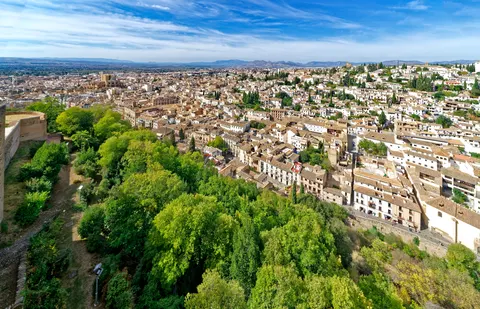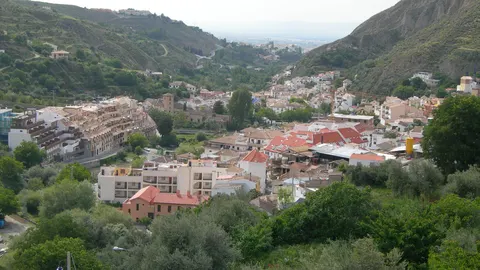

Baeza is a city and municipality in the province of Jaén, in Andalusia, Spain. It sits perched on a cliff in the Loma de Úbeda, between the Guadalquivir and the Guadalimar rivers. The town is best known for some of the best-preserved examples of Italian Renaissance architecture in Spain, and it shares its UNESCO World Heritage listing with neighbouring Úbeda.
With about 16,000 inhabitants, Baeza lies in Andalusia, Spain.
Why go to Baeza?
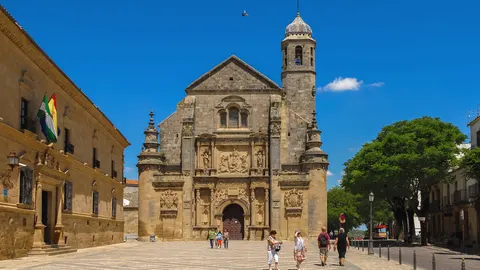
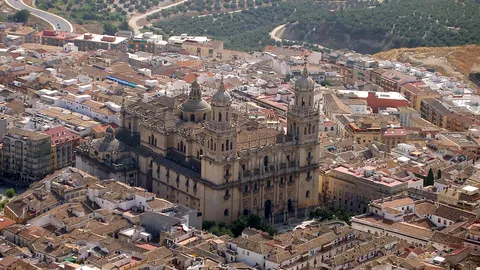
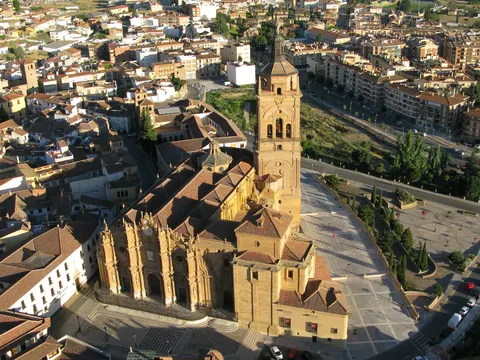
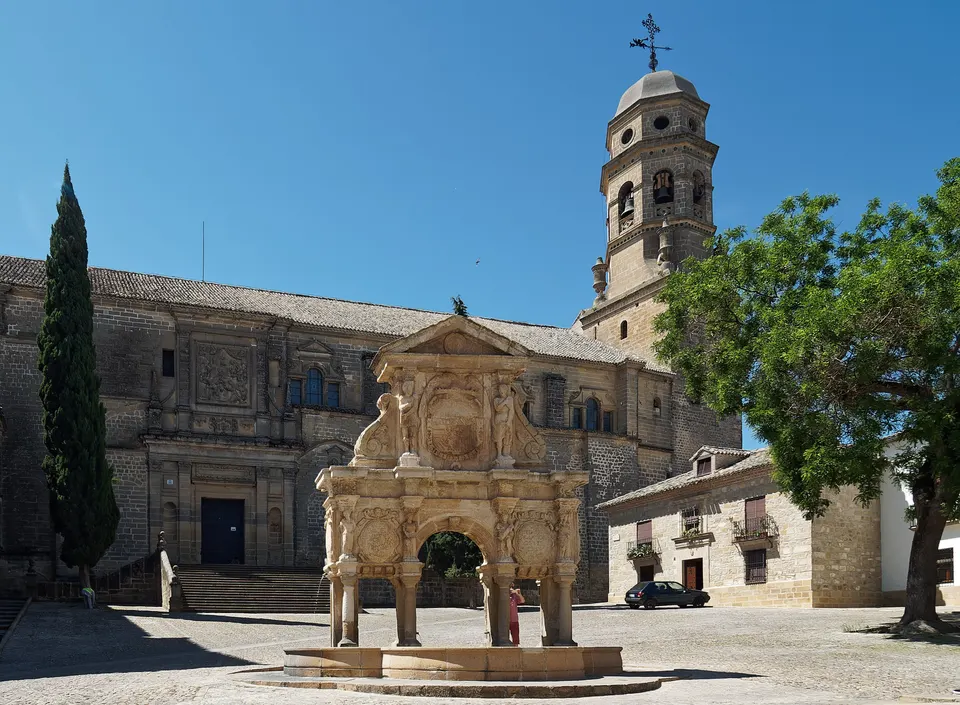
Baeza is famed for its Renaissance architecture. The cathedral was finished in the sixteenth century by Andrés de Vandelvira and later completed by the architect and mathematician Juan Bautista Villalpando. The Jabalquinto Palace combines a Gothic entrance, a Renaissance courtyard and a Baroque staircase. The Plaza de España and the Plaza de la Constitución sit in the centre, and the Constitution plaza has a marble fountain decorated with caryatids. The Fountain of the Lions is made from Ibero-Roman stone from the ruins of Cástulo.
When is the best time to visit Baeza?
Average highs range from 10 °C in January to 32 °C in July.
How do I get to Baeza without flying?
Direct bus services link Baeza with 3 destinations. Allowing for changes, 287 destinations are no more than 14 hours away without flying. Granada is 2h 00m away by bus with Alsa, with about 2.5 kg of CO₂ per person. The bus from Jaen with Alsa takes 48 min; that is about 1 kg of CO₂ per person. From Úbeda, it takes 18 min by bus with Alsa, with about 0.3 kg of CO₂ per person.
What to do in Baeza
Natividad de Nuestra Señora Cathedral
A cathedral with an early Gothic core, finished in a Renaissance style by Andrés de Vandelvira.
Find tours and tickets: Natividad de Nuestra Señora Cathedral
Jabalquinto Palace
A palace with a Gothic entrance, a Renaissance courtyard and a Baroque staircase.
Fountain of the Lions
A fountain whose lions come from the Ibero-Roman ruins of Cástulo.
Villalar Arch
An arch erected for Charles V's visit to honour his victory at Villalar.