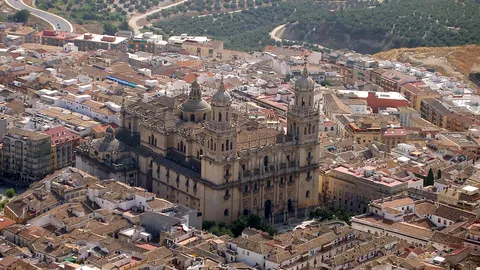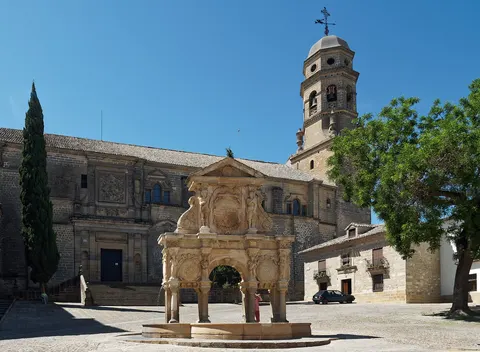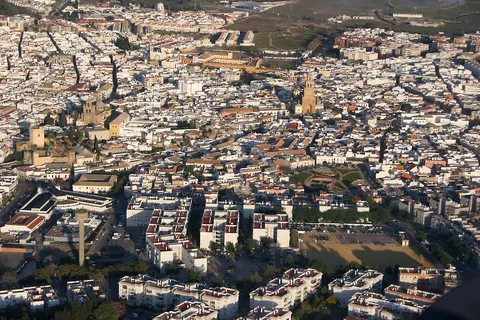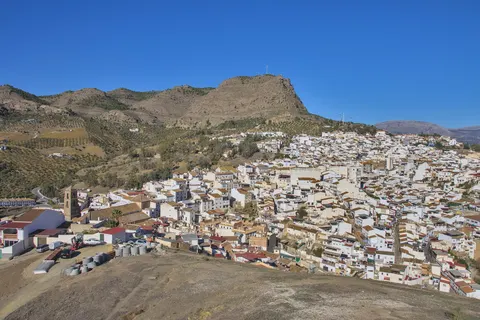

Córdoba lies on the right bank of the Guadalquivir in the south of the Iberian Peninsula and serves as capital of its province. Roman, Visigothic and Muslim rule each left a mark on the city, and its historic centre has been a UNESCO World Heritage Site since 1994. The city's summers are among the hottest in Spain and very dry, while its winters bring more rain.
Cordoba, in Andalusia, Spain, is home to about 326,000 people and works as a rail hub.
Why go to Cordoba?
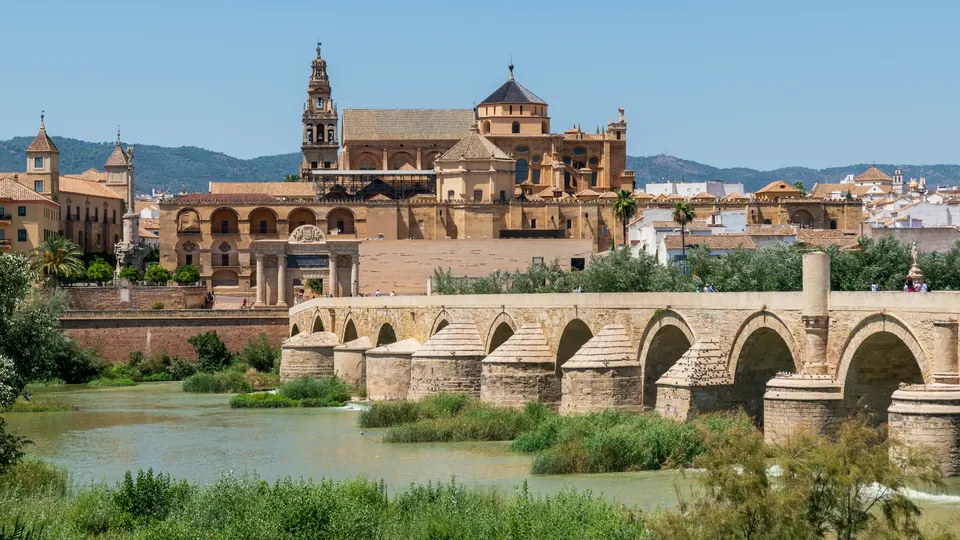
The Mezquita-Catedral is the reason many visitors come. Its Moorish architecture was named a UNESCO World Heritage Site in 1984, and the building now serves as a cathedral, though its Islamic origins are still easy to read in the arches. Under the Umayyad dynasty the city became a centre of education and learning, and it was once the second-largest city in Europe. Just outside the city, the ruins of Madinat al-Zahra keep that caliphal past in view. Inside the town, the Julio Romero de Torres Museum shows many of the painter's own works, and the Festival de los Patios, recognised by UNESCO as intangible heritage, brings the city's courtyard life to the surface.
When is the best time to visit Cordoba?
In July the average high reaches 36 °C; in January it is closer to 14 °C. For city breaks, go in February, March and November.
How do I get to Cordoba without flying?
Cordoba has direct train links to 10 destinations. Within 14 hours, travellers from 492 destinations can get here without flying. The train from Madrid with RENFE OPERADORA takes 1h 44m; that is about 2.8 kg of CO₂ per person, 96% less than the 68 kg of a flight. Seville is 41 min away by train with RENFE OPERADORA, with about 1.1 kg of CO₂ per person. Travelling from Granada, allow 1h 40m by train with RENFE OPERADORA; that is about 1.2 kg of CO₂ per person.
What to do in Cordoba
Mezquita-Catedral
A former mosque that now serves as a cathedral, with Moorish architecture that remains the heart of the city. The UNESCO site was later widened to cover the whole historic centre.
Madinat al-Zahra
A World Heritage Site near Córdoba, tied to the caliphate that made the city one of the great centres of learning in medieval Europe.
Archaeological and Ethnological Museum
Housed in a Renaissance palace, its halls cover everything from Bronze Age pieces to Roman, Visigothic and Islamic culture.
Find tours and tickets: Archaeological and Ethnological Museum
Julio Romero de Torres Museum
Set beside the Guadalquivir in a house that has seen many changes, it holds paintings and motifs by the artist himself.