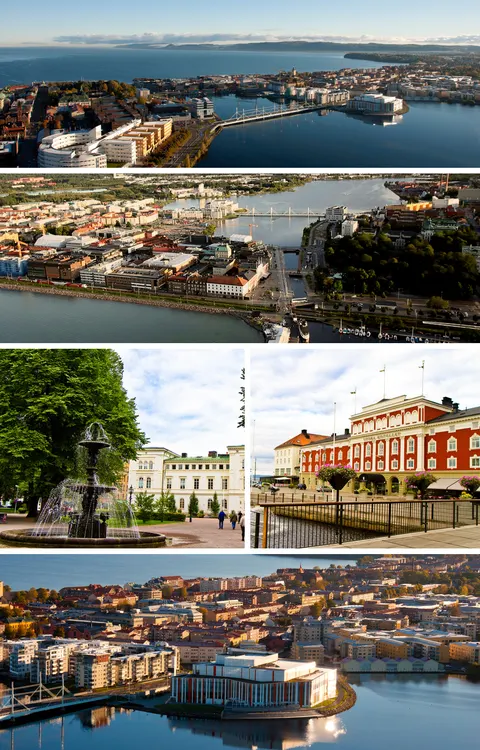

Växjö is a city and the seat of Växjö Municipality in Kronoberg County, Sweden. It is the administrative, cultural and industrial centre of the county and the episcopal see of the Diocese of Växjö, with the cathedral at its heart. The city is also home to Linnaeus University. The city has been a diocesan seat since the late 1160s, when it was separated from the Diocese of Linköping.
Växjö, in Kronoberg, Sweden, is home to about 71,000 people and works as a rail hub.
Why go to Växjö?
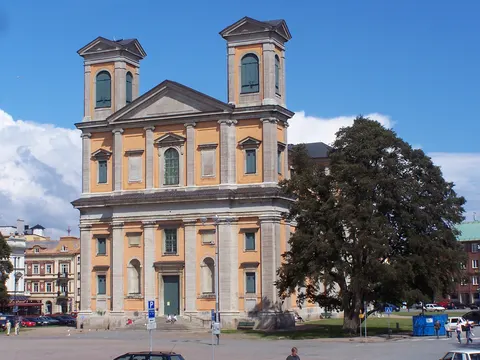
Växjö is built around its cathedral, which began as a stone church dedicated to Sigfrid and John the Baptist. The founding of the diocese has been linked to the cult of Saint Sigfrid, and he remains the city's patron saint. Medieval institutions once stood here as well, including a hospital of the Holy Ghost and a Franciscan monastery. The city has been struck by many fires over the centuries, and after the last big one, in 1843, it received the street plan it still has. Today it is the centre of county administration, culture and industry.
When is the best time to visit Växjö?
In July the average high reaches 20 °C; in January it is closer to 0 °C. For city breaks, go in June, July and August.
How do I get to Växjö without flying?
Växjö has direct train links to 3 destinations. Within 14 hours, travellers from 372 destinations can get here without flying. The train from Jönköping with Jönköpings Länstrafik takes 1h 42m; that is about 0.2 kg of CO₂ per person. Värnamo is 38 min away by train with Jönköpings Länstrafik, with about 0.1 kg of CO₂ per person. Travelling from Höör, allow 1h 20m by train with Skånetrafiken; that is about 0.3 kg of CO₂ per person.
What to do in Växjö
Linnéparken
A park in Växjö.
City breaks in Växjö
June is the ideal month for city breaks, with average highs of 18 °C.
Travel on from Växjö
Direct links run to Jönköping, Värnamo and Höör.