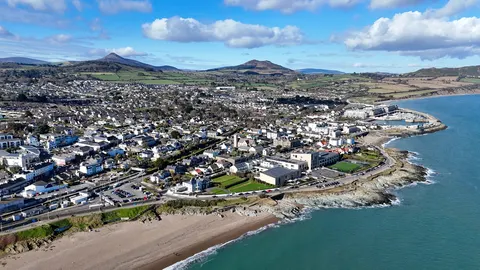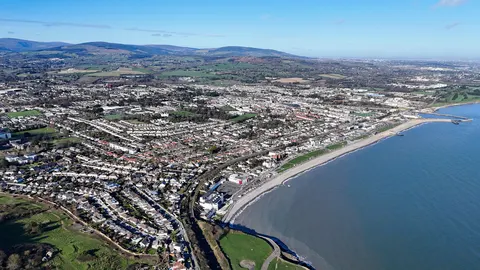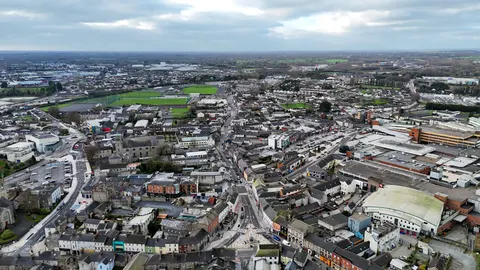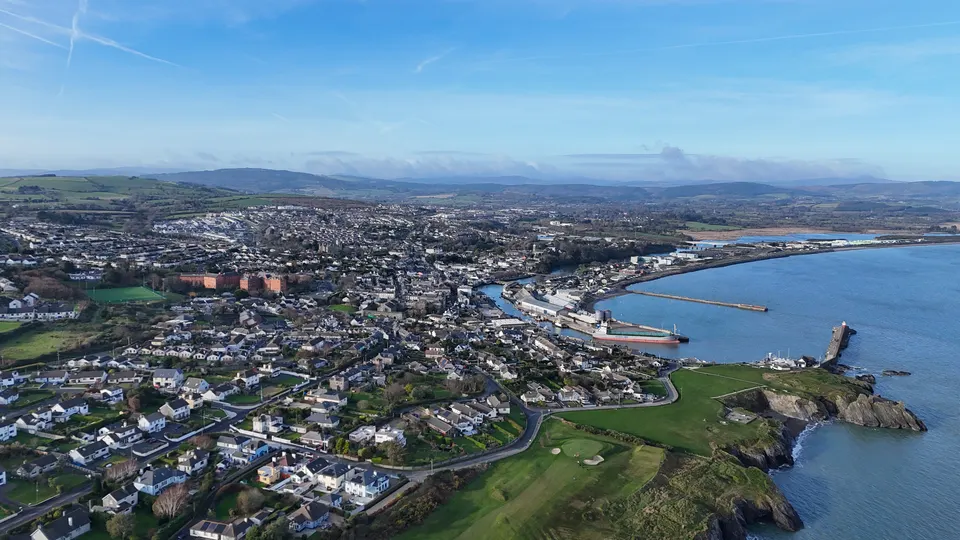

Wicklow is the county town of County Wicklow on the east coast of Ireland, south of Dublin. It had a population of 12,957 in the 2022 census. The town forms a rough semicircle around its harbour, and the River Vartry flows through it. To the west the land rises into rolling hills, which meet the Wicklow Mountains in the centre of the county.
Wicklow, in Leinster, Ireland, is home to about 13,000 people and works as a rail hub.
Why go to Wicklow?
Wicklow is a place for the coast and for its ruins. The Murrough, a grassy walking area beside the sea, lies to the north of the town, and a crescent-shaped stone beach runs along the eastern coastal strip. To the south the rocky headlands of Bride's Head and Wicklow Head reach out, and Wicklow Head is the easternmost mainland point of the Republic of Ireland. On a very clear day, the Snowdonia range in Wales can be seen from here. The Black Castle, a Norman-era fortification, lies in ruins on the coast just south of the harbour, and the Franciscan friary survives in the gardens at the west end of Main Street.
When is the best time to visit Wicklow?
In July and August the average high reaches 17 °C; in January, February and December it is closer to 8 °C. Nature and hiking trips work best in June, July and August.
How do I get to Wicklow without flying?
Wicklow has direct bus or train links to 3 destinations. Within 14 hours, travellers from 40 destinations can get here without flying. The train from Greystones with Iarnród Éireann / Irish Rail takes 14 min; that is about 0.2 kg of CO₂ per person. Arklow is 26 min away by train with Iarnród Éireann / Irish Rail, with about 0.2 kg of CO₂ per person. Travelling from Kilquade, allow 13 min by bus with Bus Éireann; that is about 0.4 kg of CO₂ per person.
What to do in Wicklow
Black Castle
A castle in Wicklow.
Nature and hiking trips in Wicklow
July is the ideal month for nature and hiking trips, with average highs of 17 °C.
Travel on from Wicklow
Direct links run to Greystones, Arklow and Kilquade.