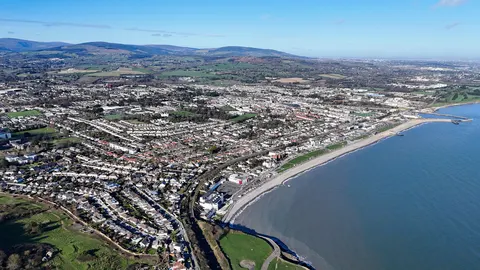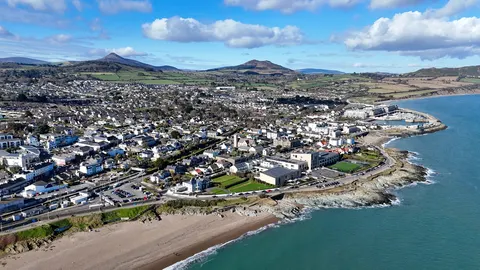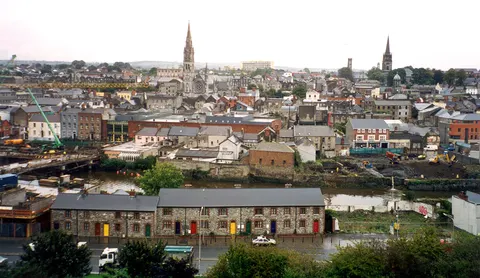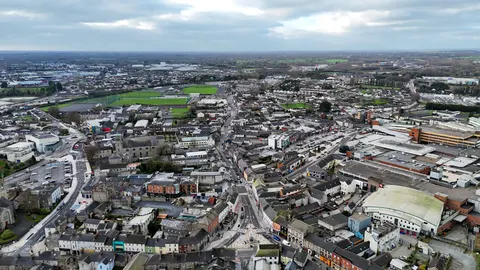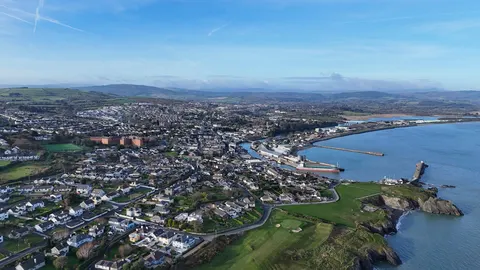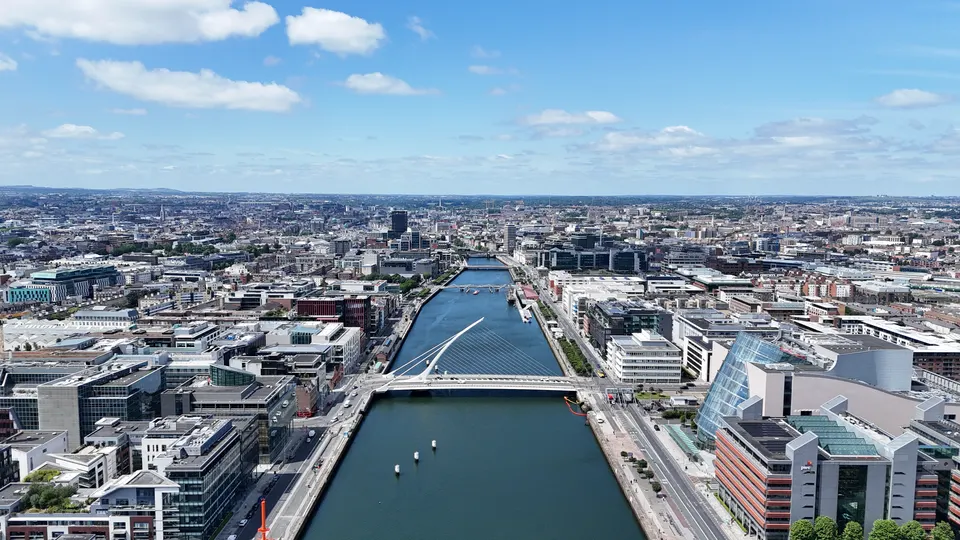

Dublin is the capital and largest city of Ireland. It sits on Dublin Bay at the mouth of the River Liffey, with the Dublin Mountains to its south. Its history runs from an early Gaelic settlement through the Viking era to the Anglo-Norman period, when it became Ireland's principal settlement. The city grew rapidly from the 17th century, and after independence in 1922 it became the capital of the new state.
Dublin, in Leinster, Ireland, is home to about 1 million people and works as a rail hub.
Why go to Dublin?
Dublin's sights stretch across a long history. Dublin Castle began as a Norman defensive work, one of the oldest landmarks in the city, and it was built as a courtyard with tall walls and a tower at each corner. The Old Library of Trinity College holds the Book of Kells, an illustrated manuscript made by Irish monks around 800, and it is among the city's most visited sites. Across the River Liffey, the Ha'penny Bridge is an iron footbridge and one of the most photographed sights in Dublin. Then there is the Spire, a stainless steel cone 121 metres tall on O'Connell Street, which replaced Nelson's Pillar.
When is the best time to visit Dublin?
In July the average high reaches 19 °C; in January, February and December it is closer to 8 °C. Any month suits city breaks.
How do I get to Dublin without flying?
Dublin has direct bus or train links to 23 destinations. Within 14 hours, travellers from 40 destinations can get here without flying. The train from Galway with Iarnród Éireann / Irish Rail takes 2h 22m; that is about 1.9 kg of CO₂ per person, 96% less than the 43 kg of a flight. Cork is 2h 29m away by train with Iarnród Éireann / Irish Rail, with about 2.2 kg of CO₂ per person against 50 kg for the flight, 96% less. Travelling from Belfast, allow 2h 12m by train with Enterprise; that is about 3 kg of CO₂ per person.
What to do in Dublin
Old Library of Trinity College
Home to the Book of Kells, an illustrated manuscript made by Irish monks around 800, and one of the city's most visited sites.
Dublin Castle
A Norman courtyard castle with tall defensive walls, founded in the early 13th century and one of the oldest landmarks in the city.
Spire of Dublin
A stainless steel spire on O'Connell Street, lit at its base and top, meant to mark the city's place in the 21st century.
Ha'penny Bridge
An iron footbridge over the River Liffey and one of the most iconic landmarks in Dublin.