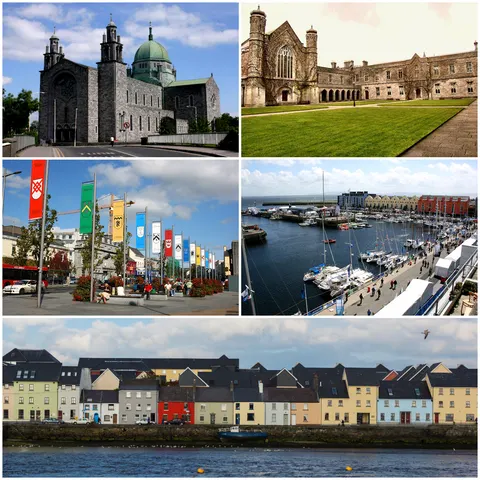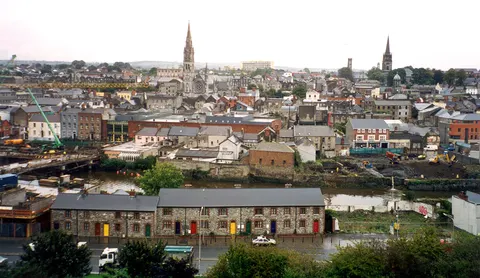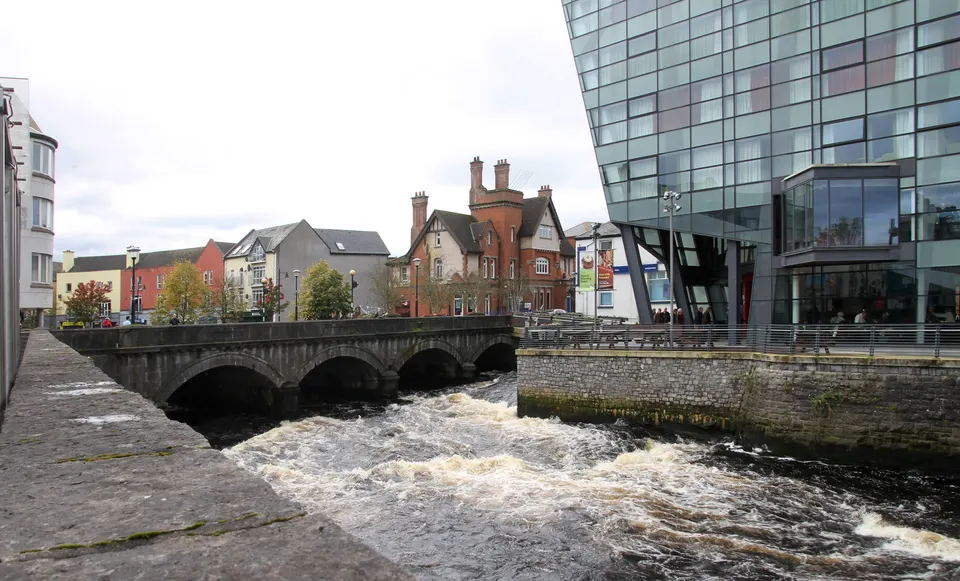

Sligo is a coastal seaport and the county town of County Sligo, on Ireland's west coast in the province of Connacht. It is the largest urban centre in the county, and a commercial and cultural hub tied to the poet W. B. Yeats. The town sits on low gravel hills on the Garavogue River, with an arc of mountains closing it in on three sides.
Sligo, in Connacht, Ireland, is home to about 21,000 people.
Why go to Sligo?
The landscape is the main draw. Knocknarea mountain, capped by the great cairn of Miosgan Maeve, dominates the skyline to the west, and Cairns Hill on the southern edge of town has two very large stone cairns. The area holds one of the highest densities of prehistoric sites in Ireland, with the Carrowmore monuments on the Coolera Peninsula just outside town. Yeats and his brother, the artist Jack Butler Yeats, drew inspiration from the countryside of north Sligo, and the Niland Gallery holds a collection of Jack's art.
When is the best time to visit Sligo?
In July and August the average high reaches 18 °C; in January and December it is closer to 7 °C.
How do I get to Sligo without flying?
Sligo has direct bus or train links to 3 destinations. Within 14 hours, travellers from 40 destinations can get here without flying. The train from Dublin with Iarnród Éireann / Irish Rail takes 2h 55m; that is about 1.8 kg of CO₂ per person, 96% less than the 41 kg of a flight. Galway is 2h 25m away by bus with Bus Éireann, with about 3.2 kg of CO₂ per person. Travelling from Letterkenny, allow 1h 48m by bus with Bus Éireann; that is about 2.4 kg of CO₂ per person.
What to do in Sligo
Knocknarea
A mountain to the west of the town, capped by the great cairn of Miosgan Maeve. It dominates the skyline to the west.
Carrowmore
A large group of megalithic monuments on the Coolera Peninsula, on the western outskirts of the town. Sligo's first roundabout was built around one of its outlying passage tombs.
Sligo Holy Cross Dominican Friary
The only surviving medieval building in the town, with an arched tower and a three-sided cloister still standing. It was built in 1252.
Model Arts and Niland Gallery
The former Model School was built to educate children of all denominations and now houses the Niland Gallery. Its rooms show the art of Jack B. Yeats.