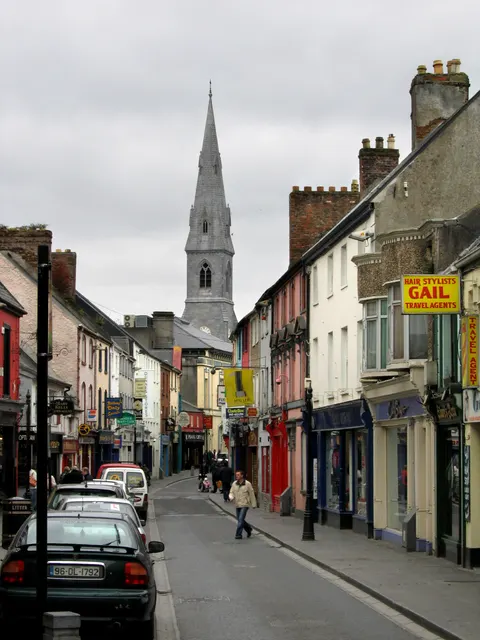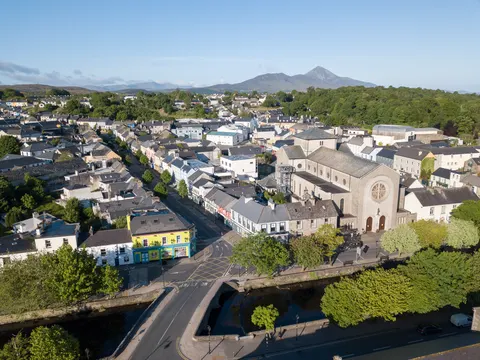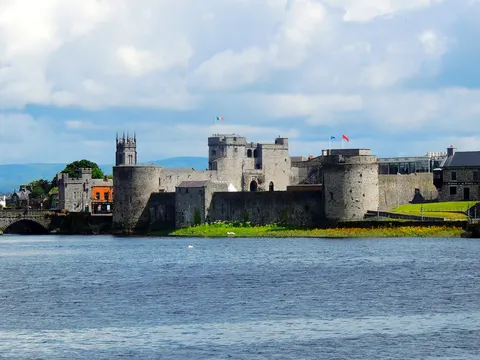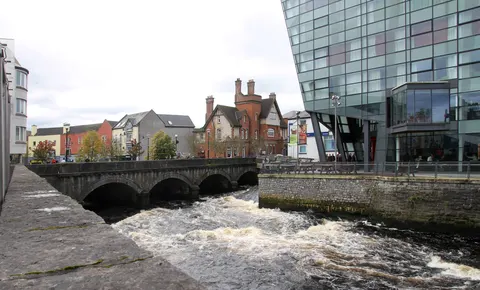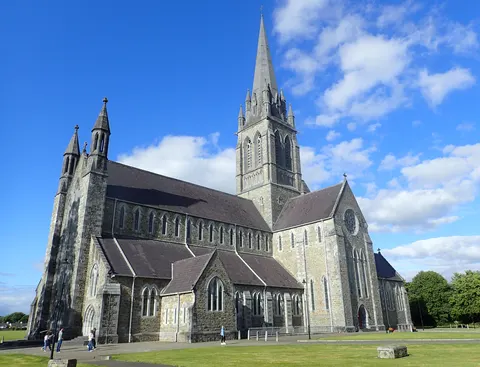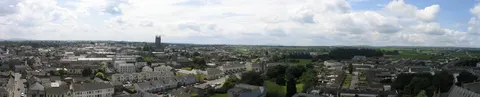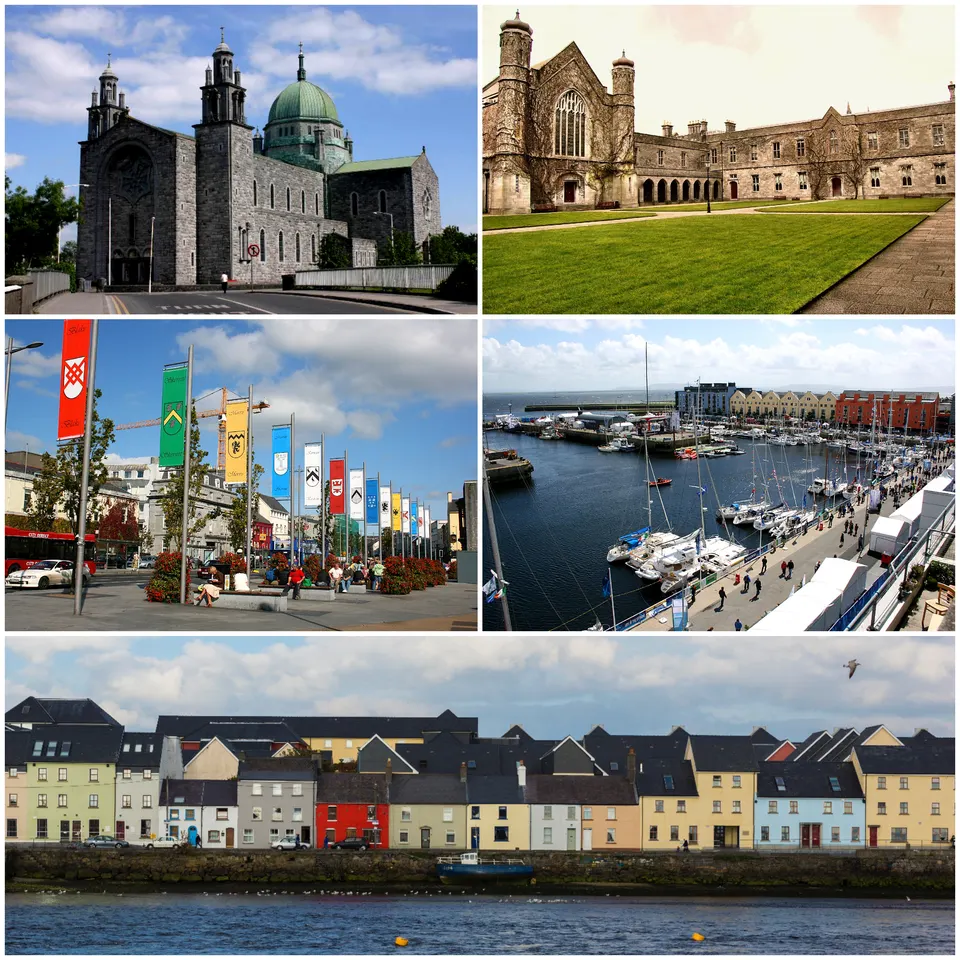

Galway is a city on the River Corrib, between Lough Corrib and Galway Bay on Ireland's west coast. It is the most populous settlement in the province of Connacht and the county town of County Galway. The city grew around a fortification built in the 12th century, and a group of merchant families known as the Tribes of Galway later ran it as a trading port. After a period of decline, it became known for festivals, including the Galway International Arts Festival.
With about 86,000 inhabitants, Galway lies in Connacht, Ireland, and is a rail hub.
Why go to Galway?
Much of the appeal lies in the old town, where the Spanish Arch is a remnant of the city wall and the Hall of the Red Earl can be seen through a glass wall off Flood Street. Lynch's Castle on Shop Street is a townhouse built by the prosperous Lynch family, and St Nicholas' Collegiate Church, founded in 1320, is the largest medieval church still in everyday use in Ireland. Galway Cathedral was built on the site of the old gaol and has an eclectic style, with a Renaissance Revival dome and a Romanesque portico. The city's cultural life is busy too, with festivals and events throughout the year, and it is known as Ireland's Cultural Heart.
When is the best time to visit Galway?
Average highs range from 8 °C in January, February and December to 18 °C in July and August. For city breaks, any month of the year works.
How do I get to Galway without flying?
Direct bus or train services link Galway with 7 destinations. Allowing for changes, 40 destinations are no more than 14 hours away without flying. Dublin is 2h 22m away by train with Iarnród Éireann / Irish Rail, with about 1.9 kg of CO₂ per person against 43 kg for the flight, 96% less. The bus from Cork with Bus Éireann takes 3h 30m; that is about 4.3 kg of CO₂ per person, 88% less than the 36 kg of a flight. From Sligo, it takes 2h 25m by bus with Bus Éireann, with about 3.2 kg of CO₂ per person.
What to do in Galway
St Nicholas' Collegiate Church
A Church of Ireland church founded in 1320 and enlarged over the following two centuries, still in use today.
Spanish Arch
The surviving remnant of the medieval city wall, close to the Galway City Museum.
Lynch's Castle
A medieval townhouse on Shop Street, built by the Lynch family and now a bank branch.
Nora Barnacle House Museum
In Bowling Green, the smallest museum in Ireland, honouring the companion and later wife of the writer James Joyce.