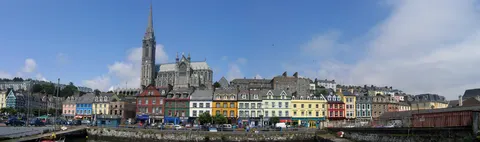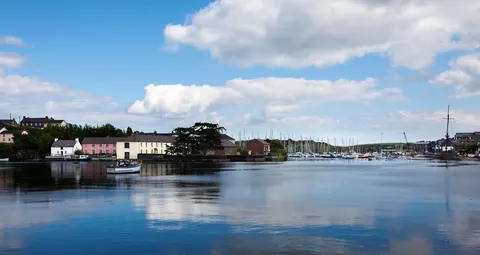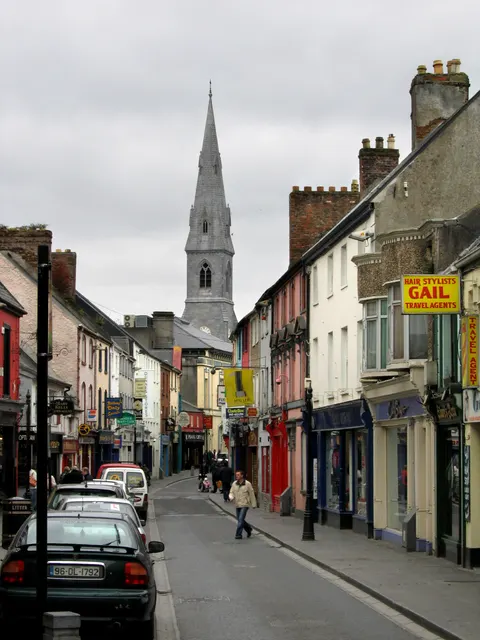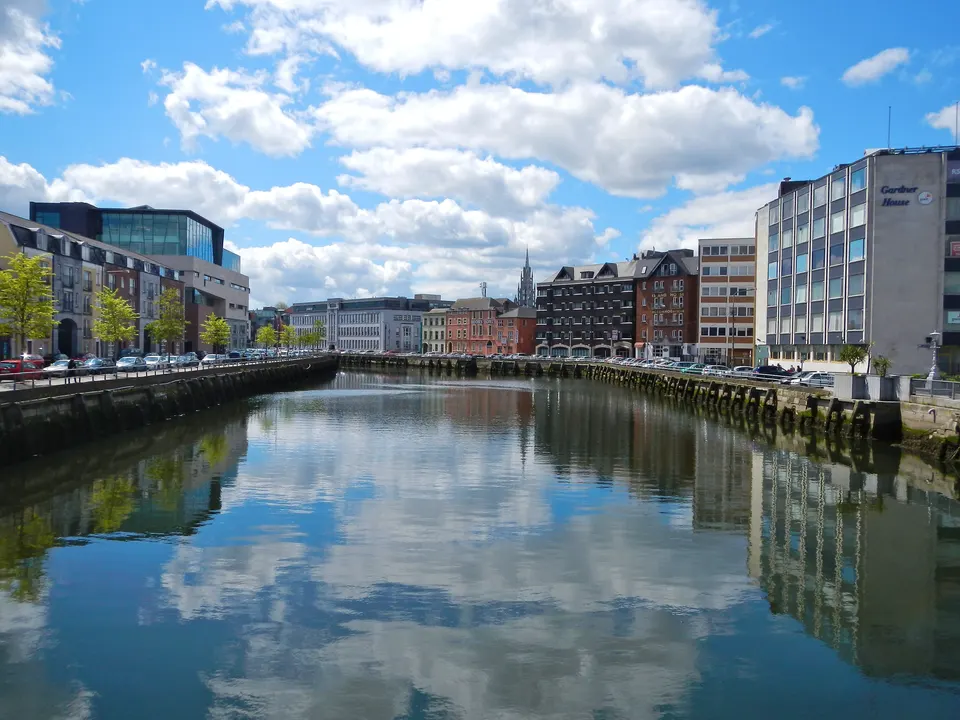

Cork is the second-largest city in the Republic of Ireland and the largest in Munster. The city centre sits on an island between two channels of the River Lee, and the river runs out to Cork Harbour, one of the world's largest natural harbours. The name comes from a word for marsh, and the place began as a monastic settlement in the sixth century before Viking traders built a port beside it.
About 224,000 people live in Cork, in Munster, Ireland, and its station is a rail hub.
Why go to Cork?
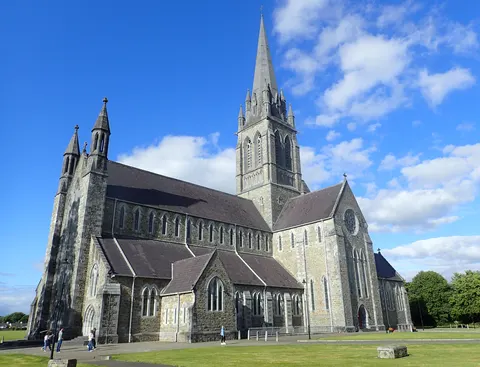
Cork has a reputation for independence, from its support for the Yorkist cause in the Wars of the Roses to the 'rebel city' nickname that goes with it. The old medieval core survives in a few streets around South and North Main Street, and the Red Abbey is the only notable medieval building left. Two cathedrals stand in the city. St Fin Barre's, built from 1862 under the architect William Burges, is possibly the better known. St Patrick's Street, the main shopping thoroughfare, bends in a curve that comes from an old river channel built over arches. The Lewis Glucksman Gallery at the university was nominated for the Stirling Prize. Music and theatre keep the city busy, with the Cork Jazz Festival and the Cork Film Festival as its big annual events.
When is the best time to visit Cork?
Expect daytime highs of about 18 °C in July and August, falling to 8 °C in January and February. For city breaks, any month of the year works.
How do I get to Cork without flying?
You can get to Cork without changing from 13 destinations, by bus or train. With changes, Cork is within 14 hours of 40 destinations without flying. From Dublin, it takes 2h 29m by train with Iarnród Éireann / Irish Rail, with about 2.2 kg of CO₂ per person against 50 kg for the flight, 96% less. Travelling from Galway, allow 3h 30m by bus with Bus Éireann; that is about 4.3 kg of CO₂ per person, 88% less than the 36 kg of a flight. Belfast is 7h 30m away by bus with Bus Éireann, with about 9.3 kg of CO₂ per person against 44 kg for the flight, 79% less.
What to do in Cork
St Anne's Church, Shandon
Its tower dominates the Northside and is widely seen as the symbol of the city, with a salmon weather vane at the top.
St Fin Barre's Cathedral
Built on the foundations of an earlier cathedral, it serves the Church of Ireland and was designed by William Burges.
Red Abbey
The only notable remnant of the city's medieval era, still standing among the modern streets.
Lewis Glucksman Gallery
The university's art gallery, opened in 2004 and nominated for the Stirling Prize.