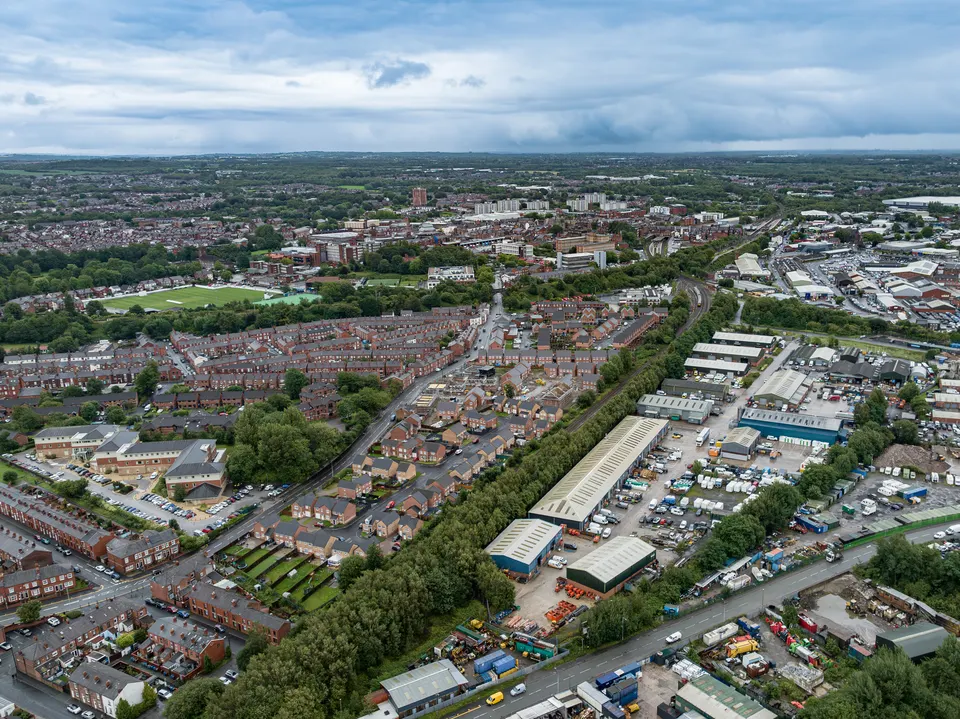

Wigan is a town in Greater Manchester, England, lying between Manchester to the south-east and Liverpool to the south-west. It is the largest settlement in the Metropolitan Borough of Wigan and the seat of its council. The town was part of the historic county of Lancashire, and its story reaches back to the Roman settlement of Coccium on the same site. Coal mining and mill work once shaped it, and the industrial past still defines much of its character.
Wigan is in England, United Kingdom, and has a population of about 175,000.
Why go to Wigan?
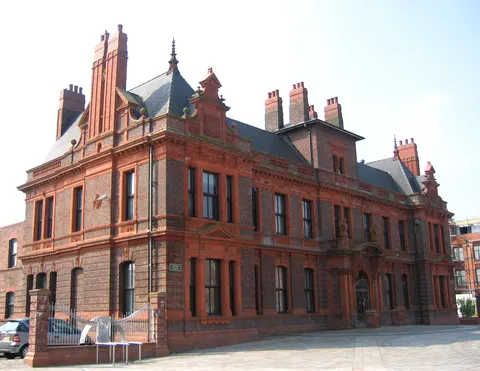
Wigan Pier is the best-known place here. It is a wharf on the Leeds and Liverpool Canal that George Orwell brought to attention in The Road to Wigan Pier, his book about the poor working and living conditions of the time. The warehouses and wharves are now a heritage centre and cultural quarter, and the Wigan Pier Theatre Company is based in the area. Trencherfield Mill still houses a restored steam engine from its days as a working mill. Mesnes Park, laid out by John McClean, has a central pavilion and a lake. The Face, a stainless steel sculpture, stands in the town centre.
When is the best time to visit Wigan?
July and August are the warmest, with highs of about 19 °C, and January, February and December are the coolest, at about 7 °C.
How do I get to Wigan without flying?
There are no direct train, bus or ferry links to Wigan yet. You can still search the trip planner for a route with changes.
What to do in Wigan
Wigan Pier
A wharf on the Leeds and Liverpool Canal, made famous by George Orwell. Its old warehouses and wharves now form a heritage centre and cultural quarter.
Trencherfield Mill
A listed mill that houses a steam engine more than a century old, restored with help from the Heritage Lottery Fund.
Mesnes Park
A park designed by John McClean, with a central pavilion and a lake. The Heritage Lottery Fund helped pay for its regeneration.
The Face
A stainless steel sculpture of a face by Rick Kirby, standing in the town centre since 2008.