
By bus
78% less CO₂Zagreb
By bus from Munich
Route
Germany → Croatia
Plan this tripPhoto: Nick Savchenko from Kiev, Ukraine, CC BY-SA 2.0, Wikimedia Commons
By bus in 7h 30m with one change, 12 kg CO₂ per person — 78% less than the flight’s 54 kg CO₂e (door to door 5h 04m).
By bus from Munich
By plane from Munich
54kg CO₂e
Per person, one way
5h04m
One way, door to door
It would take about 2 trees a full year to absorb the flight’s 54 kg CO₂e.
Only 1h04m of the 5h 04m is spent in the air.
Travel to the airport
Door to terminal
Check-in, security, boarding
Arrive early, queue, wait
Flight to Zagreb
54 kg CO₂e per trip
Travel into the city
Terminal to city centre
Arrive in Zagreb
5h04mFlight figures are CO₂e: they include the warming effect of emissions at altitude (radiative forcing). Train, bus and ferry figures are CO₂. How we calculate
By bus, you can travel from Munich to Zagreb in 7h 30m with one change in Ljubljana. The trip is run by FlixBus-eu and BlaBlaCar Bus. Per person, the trip produces about 12 kg of CO₂ against 54 kg CO₂e by air, a saving of 78%. Allow 2h 26m more than the flight, door to door.
Cheapest train or bus fare Omio lists for this trip. The price varies with the date and changes daily.
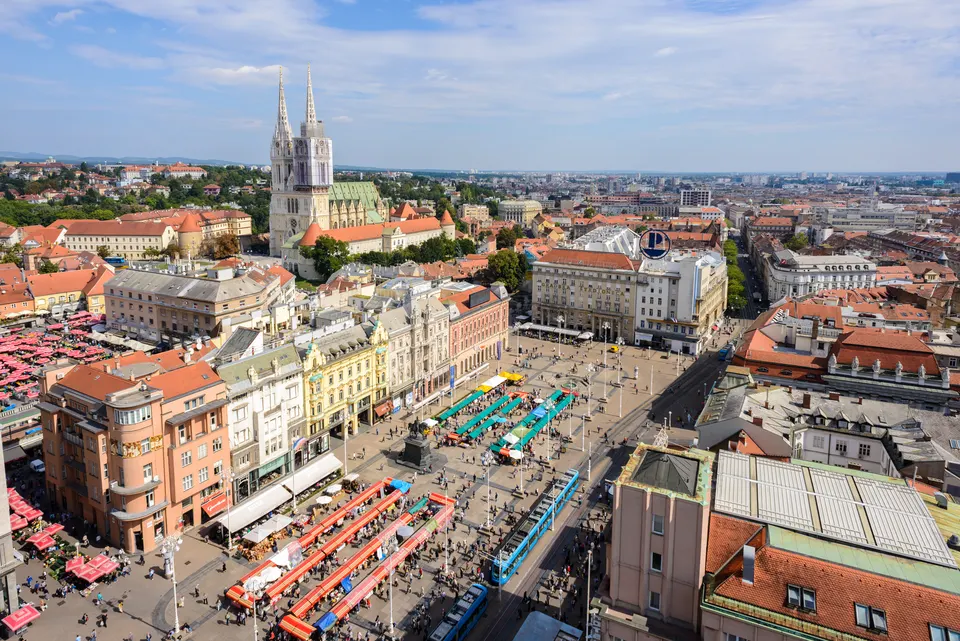
Zagreb Cathedral and the Art Pavilion in Zagreb are among the sights of the city centre. The Museum of Broken Relationships and the Mimara Museum add two more stops, and the Basilica of the Heart of Jesus is a named church. The city stands on the Sava River, on the southern slopes of the Medvednica mountain. Coming from Munich, the capital of Bavaria, you travel south-east towards Croatia, reaching a capital city of its own. The Croatian Museum of Contemporary Art is the last named stop on the route through town.
Plan city breaks in Zagreb for April, May and October, when April reaches about 16 °C.
Going the other way? The figures here are for Munich to Zagreb; the trip planner searches Zagreb to Munich just as well, for your own dates.