By Thomas AxelssonPublished Updated 5 min read
July turns 555 destinations in Sustainate's route data into proper beach weather, and eight of them are worth a closer look here. At five the July high is 26 °C, Marseille edges ahead at 27 °C, and Cassis and Monaco sit at 25 °C. The wider list of beach destinations in July has the rest.
Where can you go for beach trips by train in July?
Start with the shortlist. The table shows each destination's July high and how many direct links it has. Those links mix bus, ferry and train, so the sections below take the modes one at a time.
| Destination | July high | direct links |
|---|---|---|
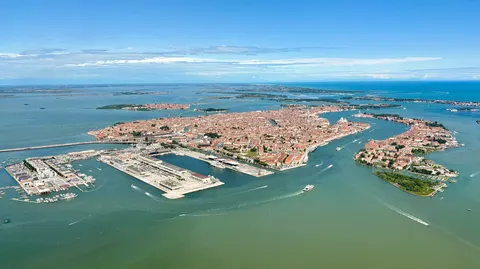
| Venice, Italy | 26 °C | 17 |
| Genoa, Italy | 26 °C | 36 |
| Barcelona, Spain | 26 °C | 38 |
| Marseille, France | 27 °C | 34 |
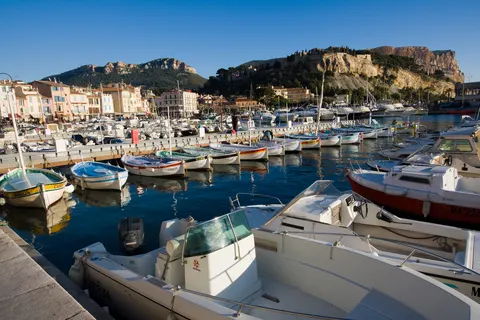
| Cassis, France | 25 °C | 3 |
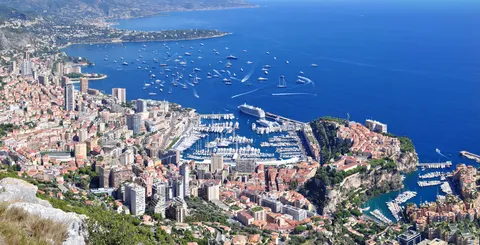
| Monaco, Monaco | 25 °C | 11 |
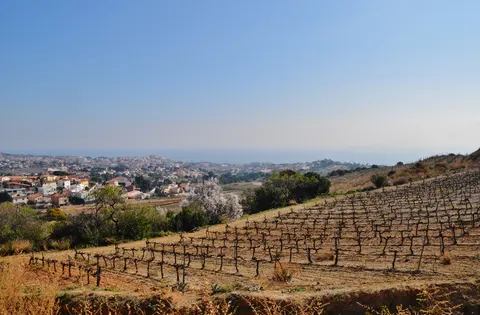
| Alella, Spain | 26 °C | 1 |
| Istanbul, Turkey | 26 °C | 13 |
Barcelona is the best connected, with 38 direct links: trains to Paris and Madrid, and a ferry to Ibiza. Genoa follows with 36 and Marseille with 34. Alella sits at the other extreme. Its only link is a 30-minute train to Barcelona, so your whole trip hangs on that one leg. If the line is disrupted, there is no second route to fall back on.
What is the weather like in July?
July is the warmest month at Venice, Genoa, Barcelona and Alella, which share it with August at 26 °C, and at Marseille, which tops out at 27 °C. Monaco is level between July and August at 25 °C. Cassis and Istanbul are the exceptions: both peak in August, Cassis at 26 °C and Istanbul at 27 °C, so July is a touch cooler there.
Pack for the month rather than the postcard, because winters here differ a lot. A beach town that feels like summer in July can be a different place entirely in the colder months. In January the average high is 7 °C at Venice, 8 °C at Istanbul, 10 °C at Genoa and 11 °C at Marseille, Cassis and Monaco. Barcelona and Alella are the mildest, at 12 °C.
Which of these places is easiest to reach by train?
Marseille is the strongest base. From there, 887 destinations lie within eight hours and 2,085 within fourteen hours, the highest eight-hour count of the group. Paris is 3h 04m away by train and Barcelona 4h 30m.
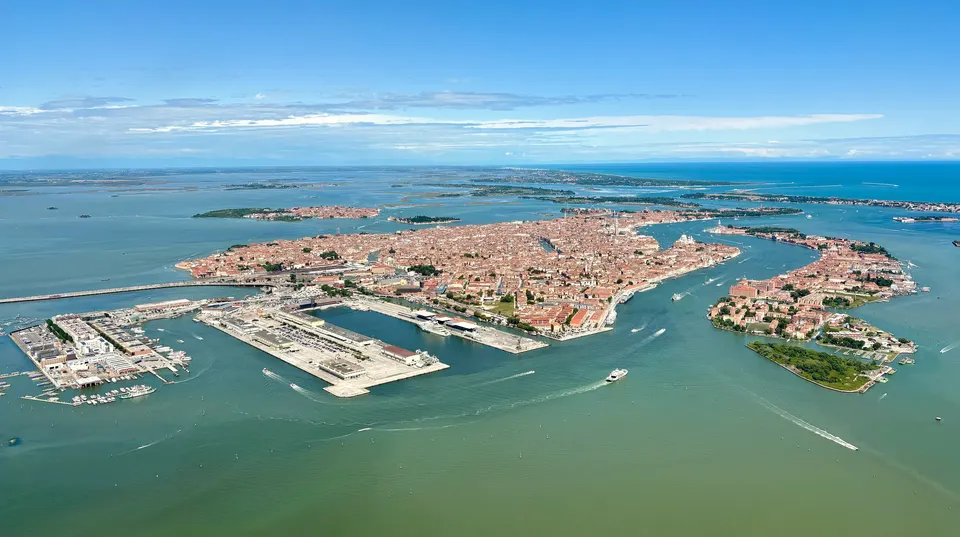
Venice comes next, with 697 destinations within eight hours and 2,160 within fourteen. Trains reach Bologna in 1h 30m and Milan in 2h 30m, and Vienna is 7h 30m away, which gives you quick rail routes pointing in three directions. Genoa is close behind on reach, at 691 destinations within eight hours and 2,067 within fourteen, though its longest links in the data are buses.
Cassis is small but well placed. It reaches 738 destinations within eight hours, on the strength of Marseille next door. Aubagne and Ceyreste are 6 minutes away by train, and the bus to Marseille takes 1h 00m. Monaco is a short hop from its neighbours: Menton is 12 minutes away, Nice 17 minutes and Sanremo 1h 00m.
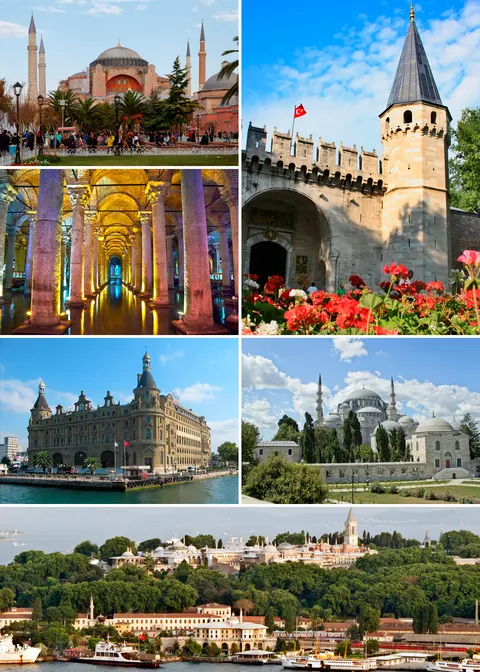
Istanbul has the thinnest reach of the eight, at 63 destinations within eight hours and 158 within fourteen. Ankara is 4h 30m away by train, Sofia 10h 00m and Bucharest 18h 00m, so the wider network means a long day or more. For a beach week with a few day trips, that argues for treating Istanbul as a destination in itself rather than a stopover.
How much CO₂ does going by train save?
Several legs here can be set against a flight, and the savings are large. The train is lower in every comparison, often by a wide margin. Marseille to Paris by train emits 1.7 kg of CO₂ against 151 kg in the air, a saving of 99%. Barcelona to Madrid emits 4.8 kg against 116 kg, saving 96%, and Venice to Milan emits 3 kg against 56 kg, saving 95%.
Other savings are more modest. Venice to Vienna by train emits 10 kg against 56 kg, a saving of 82%. Istanbul to Sofia saves 82% too, at 12 kg against 65 kg. Istanbul to Bucharest is the smallest saving of the flight comparisons, at 61%, with 22 kg against 57 kg.
Short hops barely register. The train from Monaco to Menton emits 0.1 kg over 7 km, and Alella to Barcelona emits 0.2 kg over 16 km. Buses cost a little more, though still very little next to a flight: Cassis to Marseille emits 0.4 kg over 16 km, and Genoa to Siena emits 6.1 kg over 226 km, against 52 kg for the flight.
What else is worth knowing before you go?
Three of these destinations offer a night option. Venice to Vienna by night train takes 9h 30m and emits 12 kg of CO₂, against 7h 30m and 10 kg by day. Istanbul to Sofia takes 11h 00m and emits 15 kg overnight, against 10h 00m and 12 kg by day, and Istanbul to Bucharest takes 19h 00m at 25 kg, against 18h 00m and 22 kg. Marseille to Paris has a night option of 9h 24m.
Genoa runs its longer links on buses. Siena is 4h 00m away, Rome 6h 00m and Munich 9h 10m, so build the day around the bus times rather than a rail timetable.
Barcelona suits a mix of train and ferry. The train to Madrid takes 3h 02m, the ferry reaches Ibiza in 8h 30m with Balearia, and from Barcelona you can reach 312 destinations within eight hours and 1,681 within fourteen.
Marseille has a bus to Dijon that takes 7h 40m and emits 12 kg of CO₂, saving 88% against the 103 kg flight. Check the times for your date, and allow time for any change on a route with more than one leg. The details here come from Sustainate's route data and may differ from the live timetable on the day. The method behind the CO₂ figures is on how Sustainate calculates CO₂.