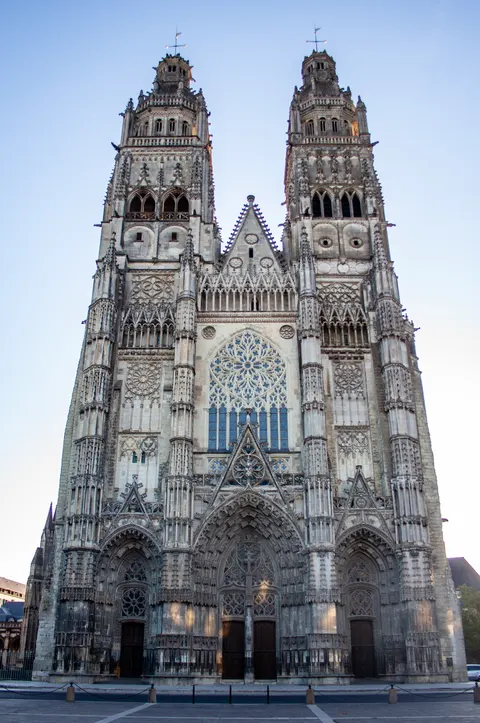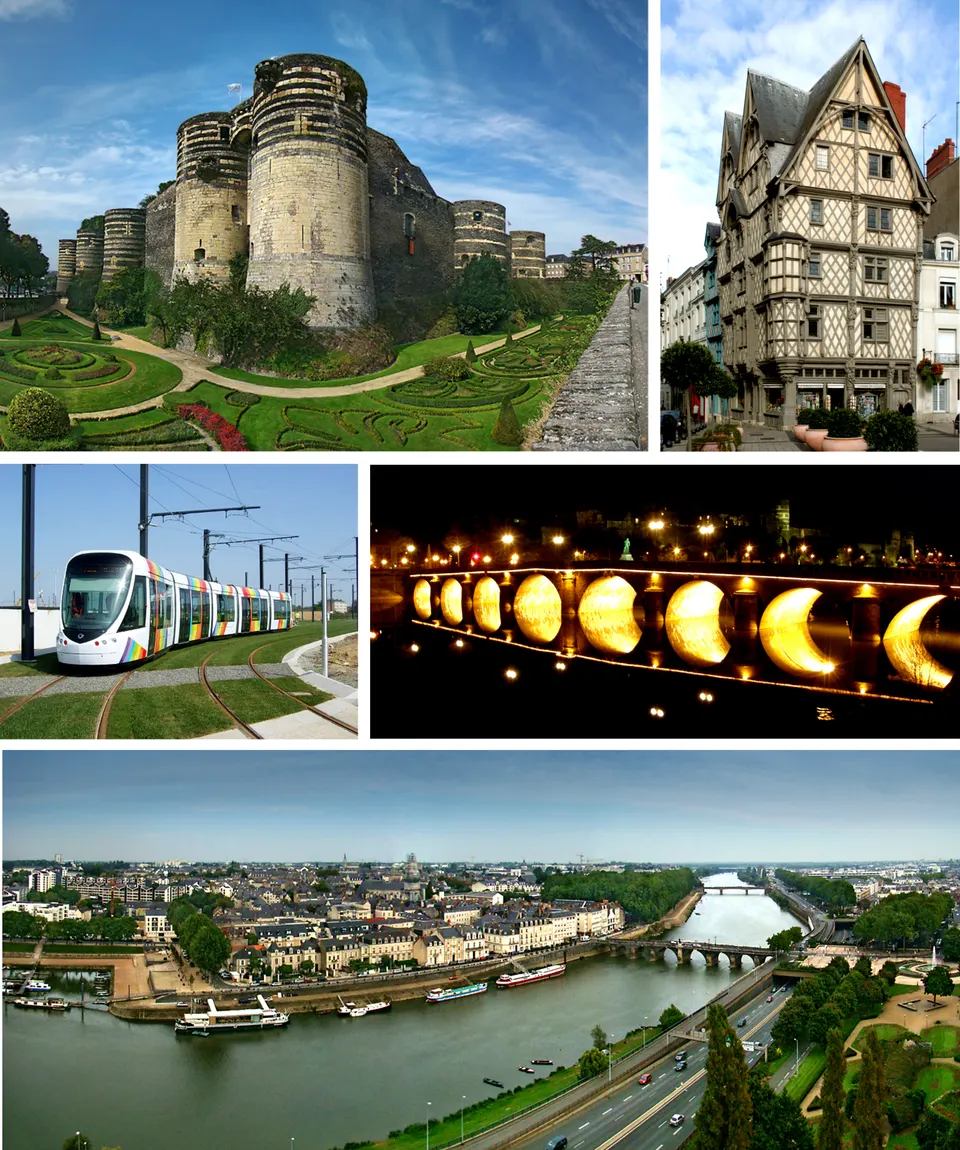

Angers is a city in western France, about 300 km southwest of Paris, and the former capital of the province of Anjou. It grew where three rivers meet and was the cradle of the Plantagenet dynasty. The old centre is dominated by a massive medieval castle. Today the city's economy leans on plants: Vegepolys, Europe's leading horticultural cluster, is based here, along with the headquarters of the Community Plant Variety Office.
Angers is in Pays de la Loire, France, and has a population of about 168,000; it is also a rail hub.
Why go to Angers?
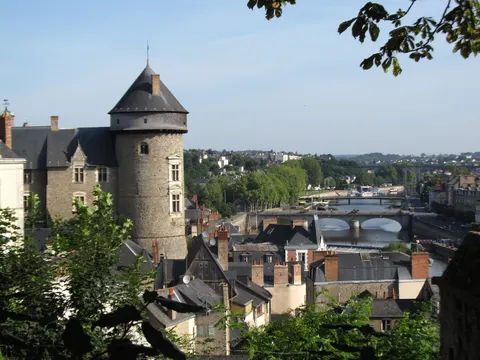
Angers is a good stop for castles and tapestries. The Chateau d'Angers, built on a schist promontory above the river Maine, has walls punctuated by towers and striped with tuff and schist. Inside, the Apocalypse Tapestry, the largest medieval tapestry in the world, hangs in its own gallery. Across the city, the Maison d'Adam, a half-timbered house from the Middle Ages, stands behind the cathedral, whose twin spires were finished in the early 16th century. The Musee des Beaux-Arts holds paintings from the 18th century.
When is the best time to visit Angers?
July and August are the warmest, with highs of about 24 °C, and January and December are the coolest, at about 8 °C. Any month suits city breaks.
How do I get to Angers without flying?
From 14 destinations you can travel to Angers directly by bus or train. Counting connections, 2,116 destinations can reach it within 14 hours without flying. Travelling from Paris, allow 1h 22m by train with SNCF VOYAGEURS; that is about 0.7 kg of CO₂ per person, 99% less than the 61 kg of a flight. From Nantes, it takes 37 min by train with SNCF VOYAGEURS, with about 0.2 kg of CO₂ per person. The bus from Rennes with BlaBlaCar Bus takes 1h 50m; that is about 3 kg of CO₂ per person.
What to do in Angers
Chateau d'Angers
The castle built by Louis IX of France on an older site, with walls striped in tuff and schist and home to the Apocalypse Tapestry.
Angers Cathedral
Its two spires dominate the city's skyline, and its Angevin Gothic style spread across western France.
Maison d'Adam
A half-timbered medieval house behind the cathedral, the kind of house that once lined the streets around the castle.
Musee Jean-Lurcat et de la tapisserie contemporaine
Housed in the old Hopital Saint-Jean, it shows tapestries from the 19th and 20th centuries, including the Chant du Monde.
Find tours and tickets: Musee Jean-Lurcat et de la tapisserie contemporaine