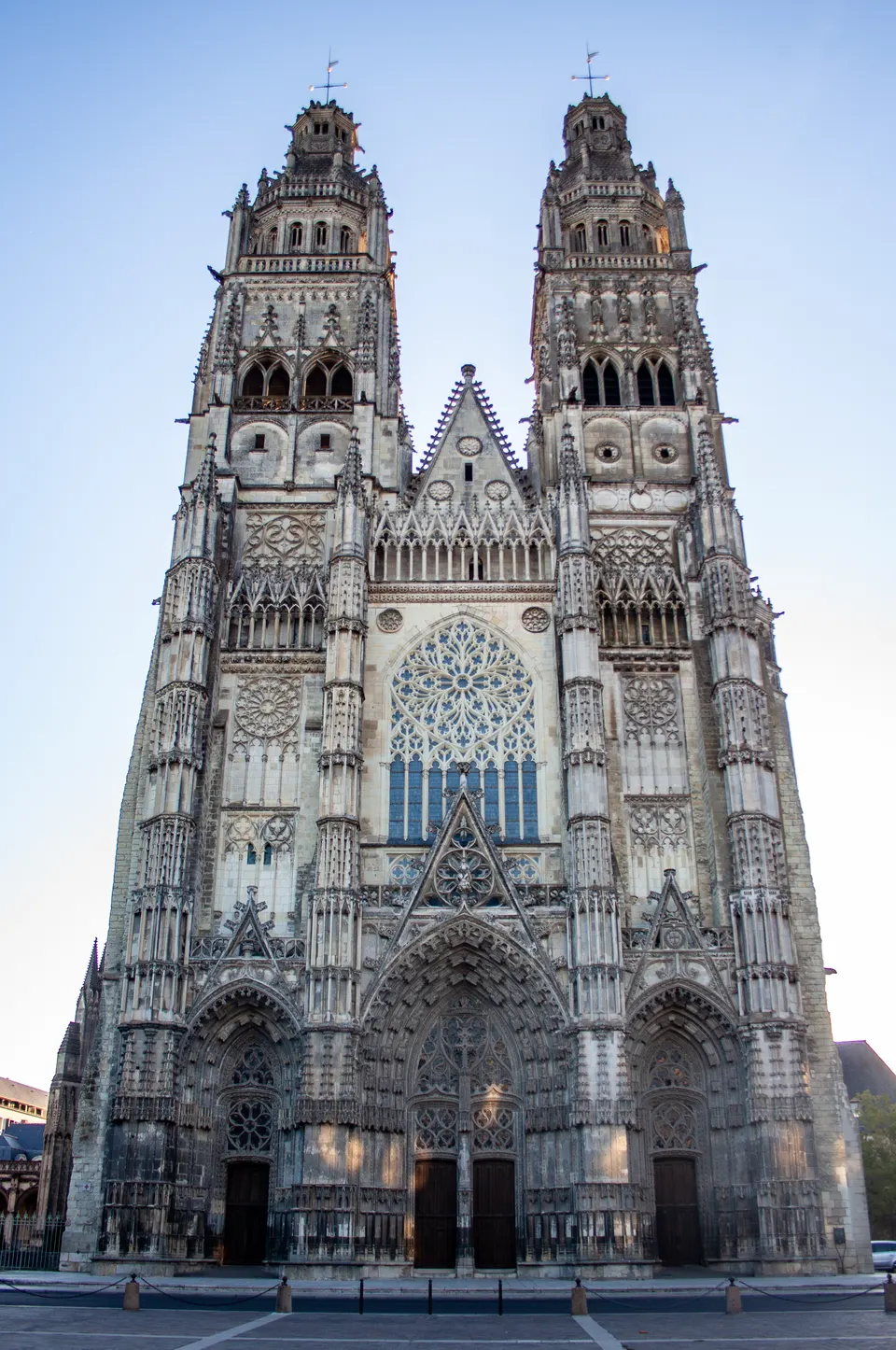

Tours is the prefecture of the Indre-et-Loire department, in the Centre-Val de Loire region, and its centre is easy to explore on foot. Start at the Tours Cathedral, then wander the streets toward the château de Tours and the older churches that give the old quarters their character. The city's pace is steady and friendly, with cafés on the squares and gardens within easy reach.
About 142,000 people live in Tours, in Centre-Val de Loire, France, and its station is a rail hub.
Why go to Tours?
Tours suits a relaxed city stay with churches, museums and a few good gardens. The Tours Cathedral is a fine start, and the Église Saint-Julien de Tours and the Église Notre-Dame-la-Riche are close by. The château de Tours and the Musée des Beaux-Arts de Tours give you history and paintings in one visit. The Jardin botanique de Tours offers green space for a slow afternoon. The Chapelle Saint-Libert de Tours is a smaller stop, and the Musée du compagnonnage explores the craft traditions of the city. Walk the lanes between the churches and let the day unfold without a fixed plan.
When is the best time to visit Tours?
Expect daytime highs of about 25 °C in August, falling to 8 °C in January and December. For city breaks, any month of the year works.
How do I get to Tours without flying?
You can get to Tours without changing from 10 destinations, by bus or train. With changes, Tours is within 14 hours of 2,134 destinations without flying. From Paris, it takes 1h 13m by train with SNCF VOYAGEURS, with about 0.5 kg of CO₂ per person against 47 kg for the flight, 99% less. Travelling from Bordeaux, allow 4h 10m by bus with BlaBlaCar Bus; that is about 8.1 kg of CO₂ per person, 88% less than the 69 kg of a flight. Angers is 53 min away by train with SNCF VOYAGEURS, with about 0.2 kg of CO₂ per person.
What to do in Tours
Tours Cathedral
Tours Cathedral is the main church of the city, with a calm interior that rewards a slow look. Step inside, then walk on toward the château de Tours.
château de Tours
The château de Tours is a castle with walls and grounds that give a sense of the city's long past. Allow an hour and walk along the outer walls for views.
Musée des Beaux-Arts de Tours
The Musée des Beaux-Arts de Tours holds paintings and sculpture in a series of rooms that suit a slow visit. Pair it with a stroll to the nearby churches.
Musée du compagnonnage
The Musée du compagnonnage shows the craft traditions that shaped the trades of the city. It makes a surprising stop between the bigger churches and museums.