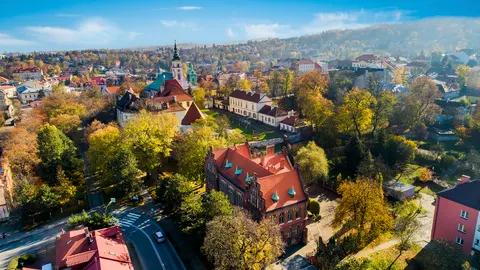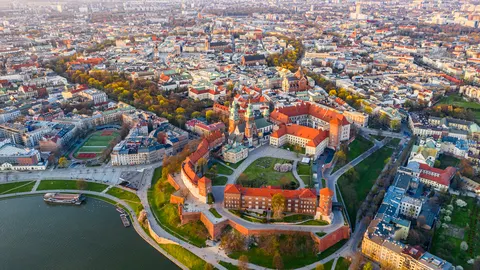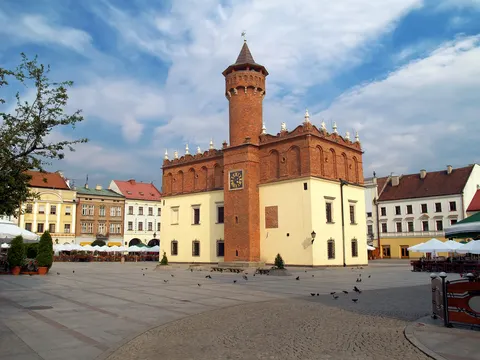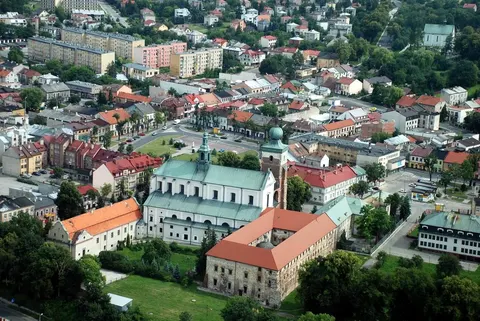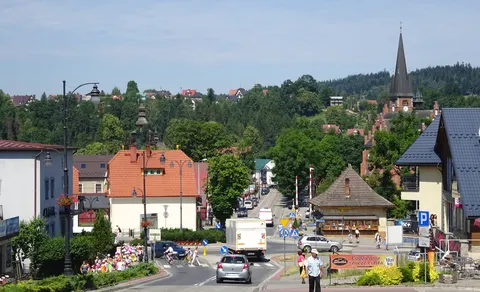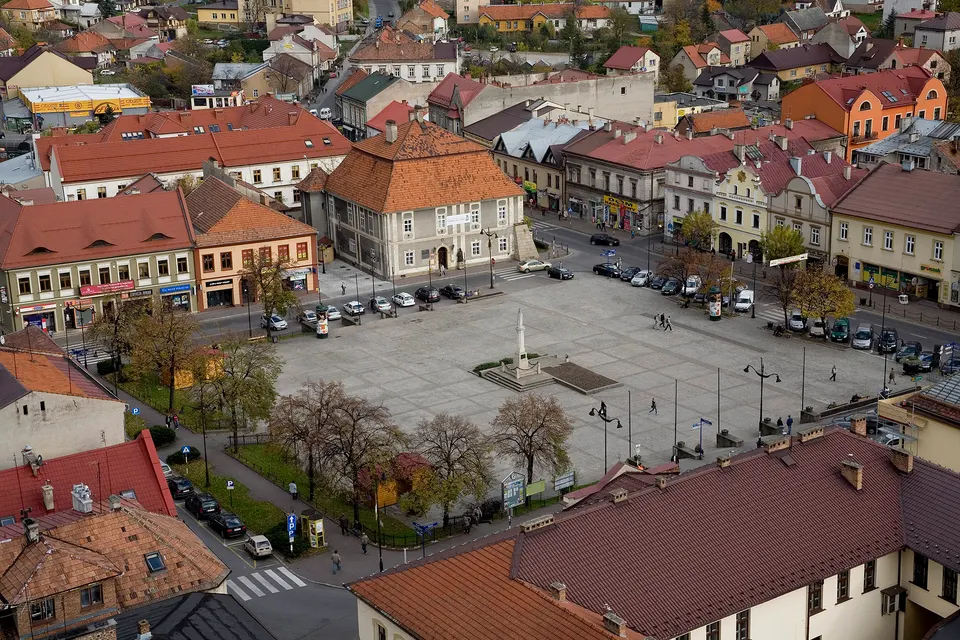

Bochnia is a town on the river Raba in southern Poland and the seat of Bochnia County in the Lesser Poland Voivodeship. It is one of the oldest towns in the region, and it grew up around its rock salt deposits, which led to the grant of city rights. The salt mine is the oldest one still functioning in Europe, and it is a World Heritage Site and a Historic Monument of Poland.
Bochnia, in Lesser Poland, Poland, is home to about 29,000 people and works as a rail hub.
Why go to Bochnia?
The salt mine is the reason most people come to Bochnia, a working mine recognised as a World Heritage Site and a Historic Monument of Poland. The St. Nicholas Basilica, with a late Gothic structure and a Baroque and Rococo interior, stands in the town. The Stanisław Fischer Museum is housed in a former Dominican monastery of Baroque design. The Art Nouveau railway station reflects the town's recovery, which was spurred by the Galician Railway. The town has a population of around 29,000.
When is the best time to visit Bochnia?
In July and August the average high reaches 23 °C; in January it is closer to 1 °C. For city breaks, go in May, June and September.
How do I get to Bochnia without flying?
Bochnia has direct train links to 3 destinations. Within 14 hours, travellers from 1,140 destinations can get here without flying. The train from Krakow with PKP Intercity takes 21 min; that is about 1.2 kg of CO₂ per person. Tarnów is 17 min away by train with PKP Intercity, with about 1.3 kg of CO₂ per person. Travelling from Wieliczka, allow 18 min by train with Polregio; that is about 0.9 kg of CO₂ per person.
What to do in Bochnia
Basilica of Saint Nicholas in Bochnia
A church in Bochnia.
Find tours and tickets: Basilica of Saint Nicholas in Bochnia
City breaks in Bochnia
May is the ideal month for city breaks, with average highs of 19 °C.
Travel on from Bochnia
Direct links run to Krakow, Tarnów and Wieliczka.