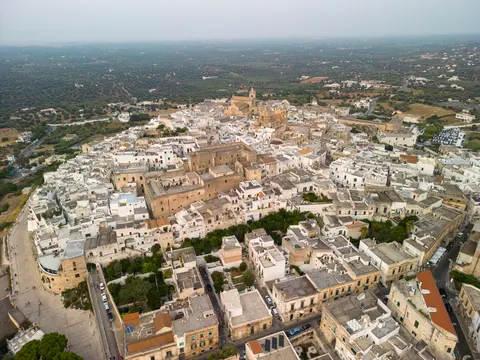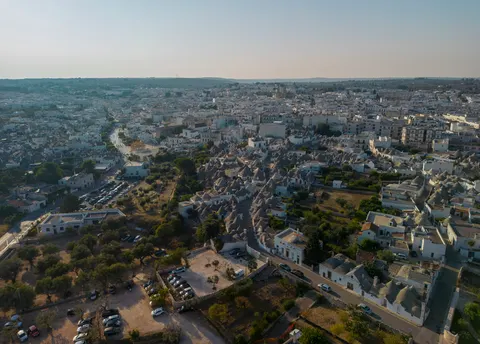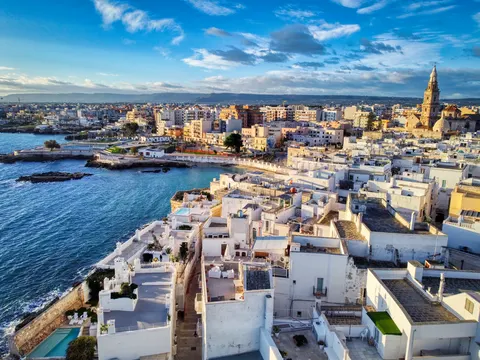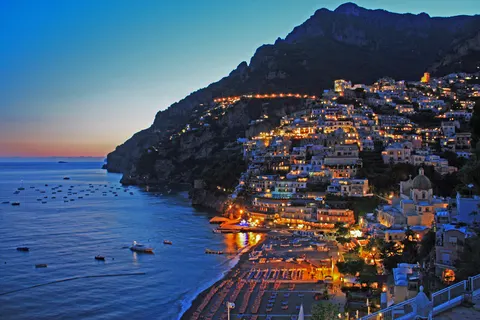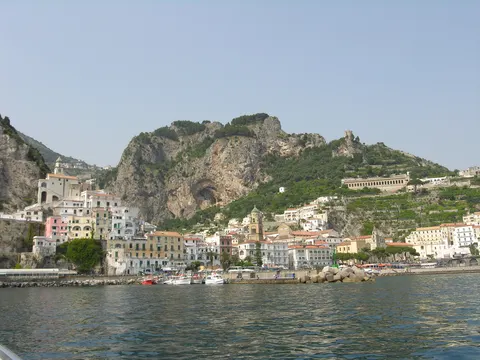

Brindisi is a city in the region of Apulia in southern Italy and the capital of the province of Brindisi, on the Adriatic coast. Its natural harbour penetrates deeply into the coast, and the city has long played an essential role in trade and culture. It remains a major port for trade with the Balkans, Greece and the Middle East, and from September 1943 to February 1944 it was the provisional seat of the Kingdom of Italy's government.
Brindisi is in Apulia, Italy, and has a population of about 87,000; it is also a rail hub.
Why go to Brindisi?
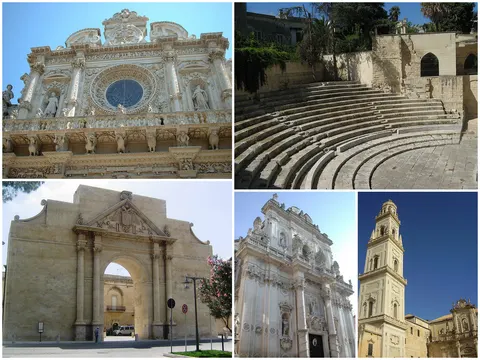
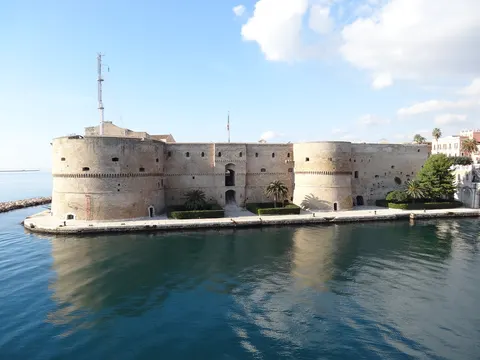
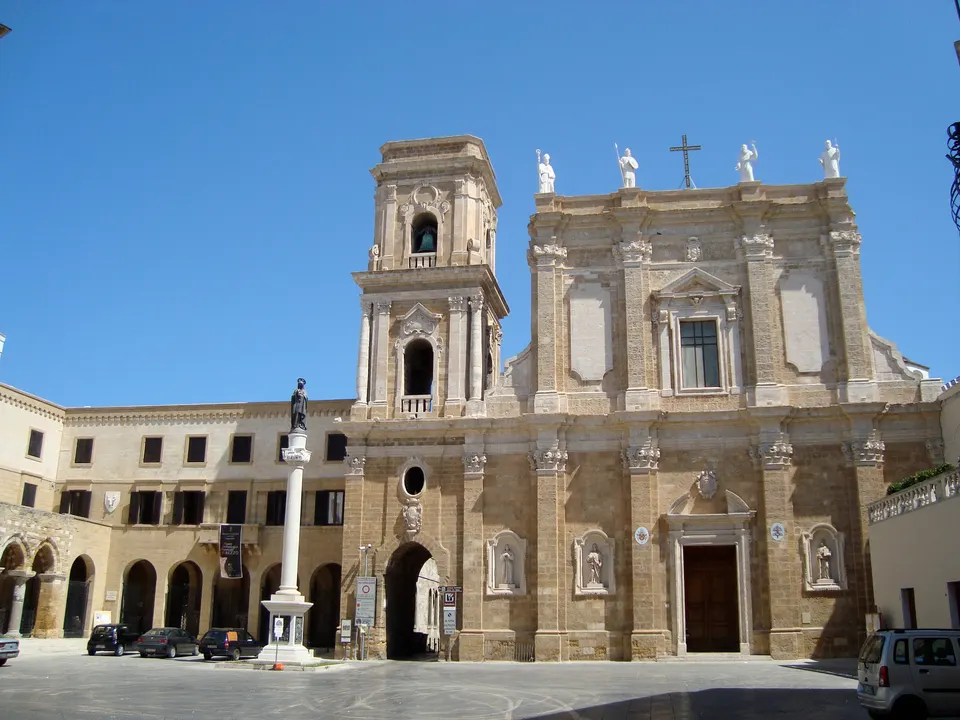
Brindisi's history can be read in its monuments. The Castello Svevo was built by Emperor Frederick II, and the Aragonese Castle on the island of S. Andrea was built by King Ferdinand I of Naples. A Roman column still stands in the city, and mariners used it as a port reference. The Romanesque Duomo and the Gothic-Romanesque church of Santa Maria del Casale show the city's medieval artistry. The coast north of town has many large dunes and beaches.
When is the best time to visit Brindisi?
July and August are the warmest, with highs of about 30 °C, and January is the coolest, at about 12 °C. For beach holidays, go in May, June and September. Any month suits city breaks.
How do I get to Brindisi without flying?
From 10 destinations you can travel to Brindisi directly by bus or train. Counting connections, 472 destinations can reach it within 14 hours without flying. Travelling from Lecce, allow 20 min by train with altoadigemobilità; that is about 0.5 kg of CO₂ per person. From Polignano a Mare, it takes 1h 04m by bus with FlixBus-eu, with about 2 kg of CO₂ per person. The bus from Naples with FlixBus-eu takes 4h 56m; that is about 8.4 kg of CO₂ per person, 88% less than the 71 kg of a flight.
What to do in Brindisi
Castello Svevo
Built by Emperor Frederick II, with a trapezoid plan and massive square towers. It was turned into a prison in the 19th century and later housed the Italian Navy.
Aragonese Castle
Known as the Forte a Mare, it stands on the island facing the port. It is divided into the Red Castle and the more recent fort.
Roman column
One of two ancient Roman pillars, once thought to mark the end of the Appian Way. The surviving one was used as a port reference by ancient mariners.
Santa Maria del Casale
A late 13th-century church with a Last Judgement fresco inside its counter-façade by Rinaldo da Taranto. The frescoes are in late-Byzantine style.