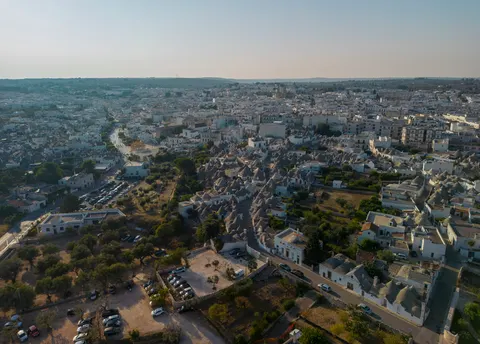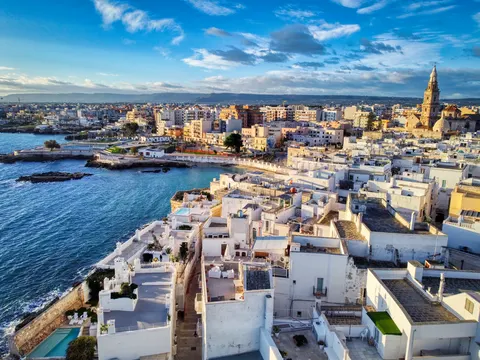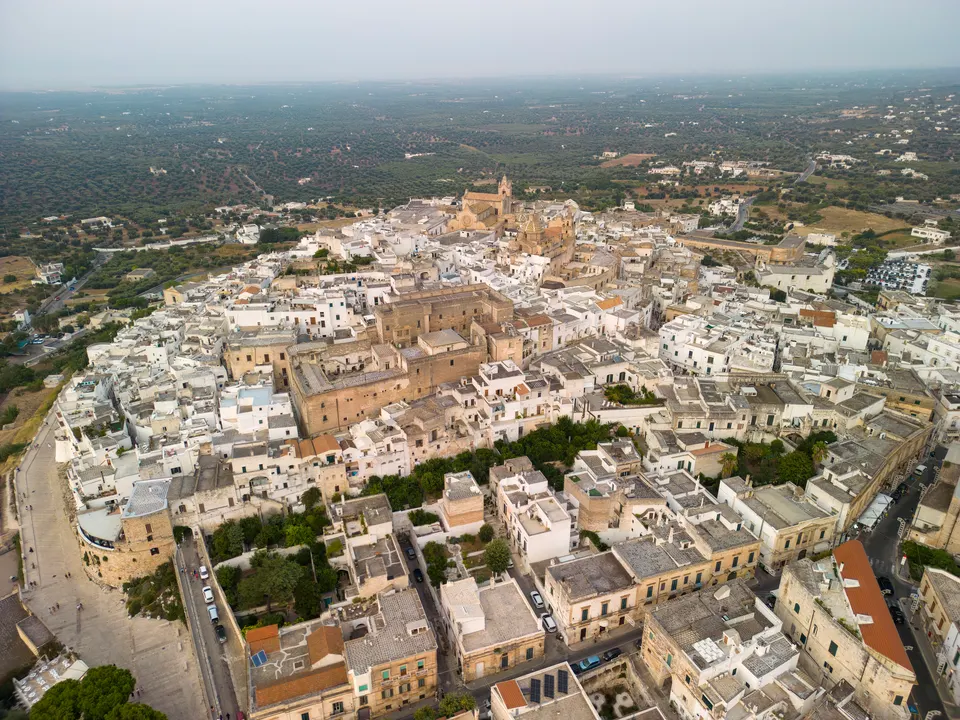

Ostuni is a city in Apulia in southern Italy, in the province of Brindisi, about 8 kilometres from the coast. Its old town is a citadel on top of a hill, still ringed by ancient walls, and the whole town is known as the White Town for its whitewashed architecture. The region around it is known for high-quality olive oil and wine, and the town has long been among the main destinations for visitors to Apulia.
Ostuni is in Apulia, Italy, and has a population of about 24,000.
Why go to Ostuni?
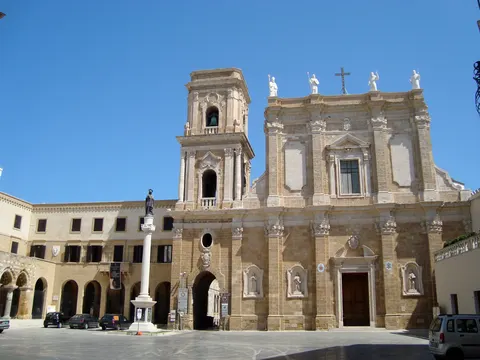
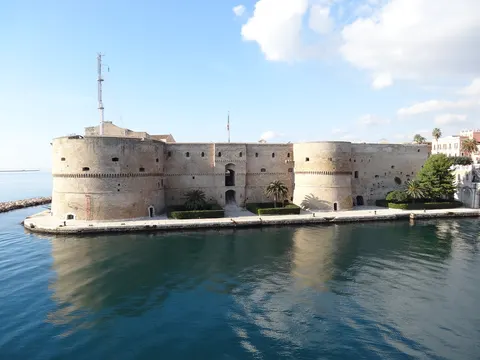
Ostuni is worth the climb for its historic centre, a fortified citadel with white walls and white-painted buildings that give the town its nickname, La Città Bianca. Its largest buildings are the cathedral and the Bishop's Palace, alongside palazzi built by local aristocratic families. Under Isabella, Duchess of Bari, the town thrived during the Italian Renaissance and protected humanists and people of art and letters. Her daughter Bona Sforza kept the town stable and had defensive towers built along the shore, and some still stand. In the countryside around the town, fortified estate-farms called masserie are typical of the region, and one of them, San Domenico, was once held by the Knights of Malta.
When is the best time to visit Ostuni?
July and August are the warmest, with highs of about 27 °C, and January and February are the coolest, at about 11 °C.
How do I get to Ostuni without flying?
From 2 destinations you can travel to Ostuni directly by train. Counting connections, 431 destinations can reach it within 14 hours without flying. Travelling from Brindisi, allow 20 min by train with altoadigemobilità; that is about 0.4 kg of CO₂ per person. From Monopoli, it takes 22 min by train with altoadigemobilità, with about 0.4 kg of CO₂ per person.
What to do in Ostuni
Old Town
The fortified citadel on the hilltop, ringed by ancient walls and white-painted throughout, is the heart of the town.
Ostuni Cathedral
One of the town's largest buildings, and a monument in its own right.
Bishop's Palace
One of the largest buildings in the town, standing alongside the cathedral.
Pozzella Tower
One of the defensive towers built along the shoreline under Bona Sforza, which were garrisoned and once used fiery beacons to send warnings.