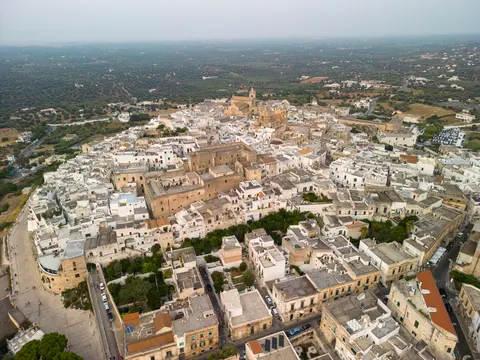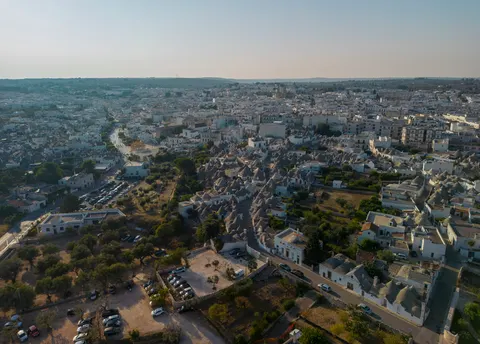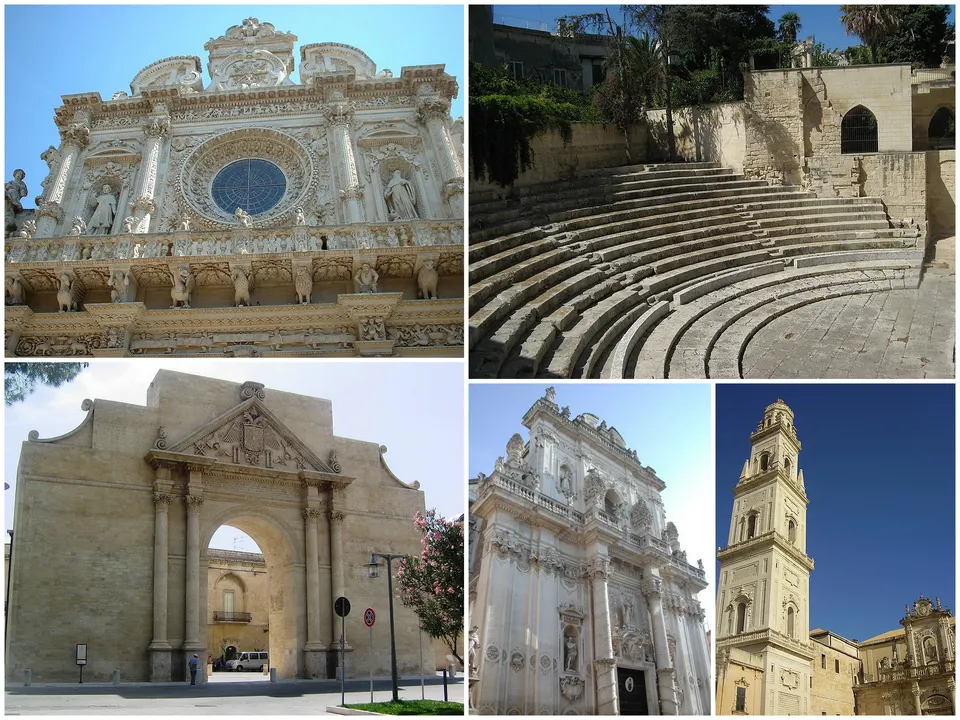

Lecce is set on the Salentine Peninsula, near the tip of the Italian boot, and it is the capital of its province in Apulia. The city's churches and palaces fill the old centre, from the Lecce Cathedral to the Basilica di Santa Croce. The stone of the old centre gives the streets a warm, even look. The old centre is compact, so its stops sit close together.
Lecce, in Apulia, Italy, is home to about 81,000 people and works as a rail hub.
Why go to Lecce?
Lecce suits a City & Culture trip with a dense group of churches and palaces. The Lecce Cathedral and the Basilica di Santa Croce are the big church stops, and the Chiesa del Gesù adds another interior. San Giovanni Battista, San Matteo, Sant’Irene and Santa Chiara complete the set of smaller churches. The Palazzo dei Celestini and the Seminary Palace in Lecce are palace stops, and the Castle of Charles V gives the walk a fortified note. The mix of church and palace keeps the walk varied from one street to the next. Each stop is easy to reach on foot.
When is the best time to visit Lecce?
In July and August the average high reaches 31 °C; in January it is closer to 12 °C. Any month suits city breaks.
How do I get to Lecce without flying?
Lecce has direct bus or train links to 5 destinations. Within 14 hours, travellers from 415 destinations can get here without flying. The bus from Otranto with Sita takes 1h 00m; that is about 0.9 kg of CO₂ per person. Bari is 1h 30m away by train with Trenitalia, with about 2 kg of CO₂ per person. Travelling from Brindisi, allow 20 min by train with altoadigemobilità; that is about 0.5 kg of CO₂ per person.
What to do in Lecce
Lecce Cathedral
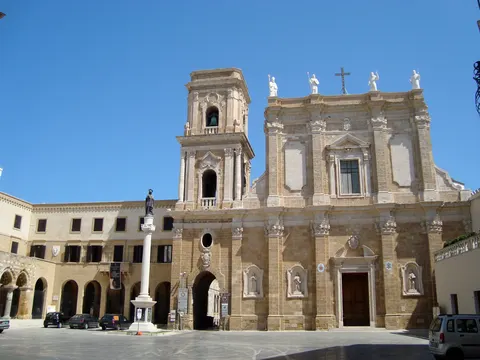
The cathedral sits in the heart of the old centre, and its facade is a good place to start the walk.
Basilica di Santa Croce
The basilica is one of the church stops in town, and its interior rewards a slow look. Its facade and the stone around it give the old centre a warm tone.
Palazzo dei Celestini
The Palazzo dei Celestini is a palace stop in the centre, a building with a long history of its own.
Castle of Charles V
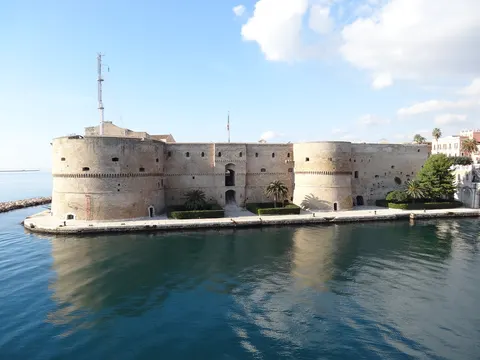
The Castle of Charles V is the castle of the town, and its walls give the walk a sense of the town's defences.
Chiesa del Gesù
The Chiesa del Gesù is a church stop among the smaller churches, and it is an easy addition to the walk.