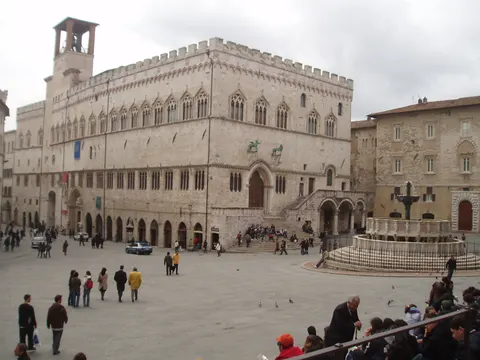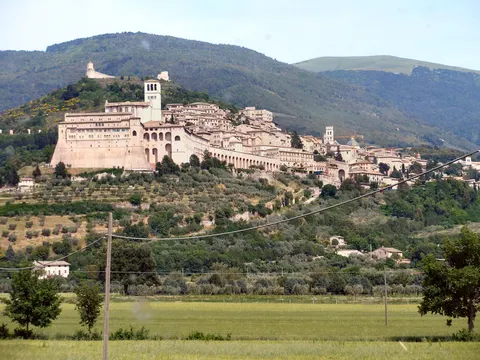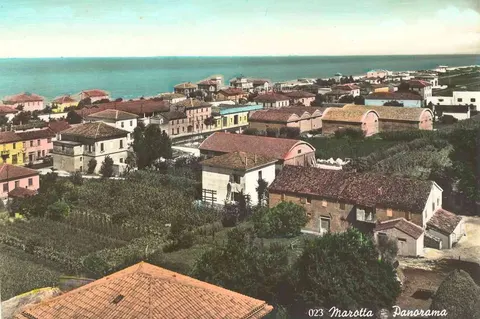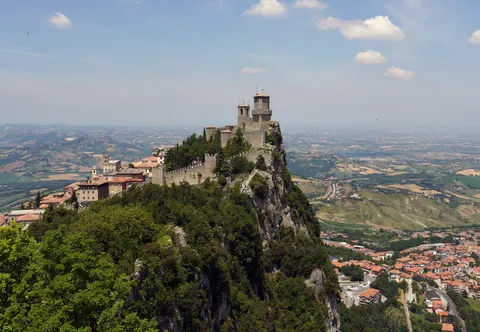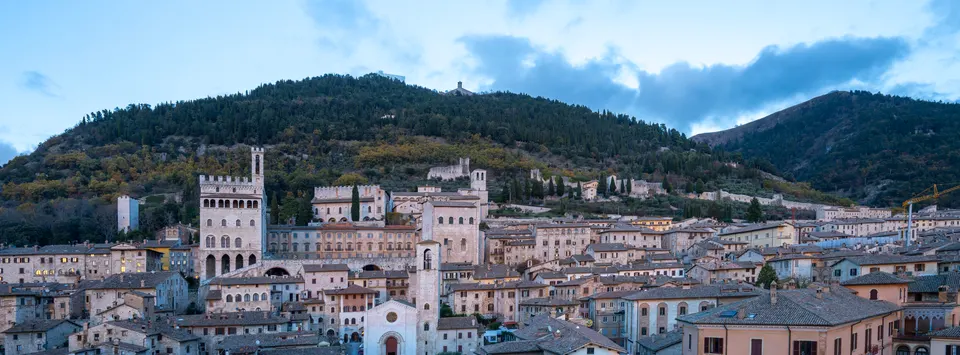

Gubbio is a town and municipality in the northeastern part of the province of Perugia, in the Italian region of Umbria. It sits on the lowest slope of Monte Ingino, a small mountain of the Apennines. The Gubbio valley runs on a northwest-to-southeast axis, close to the Marche to the east and Tuscany to the west. With around 30,000 inhabitants, it is the sixth-largest municipality in Umbria.
Gubbio is in Umbria, Italy, and has a population of about 14,000.
Why go to Gubbio?
Gubbio sits in an upland valley where the landscape has shaped its history. Two streams, the Assino and the Chiascio, run through the valley in opposite directions, and both eventually reach the Tiber. A steep limestone escarpment bounds the basin to the northeast. The river Camignano nearly divides the town in two, and several bridges join the two halves. The city has long had close political and cultural ties to both Marche and Tuscany, since it lies in the transitional area between them. Human presence here goes back to the Middle Palaeolithic, and the excavated site of San Marco, east of town, holds a ditch with almost-intact ceramic vessels that may be a ritual deposit.
When is the best time to visit Gubbio?
July and August are the warmest, with highs of about 27 °C, and January is the coolest, at about 7 °C.
How do I get to Gubbio without flying?
Gubbio has one direct link, by bus. Counting connections, 1,189 destinations can reach it within 14 hours without flying. Travelling from Perugia, allow 1h 06m by bus with Busitalia; that is about 0.8 kg of CO₂ per person.
What to do in Gubbio
Monte Cucco
A mountain a few miles from Gubbio that contains notable caves.