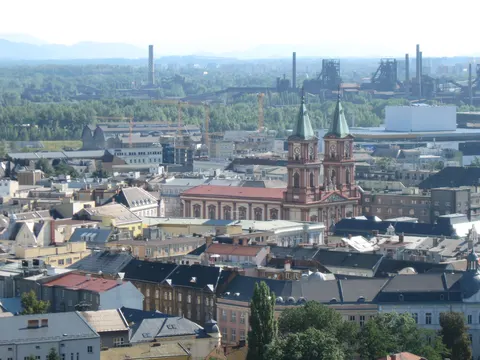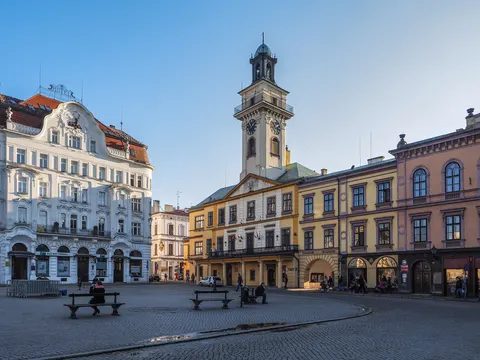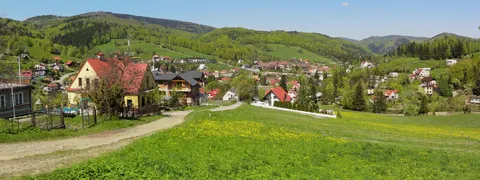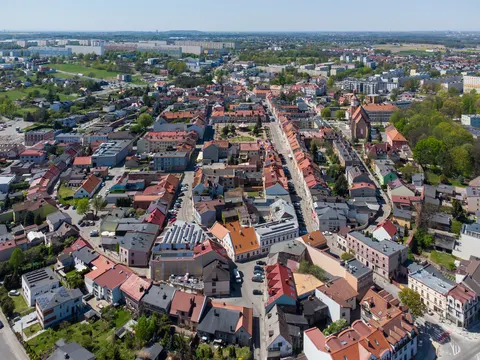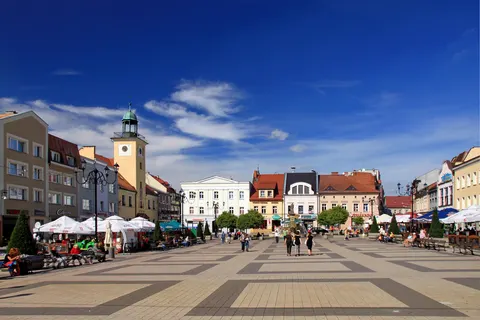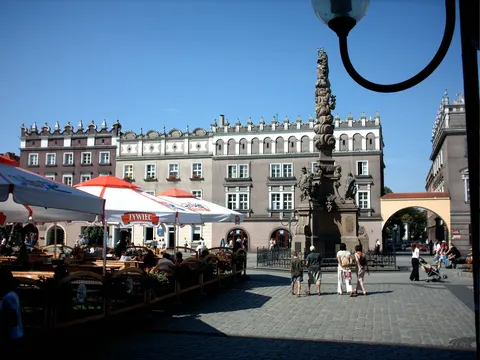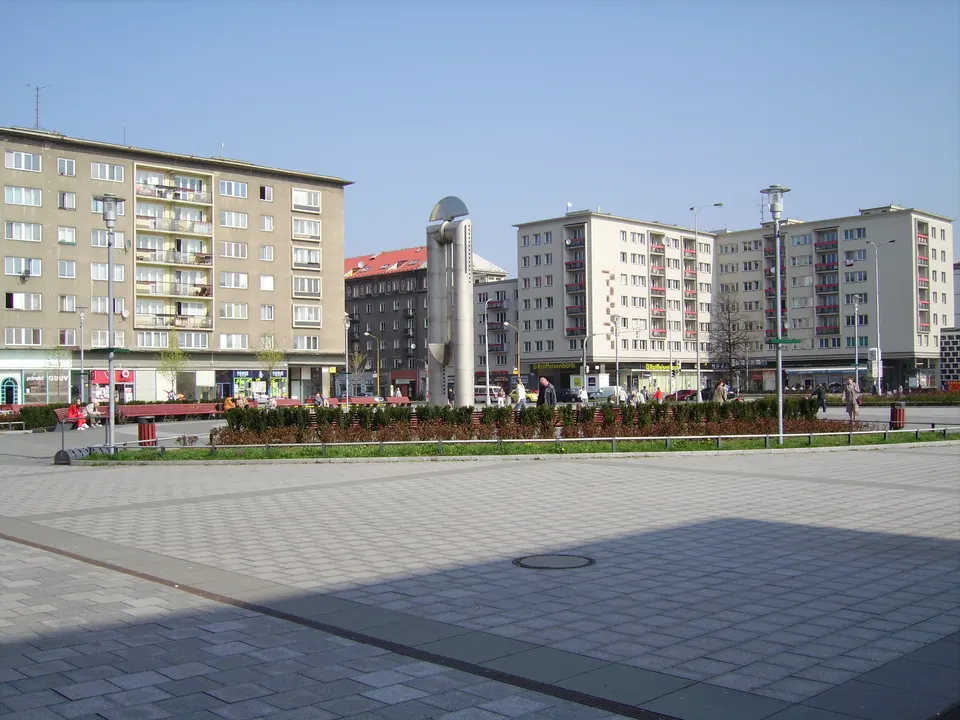

Havířov is a city in the Karviná District of the Moravian-Silesian Region of the Czech Republic. It has about 68,000 inhabitants, making it the second largest city in the region, and it was founded in 1955 as a coal-mining town. The city lies on the Lučina River, next to Ostrava.
With about 83,000 inhabitants, Havířov lies in Moravian-Silesian Region, Czech Republic, and is a rail hub.
Why go to Havířov?
Havířov was built after the Second World War on top of several villages with large Polish populations, to restore hard coal mining in the region. Building of the first housing estates for miners began in 1947, and most of the new city was built in the style of socialist realism. The Church of Saint Anne was built in the Empire style, and the Church of Saint Margaret the Virgin in Bludovice is a typical Baroque rural church. The Šumbark Castle, once a medieval fortress, is now a hotel.
When is the best time to visit Havířov?
Average highs range from 1 °C in January to 23 °C in July and August.
How do I get to Havířov without flying?
Direct train services link Havířov with 4 destinations. Allowing for changes, 1,533 destinations are no more than 14 hours away without flying. Olomouc is 1h 22m away by train with RegioJet,a.s., with about 0.9 kg of CO₂ per person. The train from Ostrava with RegioJet,a.s. takes 14 min; that is about 0.1 kg of CO₂ per person. From Český Těšín, it takes 17 min by train with RegioJet,a.s., with about 0.1 kg of CO₂ per person.
What to do in Havířov
Memorial to the victims of Nazi terror
A granite wall with a sandstone sculpture of a woman with a child, protected as a national cultural monument.
Find tours and tickets: Memorial to the victims of Nazi terror
Šumbark Castle
A medieval fortress rebuilt as a Renaissance castle and later in the Baroque style, today a hotel.
Kotula's log cabin
A log cabin from 1781 that is now a small museum of folk housing in the region, with a barn and a windmill beside it.