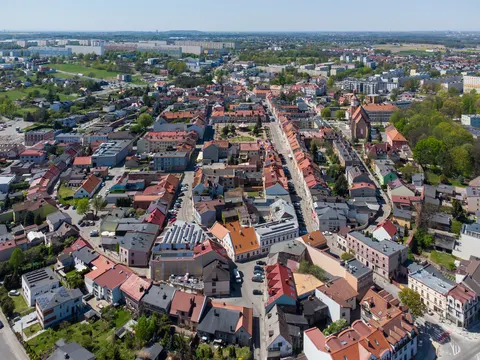

Rybnik is a city in southern Poland, in the Silesian Voivodeship, about 38 km southwest of Katowice and close to the Czech border. It is one of the major cities of the Katowice-Ostrava metropolitan area and the main city of the Subregion Zachodni, and the centre of commerce, business, transport and culture for the southwest of the voivodeship. Its name comes from an old Slavic word for a pond, and a fish still appears on its coat of arms.
About 143,000 people live in Rybnik, in Silesia, Poland, and its station is a rail hub.
Why go to Rybnik?
Rybnik is known for music. The Szafrankowie School of Music has produced musicians such as Henryk Górecki and Lidia Grychtołówna, and the city is the seat of the Rybnik Philharmonic Orchestra. Its historic buildings include the neo-Gothic basilica of St Anthony and a neo-classical town hall. Outside the built-up area, the reservoir Zalew Rybnicki on the river Ruda is used for swimming, fishing, sailing and surfing, and it stays warm all year from the power station's waste heat. The Beskidy mountains, a popular area for recreation and skiing, lie within a short drive.
When is the best time to visit Rybnik?
Expect daytime highs of about 23 °C in July and August, falling to 1 °C in January.
How do I get to Rybnik without flying?
You can get to Rybnik without changing from 10 destinations, by bus or train. With changes, Rybnik is within 14 hours of 1,546 destinations without flying. From Vienna, it takes 5h 09m by train with PKP Intercity, with about 5.1 kg of CO₂ per person against 34 kg for the flight, 85% less. Travelling from Katowice, allow 46 min by train with PKP Intercity; that is about 1.3 kg of CO₂ per person. Ostrava is 1h 00m away by bus with FlixBus-eu, with about 1 kg of CO₂ per person.
What to do in Rybnik
Basilica of St Anthony
A neo-Gothic basilica dedicated to St Anthony, one of the town's main sights.
Zalew Rybnicki
A reservoir on the river Ruda, north-east of the built-up area and surrounded by forests. Its water is warmed by the power station's waste heat, so it is used for swimming, fishing, sailing and surfing.
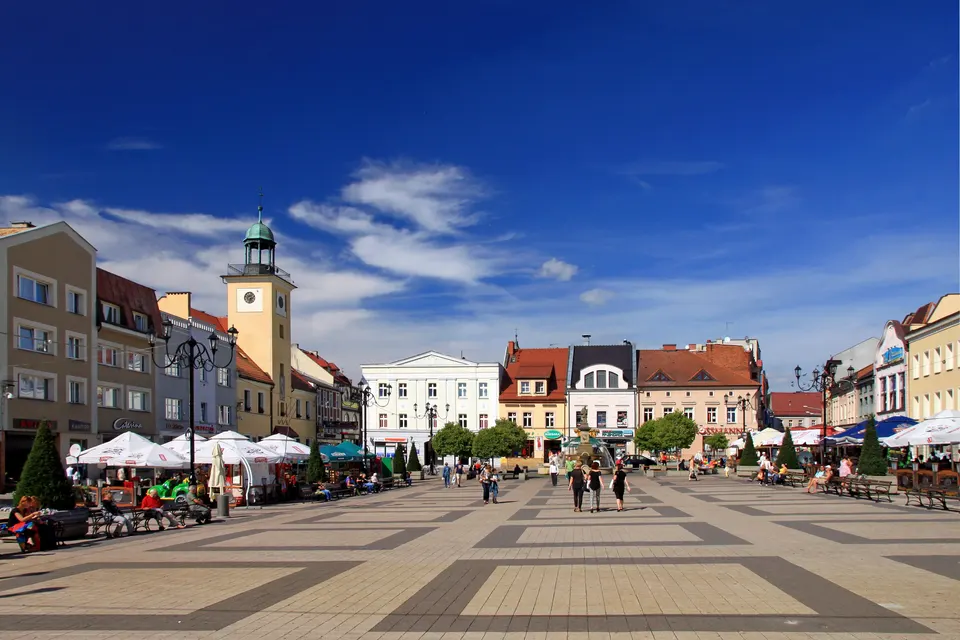
Old town hall
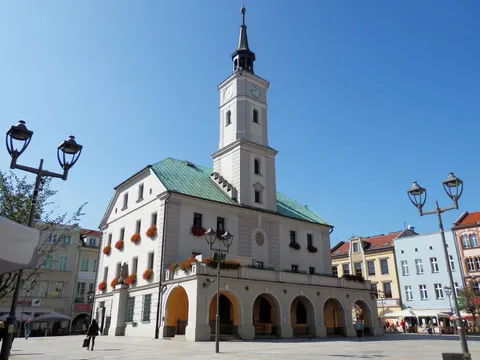
A neo-classical building with a clock tower, which now houses the registry office and the museum of local history.
Piast castle
A Piast castle from the early 13th century, completely redesigned in the 18th century.