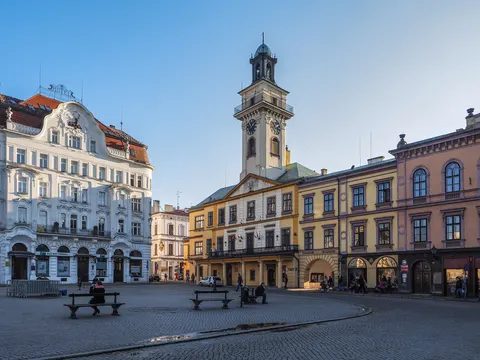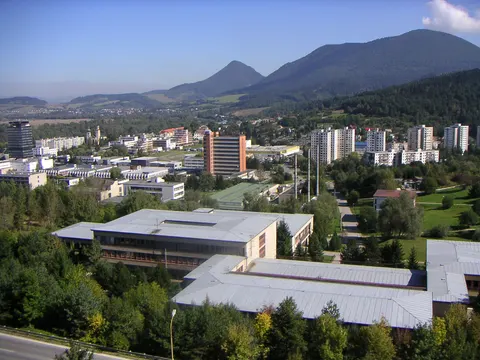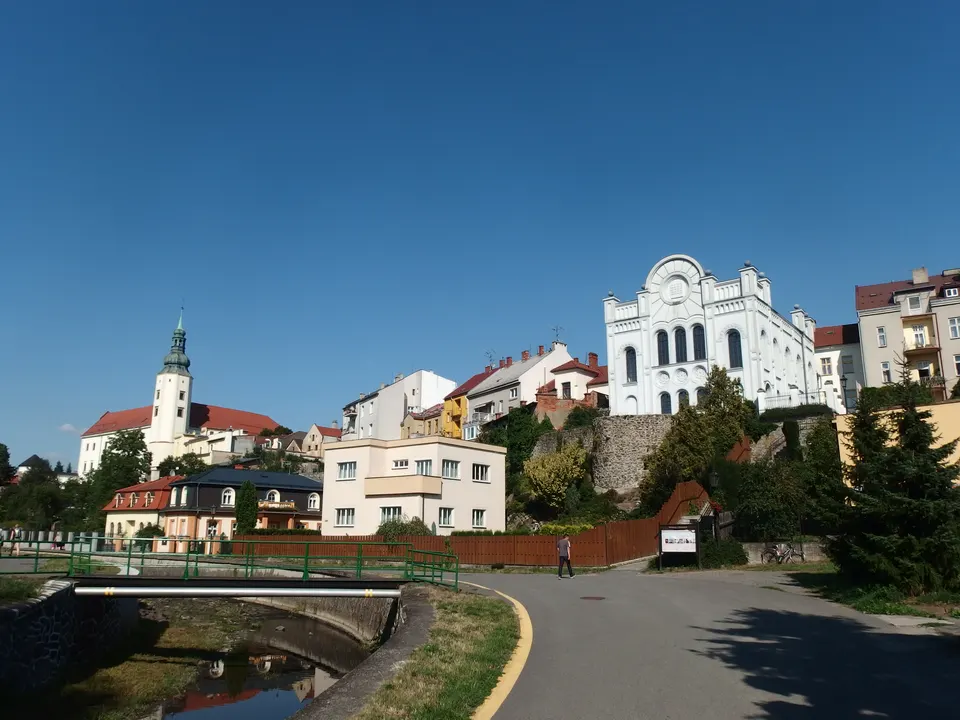

Hranice is a town in the Přerov District of the Olomouc Region in the Czech Republic, with about 18,000 inhabitants. It lies on the Bečva River and is an industrial city and railway junction. The town is known for the Hranice Abyss, the deepest flooded pit cave in the world.
Hranice, in Olomouc Region, Czech Republic, is home to about 18,000 people and works as a rail hub.
Why go to Hranice?
Hranice is known for the Hranice Abyss, the deepest flooded pit cave in the world, which lies by the town. Its historic centre has been protected as an urban monument zone since 1992, and the Church of the Beheading of Saint John the Baptist dominates the main square. The Hranice Castle, once a Gothic castle of the Cimburk lords, was rebuilt in the Renaissance style and now houses the town hall, a museum and an art gallery. The three Hranice Viaducts, 430 metres long, are among the town's most valuable technical monuments.
When is the best time to visit Hranice?
In July and August the average high reaches 23 °C; in January it is closer to 0 °C.
How do I get to Hranice without flying?
Hranice has direct train links to 11 destinations. Within 14 hours, travellers from 1,835 destinations can get here without flying. The train from Vienna with PKP Intercity takes 2h 26m; that is about 1.5 kg of CO₂ per person, 93% less than the 23 kg of a flight. Bratislava is 2h 47m away by train with PKP Intercity, with about 1.6 kg of CO₂ per person against 21 kg for the flight, 92% less. Travelling from Olomouc, allow 29 min by train with PKP Intercity; that is about 0.4 kg of CO₂ per person.
What to do in Hranice
Hranice Abyss
The deepest pit cave in the Czech Republic, and the deepest flooded abyss in the world.
Church of the Beheading of Saint John the Baptist
A massive Baroque-Neoclassical church on the town square, with valuable decorations inside.
Find tours and tickets: Church of the Beheading of Saint John the Baptist
Hranice Castle
A former Gothic castle of the Cimburk lords, rebuilt in the Renaissance style.
Hranice Viaducts
Three viaducts, and the most valuable technical monument in the town.