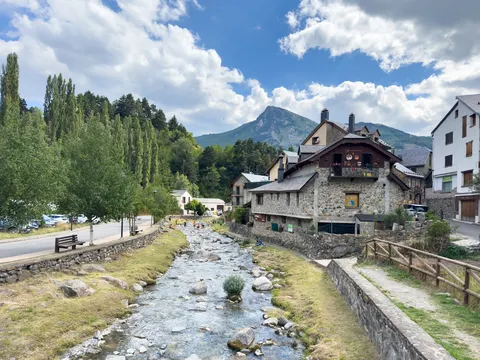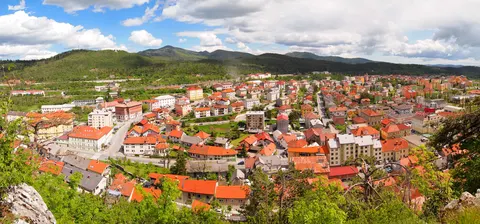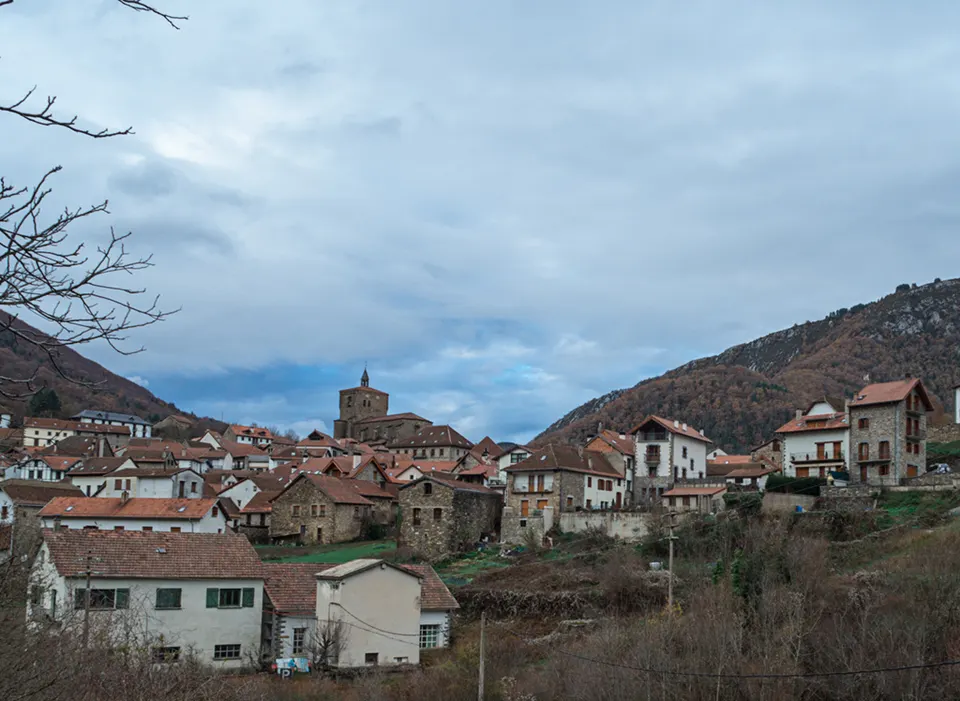

Isaba is a village and municipality in the Spanish region of Navarre, in the Roncal-Salazar comarca and the Roncal valley. It is the largest of the seven villages of the valley, with 384 residents in 2025. The village sits on a hillside where three rivers meet and form the Esca. The houses are typical mountain houses with steep pitched roofs, and the municipality covers a large share of the valley's high ground.
Isaba is in Spain.
Why go to Isaba?
The highest point of Navarre, the Mesa de los Tres Reyes, lies within its land, at the place where the old kingdoms of Navarre and Aragon met France. The valley has kept its own institutions for centuries. The Junta General manages the valley's grazing and forest interests, and the Roncal people once held privileges that let them choose their own war captain. Prehistoric dolmens in the Larra-Belagua area show that shepherds lived here in the Neolithic period, and their finds are kept in the Museo de Navarra in Pamplona.
When is the best time to visit Isaba?
July is the warmest, with highs of about 24 °C, and January and December are the coolest, at about 7 °C. For nature and hiking trips, go in May, June and September.
How do I get to Isaba without flying?
From 2 destinations you can travel to Isaba directly by bus. Counting connections, 886 destinations can reach it within 14 hours without flying. Travelling from Pamplona, allow 2h 00m by bus; that is about 1 kg of CO₂ per person. From Irun, it takes 4h 00m by bus, with about 2.1 kg of CO₂ per person.
What to do in Isaba
Monte Aldasur
A mountain in Isaba.
Nature and hiking trips in Isaba
September is the ideal month for nature and hiking trips, with average highs of 20 °C.
Travel on from Isaba
Direct links run to Pamplona and Irun.