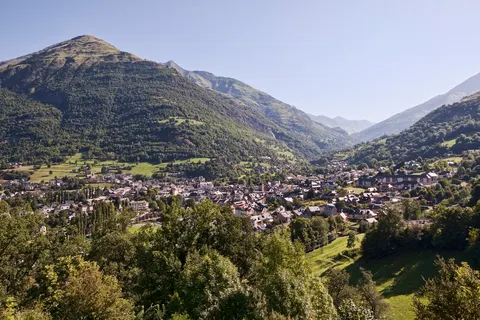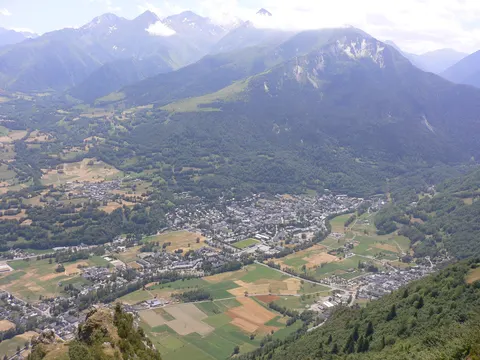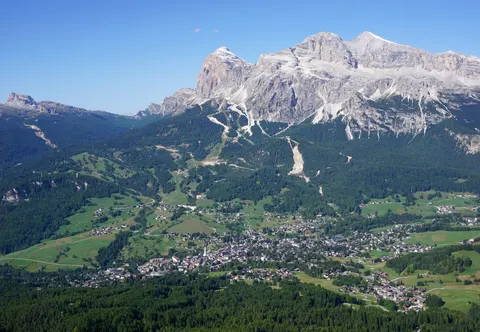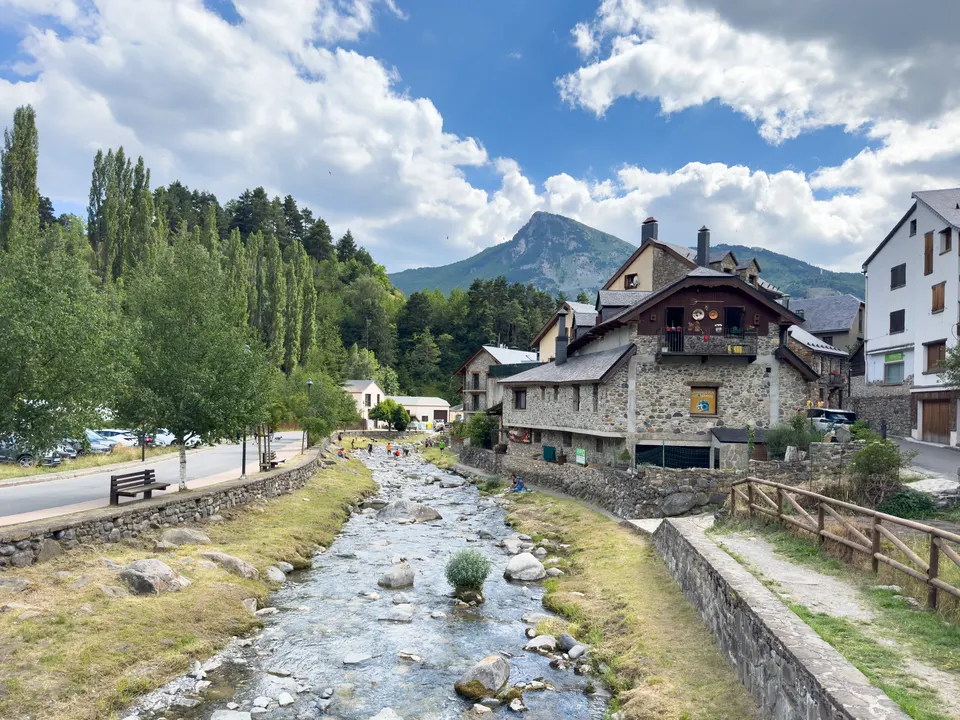

Sallent de Gállego is a municipality in the province of Huesca, in the Spanish region of Aragon. It sits in the central Pyrenees beside the Lanuza reservoir, close to the French border, and it is the capital of the Tena Valley. It is part of the Alto Gállego comarca, and its municipality also includes the ski resort of Formigal.
With about 1,281 inhabitants, Sallent de Gállego lies in Aragon, Spain.
Why go to Sallent de Gállego?
The main artistic attraction of Sallent is its Gothic Church of the Assumption, which has a plateresque altarpiece and the venerated image of the Virgen de las Nieves, the town's patron. The old town has many emblazoned houses, and the Aguas Limpias river runs through the middle of the village under the Puente Romano. The Mentidero, a large bench opened to the street, is still used by residents and visitors as a meeting place. Nearby, the ski resort at Formigal sits in contrast to the older village.
When is the best time to visit Sallent de Gállego?
Average highs range from 4 °C in January and February to 22 °C in July. Skiing works best in January, February and December. June, August and September are the time for nature and hiking trips.
How do I get to Sallent de Gállego without flying?
Direct bus services link Sallent de Gállego with 2 destinations. Allowing for changes, 437 destinations are no more than 14 hours away without flying. Astún is 24 min away by bus, with about 0.4 kg of CO₂ per person. The bus from Panticosa-Los Lagos takes 24 min; that is about 0.2 kg of CO₂ per person.
What to do in Sallent de Gállego
Church of the Assumption
A Gothic church from the early sixteenth century, with a valuable plateresque altarpiece. It has been declared of cultural interest.
Puente Romano
A medieval bridge built in the 16th century, which crosses the Aguas Limpias river in the middle of the village.
Mentidero
A large bench opened to the street in the centre of the village, still used as a meeting place by residents and visitors.
Church of Salvador de Basarán
A small church at Formigal, dating from the 10th century and rebuilt in 1972, which contrasts with the modern ski resort buildings around it.