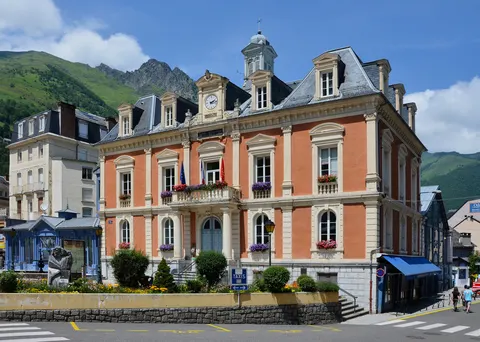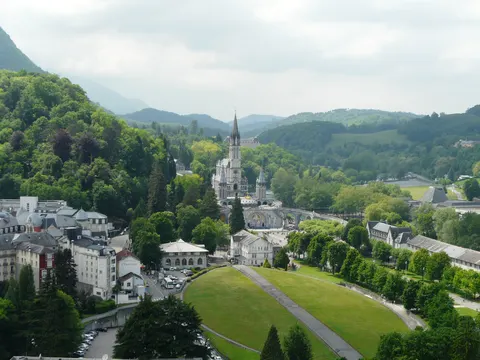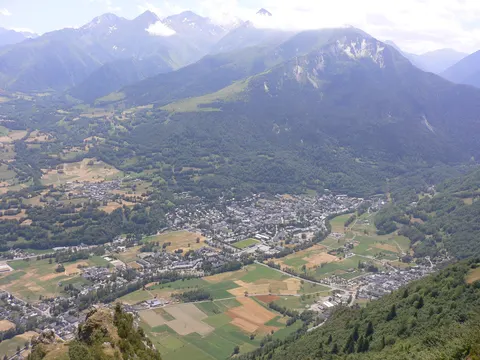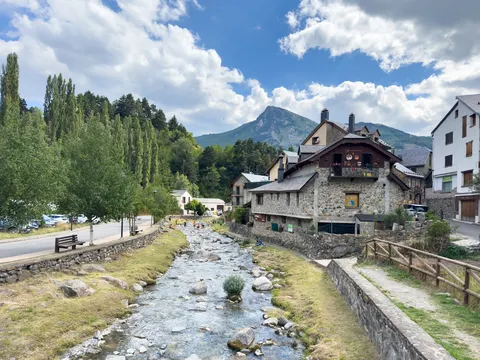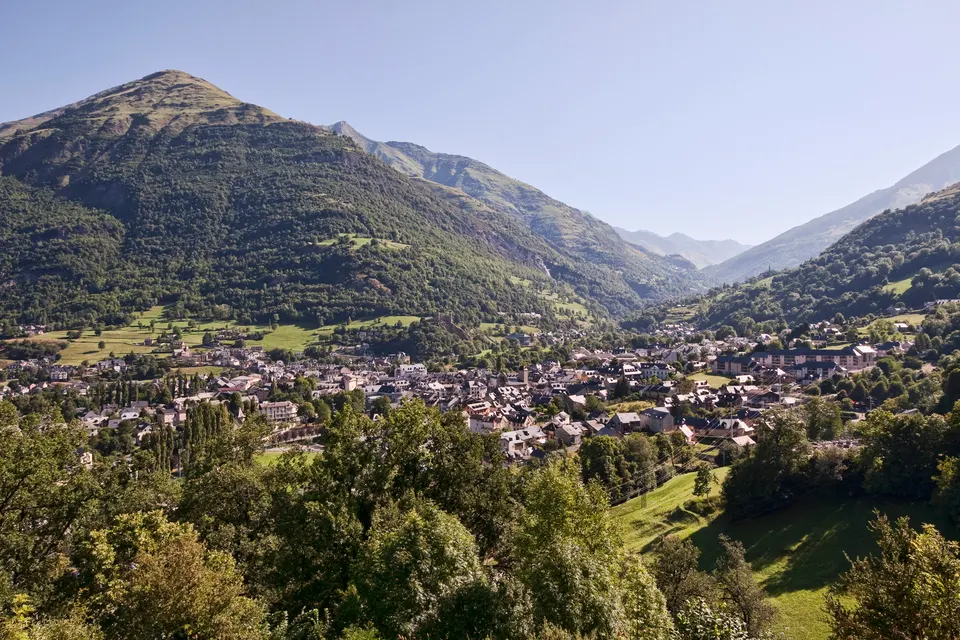

Luz-Saint-Sauveur is a commune in the Hautes-Pyrénées department of south-western France, in the Occitanie region. It sits on the Bastan river, a tributary of the Gave de Pau, in a valley ringed by mountains on three sides. The town has notable heritage sites and a spa district, and the Pierrefitte gorge separates it from the plain to the north. Its inhabitants are called Luzéens.
About 1,074 people live in Luz-Saint-Sauveur, in Occitanie, France.
Why go to Luz-Saint-Sauveur?
Luz-Saint-Sauveur is worth a stop for its heritage and its setting. The church of Saint-André, also known as Les Templiers, is one of its most notable buildings, and the Château Sainte-Marie stands among the historic sites. The spa district adds a second layer to the town's past. The setting does much of the work: mountains close the town in to the east, west and south, while the Pierrefitte gorge cuts it off from the plain to the north. Before 1962 the town was simply called Luz, and its Gascon name, Lus e Sent Sauvaire, still reflects the older language of the valley. Its people are called Luzéens.
When is the best time to visit Luz-Saint-Sauveur?
Expect daytime highs of about 24 °C in July and August, falling to 8 °C in January, February and December. If you are after nature and hiking trips, aim for May, September and October.
How do I get to Luz-Saint-Sauveur without flying?
You can get to Luz-Saint-Sauveur without changing from 9 destinations, by bus. With changes, Luz-Saint-Sauveur is within 14 hours of 1,546 destinations without flying. From Lourdes, it takes 40 min by bus with .liO 65, with about 0.7 kg of CO₂ per person. Travelling from Tarbes, allow 1h 12m by bus; that is about 1.1 kg of CO₂ per person. Cauterets is 24 min away by bus, with about 0.3 kg of CO₂ per person.
What to do in Luz-Saint-Sauveur
Church of Saint-André
Also called Les Templiers, it is one of the town's historical landmarks.
Château Sainte-Marie
A château in the town that counts among its historic heritage sites.