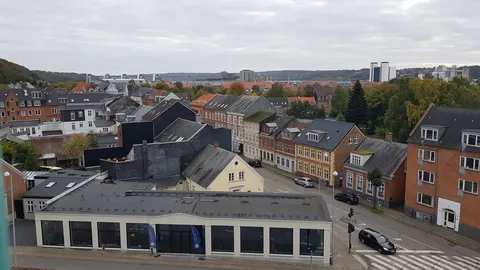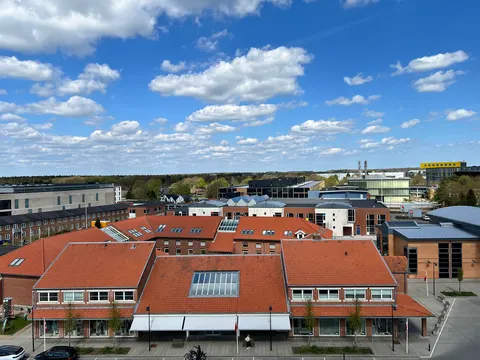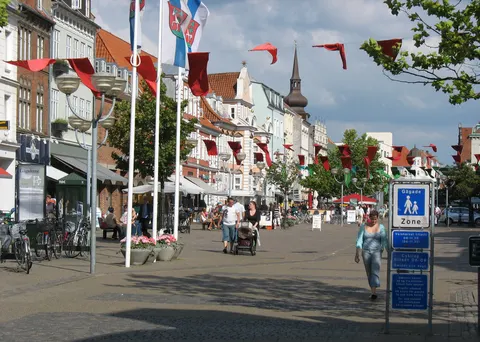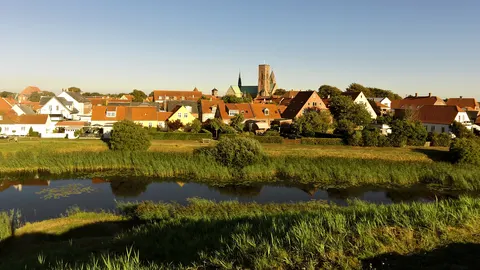

Kolding is a Danish seaport city at the head of Kolding Fjord in southeast Jutland. It is the seat of Kolding Municipality and a centre for transport, commerce and manufacturing, with a strong shipbuilding industry. UNESCO recognised the city as a Design City in 2017, and it is the eighth largest city in Denmark.
Kolding is in South Denmark, Denmark, and has a population of about 62,000; it is also a rail hub.
Why go to Kolding?
Kolding's castle is the anchor of the town. Koldinghus was a royal palace, and today it houses the municipal museum, with Danish art from the late Middle Ages to the 1940s and a large collection of gold and silver items. The Trapholt art museum adds modern Danish art and a large collection of chairs. The botanical garden Geografisk Have spreads over 14 hectares. The former children's tuberculosis sanatorium now holds the Danish Museum of Nurses and a hotel, set in a small forest above the water.
When is the best time to visit Kolding?
July is the warmest, with highs of about 21 °C, and January is the coolest, at about 3 °C. City breaks work best in June, August and September.
How do I get to Kolding without flying?
From 10 destinations you can travel to Kolding directly by bus or train. Counting connections, 1,539 destinations can reach it within 14 hours without flying. Travelling from Hamburg, allow 3h 11m by bus with FlixBus-eu; that is about 5.9 kg of CO₂ per person, 79% less than the 28 kg of a flight. From Copenhagen, it takes 2h 41m by bus with FlixBus-eu, with about 5.3 kg of CO₂ per person against 45 kg for the flight, 88% less. The train from Odense with Snälltåget takes 38 min; that is about 0.4 kg of CO₂ per person.
What to do in Kolding
Koldinghus
The castle and former royal palace that houses the municipal museum and its collection of gold and silver.
Trapholt
An art museum with Danish art from 1900 onwards, and a smaller number of works from other countries.
Geografisk Have
A botanical garden of 14 hectares, where thousands of trees and plants are arranged by geographical area.
Danish Museum of Nurses
A museum in the reception building of a former children's tuberculosis sanatorium, which also tells the story of the building itself.