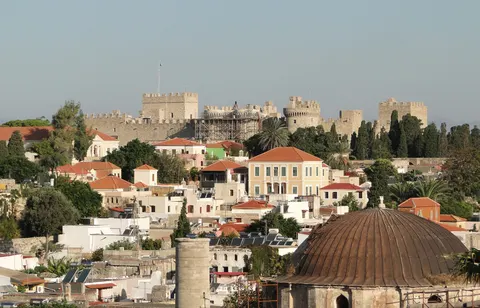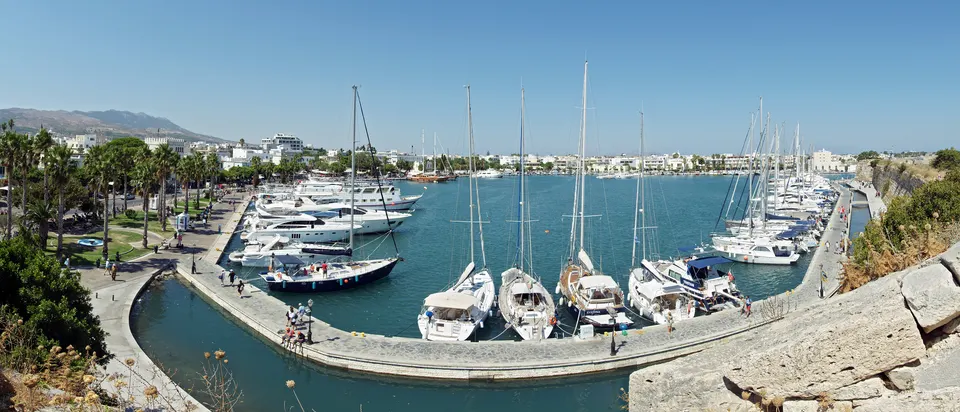

Kos is a Greek island in the southeastern Aegean Sea, part of the Dodecanese chain. It is one of the larger islands in that group, and its principal town is also called Kos, the seat of the municipality. The island sits in the South Aegean region of Greece, close to the coast of Turkey.
About 19,000 people live in Kos, in South Aegean, Greece, and its station is a rail hub.
Why go to Kos?
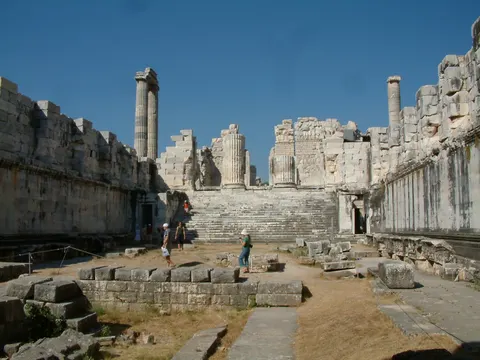
Kos fits a Sun & Beach trip, and its museums add a City & Culture side to it. The Church of Agia Paraskevi is the church to name on the island. The Archaeological Museum of Kos in neighbouring Kos regional unit, Neratzia in neighbouring Kos Municipality and Casa Romana in neighbouring Kos Municipality are the sights beyond the town. Bodrum, in Turkey, is a nearby town, and the island's mix of beaches and older sights makes a trip here easy to shape.
When is the best time to visit Kos?
Expect daytime highs of about 26 °C in August, falling to 14 °C in January and February. If you are after beach holidays, aim for July, August and September. For city breaks, any month of the year works.
How do I get to Kos without flying?
You can get to Kos without changing from 2 destinations, by ferry. With changes, Kos is within 14 hours of 88 destinations without flying. From Athens, it takes 10h 00m by ferry with Blue Star, with about 15 kg of CO₂ per person against 77 kg for the flight, 81% less. Travelling from Bodrum, allow 30 min by ferry; that is about 0.4 kg of CO₂ per person.
What to do in Kos
Church of Agia Paraskevi
A church in Kos.
Beach holidays in Kos
August is the ideal month for beach holidays, with average highs of 26 °C.
City breaks in Kos
November is the ideal month for city breaks, with average highs of 18 °C.