
Sagres is a civil parish in the municipality of Vila do Bispo, in the southern Algarve of Portugal, near the south-west tip of mainland Europe. It is historically connected to the early Portuguese Age of Discovery. The parish had 1,894 inhabitants in 2021, and its high cliffs look out over the Atlantic.
About 1,939 people live in Sagres, in Faro, Portugal.
Why go to Sagres?
Sagres is tied to Prince Henry the Navigator, the son of a Portuguese king, who was known as the Infante of Sagres. His navigators had reached Sierra Leone by the time he died. The small fishing village he developed on the Ponta de Sagres overlooked the coves of Mareta and Beliche, and it later became Vila do Infante. The site was held sacred long before that: Mediterranean peoples venerated their gods here. Christians from the Muslim period built the Church of Corvo, where the remains of Saint Vincent were deposited in the 8th century, and the cape took his name.
When is the best time to visit Sagres?
Expect daytime highs of about 21 °C in August and September, falling to 15 °C in January, February and March. If you are after beach holidays, aim for July, August and September.
How do I get to Sagres without flying?
You can get to Sagres without changing from 2 destinations, by bus. With changes, Sagres is within 14 hours of 208 destinations without flying. From Lisbon, it takes 5h 18m by bus with Rede Expressos, with about 5.2 kg of CO₂ per person against 44 kg for the flight, 88% less. Travelling from Lagos, allow 1h 00m by bus with Eva Transportes; that is about 0.7 kg of CO₂ per person.
What to do in Sagres
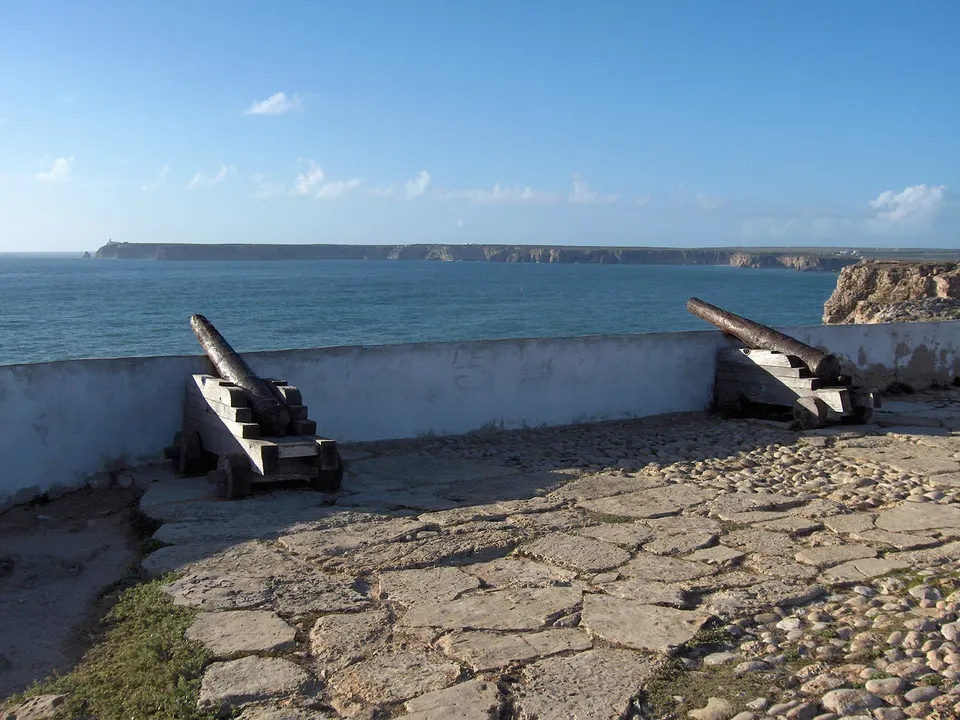
Fortaleza de Sagres
A castle in Sagres.
Beach holidays in Sagres
August is the ideal month for beach holidays, with average highs of 21 °C.
Travel on from Sagres
Direct links run to Lisbon and Lagos.