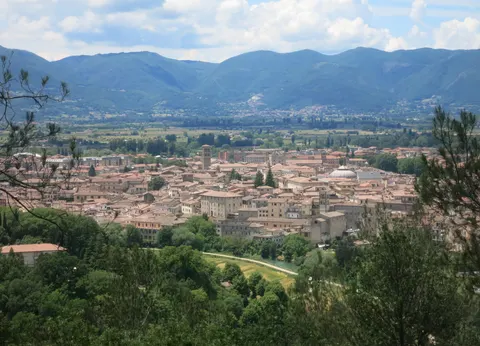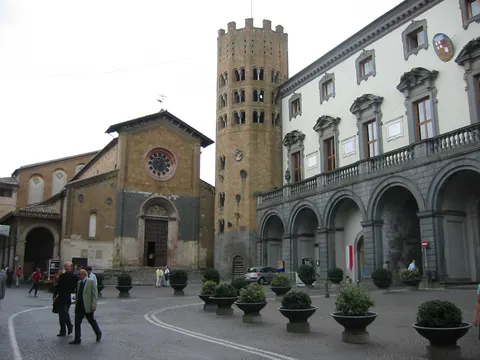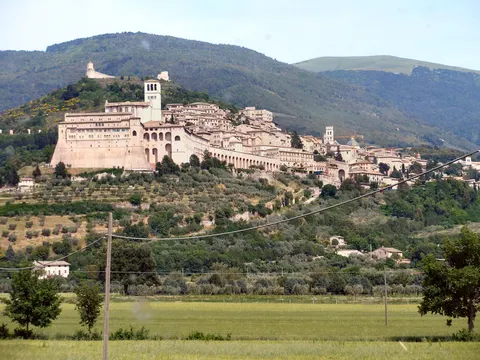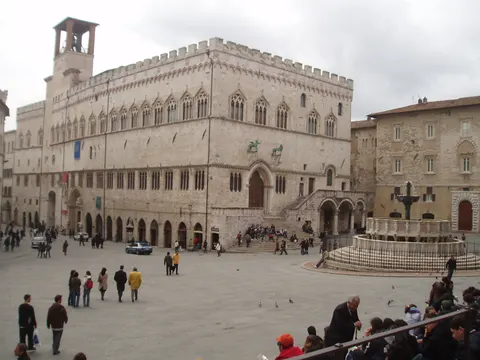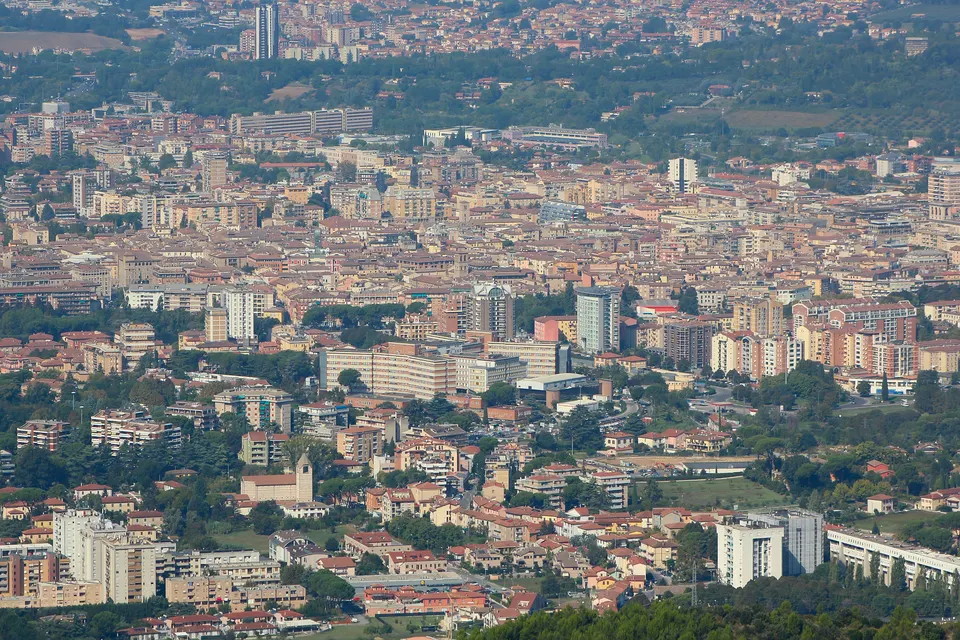

Terni sits in the south of Umbria, near the border with Lazio, on the plain of the River Nera. The old churches and palaces of the centre stand beside the newer streets of the city, and that contrast shapes the visit. Terni Cathedral is the church to start with, and the Palazzo Spada gives the centre one of its palaces. The Marmore bridge crosses the Nera and links the city to the landscape beyond.
Terni is in Umbria, Italy, and has a population of about 111,000; it is also a rail hub.
Why go to Terni?
Terni is a city of churches, palaces and museums in the south of Umbria, close to the border with Lazio. Terni Cathedral is the building to see first, and San Valentino, San Francesco and San Pietro add to the run of churches in the centre. The Palazzo Spada gives the city a secular landmark, and the archaeological museum adds a look at the older history of the area. Rome and Perugia are the larger reference points, and both are reachable by rail, so Terni can be one stop in a wider trip through central Italy. The Nera plain sets the city in its landscape.
When is the best time to visit Terni?
July and August are the warmest, with highs of about 31 °C, and January is the coolest, at about 10 °C.
How do I get to Terni without flying?
From 3 destinations you can travel to Terni directly by bus or train. Counting connections, 1,375 destinations can reach it within 14 hours without flying. Travelling from Rome, allow 1h 00m by train with Trenitalia; that is about 1 kg of CO₂ per person. From Rieti, it takes 54 min by train with Trenitalia, with about 0.3 kg of CO₂ per person. The bus from Foligno with FlixBus-eu takes 1h 10m; that is about 1.2 kg of CO₂ per person.
What to do in Terni
Terni Cathedral
The cathedral is the principal church in the city's centre, and it sets the tone for a walk through the older streets. Go inside, then look for the palace and the churches nearby.
Marmore bridge
The Marmore bridge crosses the River Nera and gives a view along the plain. Walk across it and look back at the city, then decide how far to follow the river on foot.
Palazzo Spada
Palazzo Spada is the palace in the centre, and it is one of the buildings that give the city its civic side. Look at its front, then walk on to the church of San Valentino.