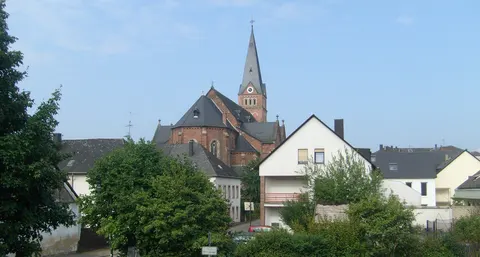
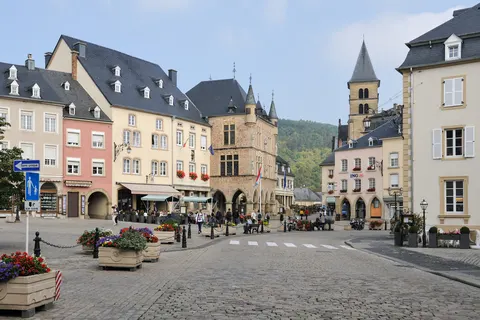
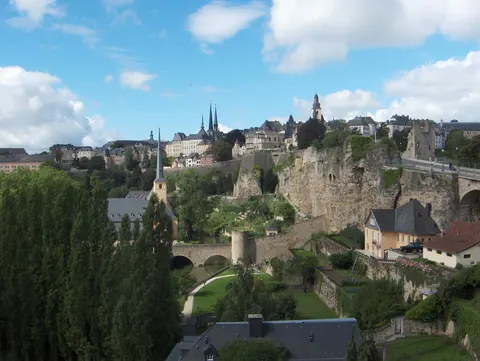
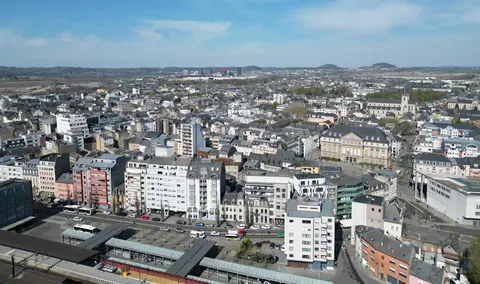
Trier has a river side and a hill side, and the difference shows as soon as you cross the Moselle. On the banks the town keeps to the flat ground, where the Roman Bridge carries you over the water, while the slopes around it are planted with vines and cut through with red rock. Within the old centre, the Cathedral of Trier and the Electoral Palace stand close together, and the walk between them takes only a few minutes.
Trier is in Rheinland-Pfalz, Germany, and has a population of about 100,000; it is also a rail hub.
Why go to Trier?
Go to Trier for the City & Culture side of the Moselle, where the ancient layer and the churches sit within easy walking distance of each other. The Roman Monuments, Cathedral of St. Peter and Church of Our Lady in Trier are the UNESCO sites that draw most of the attention, and the Aula Palatina, now a church, stands nearby. The Rheinisches Landesmuseum takes the story further into the region, and the Karl-Marx-House museum gives a different angle on the city's later past. Liebfrauenkirche and Saint Paulin Church add more church architecture to the walk, and St. Matthias' Abbey sits on the edge of the centre. The Moselle wine region brings the vines into the picture, so an evening glass fits the town's character. Trier suits a slow trip built around stone and wine.
When is the best time to visit Trier?
July and August are the warmest, with highs of about 23 °C, and January and December are the coolest, at about 4 °C. City breaks work best in May, June and September.
How do I get to Trier without flying?
From 11 destinations you can travel to Trier directly by bus or train. Counting connections, 2,285 destinations can reach it within 14 hours without flying. Travelling from Koblenz, allow 1h 40m by bus with FlixBus-eu; that is about 2.6 kg of CO₂ per person. From Wiesbaden, it takes 1h 55m by bus with FlixBus-eu, with about 3.2 kg of CO₂ per person. The bus from Mainz with FlixBus-eu takes 2h 05m; that is about 3.2 kg of CO₂ per person.
What to do in Trier
Roman Bridge
Cross the Roman Bridge over the Moselle and look back from the middle, where the cathedral towers and the Electoral Palace line up across the river. It is one of the simplest ways to read the town's layout in a single look.
Cathedral of Trier
The Cathedral of Trier and the Liebfrauenkirche stand close to each other, so one visit can take in both. The churches keep the older stonework of the town in full view, and Saint Paulin Church is a short walk out.
Karl-Marx-House museum
This museum is the place to turn from the ancient stone to the city's later story. It stands apart from the churches and the ancient sites, so give it a separate visit and read the displays at your own pace.
Rheinisches Landesmuseum
The regional museum takes the story of Trier beyond the ancient sites and into the wider region around it, which makes it a useful second stop after the cathedral quarter.
Aula Palatina
The hall stands in the same stretch of the old centre as the Electoral Palace, so the two make an easy pairing. Look at the walls before moving on to Saint Paulin Church.