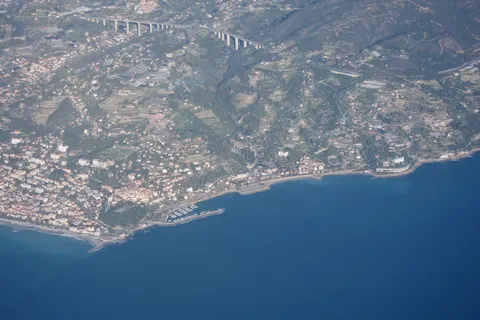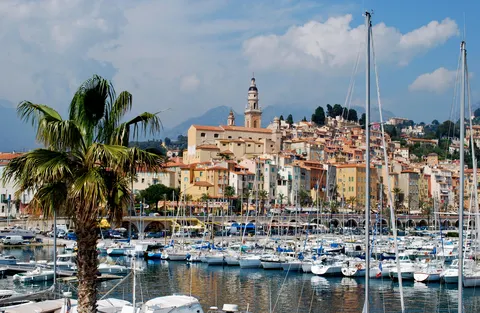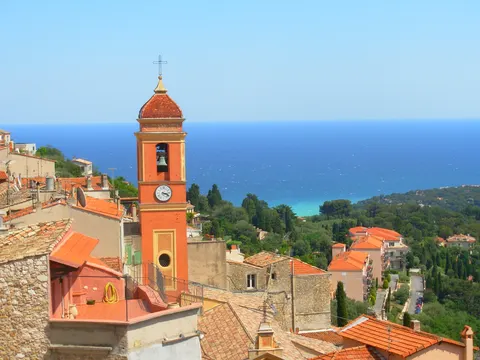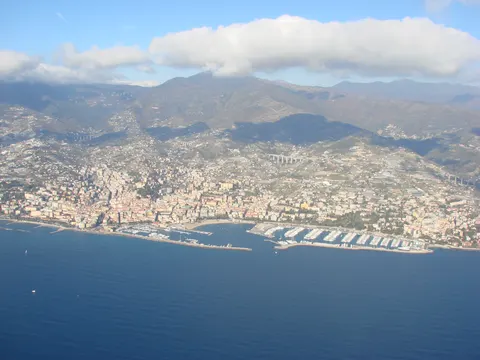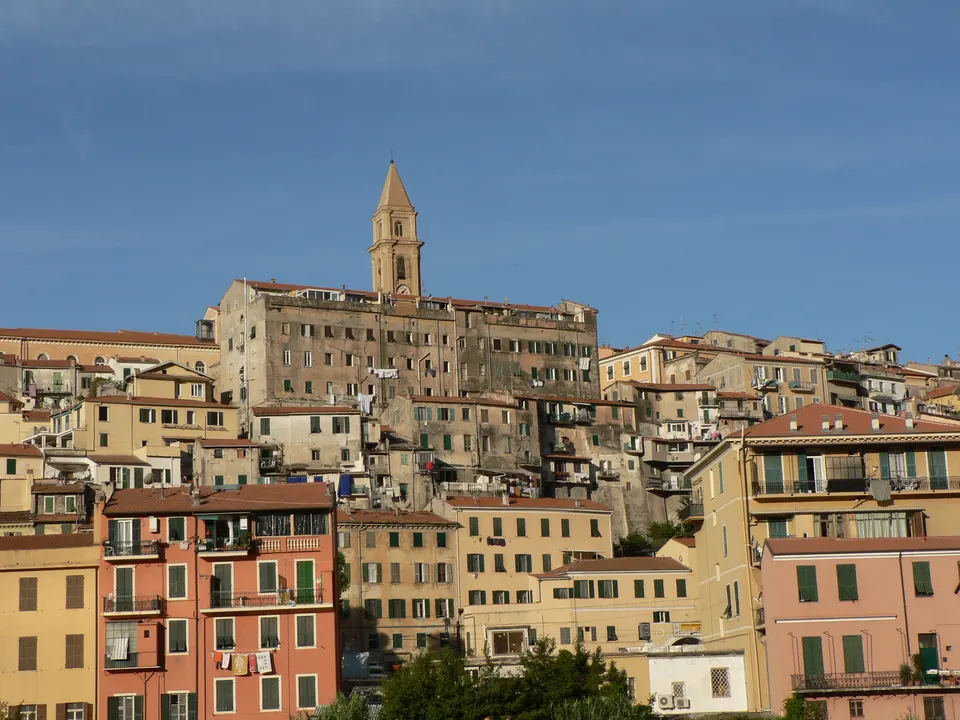

Ventimiglia is a resort town on the Italian Riviera in the province of Imperia, Liguria, on the Gulf of Genoa. It lies about 7 kilometres from the French border, with a small harbour at the mouth of the Roia river, which divides the town into two parts. Its urban area has about 55,000 inhabitants.
With about 24,000 inhabitants, Ventimiglia lies in Liguria, Italy, and is a rail hub.
Why go to Ventimiglia?
Ventimiglia's historic hill town sits above the new town, and the Church of San Michele Arcangelo stands on the foundations of a pagan temple. Remains of a Roman theatre are visible, and the Cathedral of the Assumption is built on the ruins of earlier churches and possibly a Roman building. The Hanbury Botanical Gardens, around Sir Thomas Hanbury's villa at La Mortola, are the biggest in Italy, with tropical and sub-tropical plants. Visitors from France come for the Friday street market along the seafront of the new town.
When is the best time to visit Ventimiglia?
Average highs range from 11 °C in January and February to 25 °C in July and August. June, July and August are the time for beach holidays.
How do I get to Ventimiglia without flying?
Direct bus or train services link Ventimiglia with 7 destinations. Allowing for changes, 1,965 destinations are no more than 14 hours away without flying. Monaco is 46 min away by train with SNCF Voyageurs SA, with about 0.2 kg of CO₂ per person. The train from Sanremo with Trenitalia takes 18 min; that is about 1 kg of CO₂ per person. From Nice, it takes 48 min by train with SNCF, with about 1 kg of CO₂ per person.
What to do in Ventimiglia
Roman theatre
Remains of a Roman theatre from the first half of the 2nd century.
Cathedral of the Assumption
A Romanesque cathedral with an 11th-century baptistery, built on the ruins of earlier churches.
Church of San Michele Arcangelo
A church that holds old milestones from the Via Iulia Augusta.
Hanbury Botanical Gardens
The largest botanical gardens in Italy, surrounding the villa of Sir Thomas Hanbury at La Mortola.
Balzi Rossi caves
Caves rich in Palaeolithic remains, including skeletons of Cro-Magnon people.