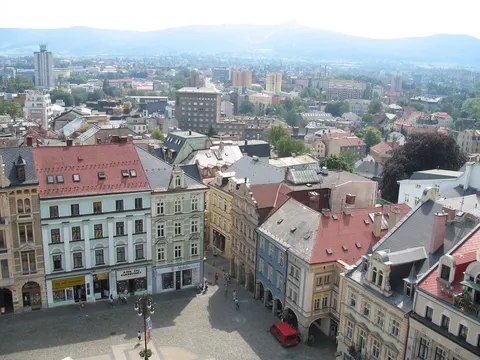
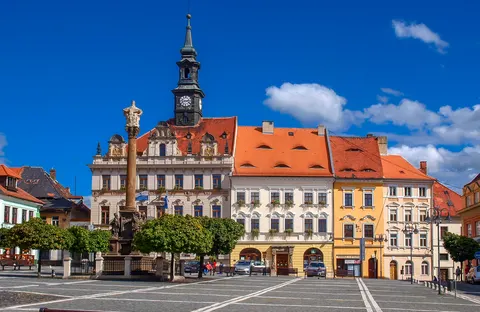
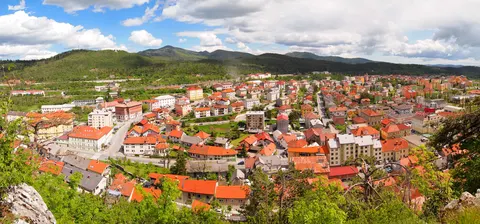
Zittau is a city in the German state of Saxony, in Upper Lusatia, on the Mandau and Lusatian Neisse rivers at the foot of the Zittau Mountains. It belongs to Görlitz district, Germany's easternmost district. The city has around 25,000 people and lies directly on the western edge of the Turów Coal Mine, on the far side of the Lusatian Neisse. Its history includes a long period of prosperity as a member of the Six-City League.
With about 25,000 inhabitants, Zittau lies in Saxony, Germany, and is a rail hub.
Why go to Zittau?
The Great Zittau Lenten Cloth, made in 1472, is among the most impressive textile works in the Western tradition, alongside the Bayeux Tapestry. It is the third-largest surviving Lenten veil and is exhibited in the Holy Cross Church, in the largest museum display case in the world. The town also has a flower clock, built in 1907 from the clockwork of an old tower clock, which is planted three times a year. Zittau's historic fountains and its Neustadt square with the Salt House add to the old town.
When is the best time to visit Zittau?
Average highs range from 1 °C in January to 22 °C in July and August. May, June and September are the time for nature and hiking trips.
How do I get to Zittau without flying?
Direct bus or train services link Zittau with 7 destinations. Allowing for changes, 1,950 destinations are no more than 14 hours away without flying. Dresden is 1h 55m away by bus with FlixBus-eu, with about 2.1 kg of CO₂ per person. The train from Görlitz with Ostdeutsche Eisenbahn GmbH takes 35 min; that is about 0.6 kg of CO₂ per person. From Liberec, it takes 26 min by bus with FlixBus-eu, with about 0.6 kg of CO₂ per person.
What to do in Zittau
Great Zittau Lenten Cloth
A textile work made in Zittau in 1472, shown in the Holy Cross Church, which belongs to the Zittau Municipal Museums.
Flower Clock
A clock built in 1907 from the clockwork of an old tower clock, with plants set out three times a year.
City Hall
Designed by Karl Friedrich Schinkel in Italian palazzo style and built in the middle of the nineteenth century.
Friary Church
The church of the former Franciscan monastery, with a late gothic main aisle and side prayer rooms built for wealthy citizens.
Church of Our Lady
A semi-gothic church first mentioned in the fourteenth century.