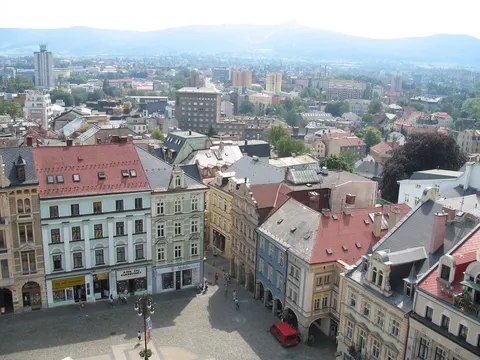
St. Jakobus, the cathedral of Görlitz, is the first sight of a town on the river Lusatian Neisse that faces the Polish town of Zgorzelec across the water. Görlitz is the largest town in Upper Lusatia and the easternmost town in Germany, and the river makes that plain. The Neisse viaduct and the Altstadtbrücke cross to the other bank, and the churches and museums give the centre its character.
With about 58,000 inhabitants, Görlitz lies in Saxony, Germany, and is a rail hub.
Why go to Görlitz?
Görlitz suits a City & Culture trip with churches, bridges and a town that reaches across a border. St. Jakobus and Saint Peter and Paul are the two big churches to see, and the Heiliges Grab and the Heilig-Kreuz-Kirche add to the church side of the visit. The Neisse viaduct in Görlitz and the Altstadtbrücke are the bridges on the walk between the banks, and the Neptunbrunnen is a fountain monument in the centre. The Senckenberg Museum of Natural History and the Tierpark Görlitz give the trip a natural side, and the Landeskrone rises above the town as the place to aim for a wider view.
When is the best time to visit Görlitz?
Average highs range from 2 °C in January to 23 °C in July. May, June and September are the time for city breaks.
How do I get to Görlitz without flying?
Direct bus or train services link Görlitz with 7 destinations. Allowing for changes, 2,060 destinations are no more than 14 hours away without flying. Wroclaw is 2h 20m away by bus with FlixBus-eu, with about 3.9 kg of CO₂ per person. The bus from Dresden with FlixBus-eu takes 1h 31m; that is about 2.4 kg of CO₂ per person. From Legnica, it takes 52 min by train with Koleje Dolnośląskie, with about 2.1 kg of CO₂ per person.
What to do in Görlitz
St. Jakobus cathedral
St. Jakobus is the cathedral of Görlitz, and it is the building that anchors the old town and the walk through its streets.
Neisse viaduct in Görlitz
The Neisse viaduct in Görlitz is one of the named bridges, and it stands over the river that separates the town from Zgorzelec.
Climb the Landeskrone
The Landeskrone is the mountain above the town, and the climb to its top gives a view over the roofs and the river below.
Senckenberg Museum of Natural History
The Senckenberg Museum of Natural History covers the natural sciences, a museum that gives the town a different collection from its churches.
Find tours and tickets: Senckenberg Museum of Natural History