By Thomas AxelssonPublished Updated 4 min read
Build your trip around a few rail hubs rather than a string of single cities. Paris reaches 1,463 destinations within 8 hours and 2,374 within 14 hours, while Barcelona reaches 312 and 1,681.
How do you plan an Interrail route?
Work in three steps. First, choose a base hub and see how many destinations it reaches within 8 and 14 hours. Second, look at its direct links, because a direct link is the simplest way to get between two hubs without a change. Third, plan each stage of the trip from the hub where you are staying, and only then add the next hop. With one hub at the centre of each stage, you always know what is within reach of where you sleep. It also keeps the plan flexible: if a leg falls through, you are still standing in a city with dozens of direct links to choose from, such as Paris with 55 or Munich with 52.
The figures here cover routes only. Pass prices, pass rules, seat reservations and timetables are not part of them, so check those with the operators for your dates.
Which rail hubs make good bases?
Eight hubs have the reach to work as a base. The table shows how many destinations each reaches within 8 and 14 hours, and how many direct links it has.
| hub | within 8 hours | within 14 hours | direct links |
|---|---|---|---|
| Paris | 1,463 | 2,374 | 55 |
| Munich | 1,436 | 2,681 | 52 |
| Brussels | 1,322 | 2,358 | 46 |
| Vienna | 814 | 2,311 | 45 |
| Bologna | 889 | 2,172 | 42 |
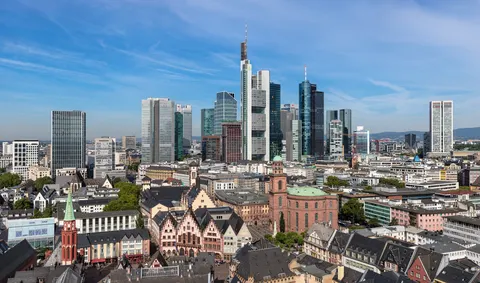
| Frankfurt | 1,423 | 2,596 | 41 |
| Zurich | 1,296 | 2,511 | 40 |
| Barcelona | 312 | 1,681 | 38 |
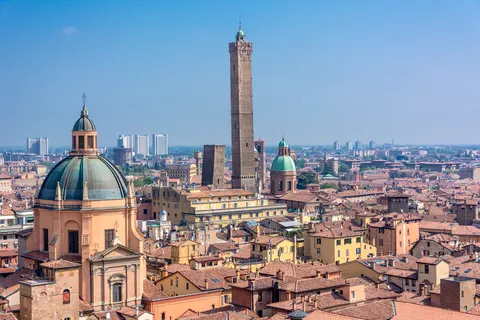
Paris, Munich and Frankfurt each reach at least 1,423 destinations within 8 hours, which suits a trip that fans out from one city in a day. Barcelona fits a trip that starts in Spain, since its 312 destinations within 8 hours is a far smaller circle than Paris's 1,463. Bologna and Vienna show the other pattern. Their 8-hour reach is smaller, at 889 and 814, yet they stretch to 2,172 and 2,311 once you allow 14 hours, so they reward a long travel day more than a short one. Reach matters, but so do the places you actually want to see: a hub only helps if they are inside its circle.
How far can you get from a hub in a day?
Two numbers matter here, the 8-hour reach and the 14-hour reach. The route search itself allows trips of up to 16 hours, so the 14-hour column is a yardstick for a long travel day rather than the limit.
The spread between hubs is wide. Within 8 hours, the eight hubs run from 312 destinations in Barcelona to 1,463 in Paris, and within 14 hours from 1,681 in Barcelona to 2,681 in Munich. The 8-hour column is what a shorter day gets you, and the 14-hour column is what a long one does.
A few single hops show how a day looks in practice. From Paris, the Eurostar train to London takes 2h 18m and produces 2.4 kg of CO₂, against 44 kg for the flight, a saving of 95%. The Nightjet train from Paris to Vienna takes 14 hours, so that hop alone fills a long travel day. Plan the rest of the day around it rather than adding a second long hop.
How many direct links does each hub have?
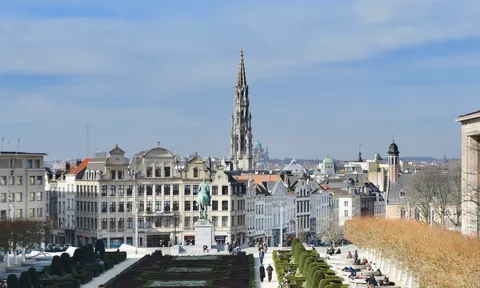
Paris has 55, all of them by train. Munich has 52 by bus and train, Brussels 46, Vienna 45, Bologna 42, Frankfurt 41, Zurich 40 and Barcelona 38. Zurich and Barcelona, with links by bus, ferry and train, are the only hubs in the table with ferry connections.
Links come in all lengths, and shorter ones leave more of the day for each place. From Vienna, the train to Prague takes 4 hours and produces 4 kg of CO₂, and the train to Budapest takes 2h 30m and produces 3 kg. From Frankfurt, the train to Berlin takes 3h 55m and the train to Paris takes 4 hours. From Brussels, the Eurostar train to Paris takes 1h 22m and produces 1.7 kg of CO₂, while the Nightjet train to Vienna takes 14 hours and produces 12 kg. From Barcelona, the train to Paris takes 6h 30m and produces 12 kg, against 106 kg for the flight, and the Balearia ferry to Ibiza takes 8h 30m.
How do you link hubs into a trip?
One hop at a time, using the direct link between each pair. Every hop is listed with its own time and CO₂, so you can see the cost of each change before you commit.
Some hops are short enough to chain. Brussels to Paris takes 1h 22m, Paris to Zurich takes 4 hours with TGV Lyria, and Zurich to Munich takes 3h 30m with SBB/DB. Munich to Vienna is a direct ÖBB train of 4 hours, so that chain reaches Vienna in four hops. From Bologna, Milan is an hour away on Trenitalia and Rome is a 4h 52m bus.
Keep each day under your own limit. If a hop is longer than the day allows, look for a different hub on the same line, and give the long leg a day with nothing else planned. Check the times for your dates, and keep pass rules and reservations separate from this plan, because the route data does not cover them.
Each hub page lists its direct routes with the time and CO₂ of every hop, so you can compare two options before choosing. For the hubs themselves, see the pages for France, Germany and Italy, or browse every destination.