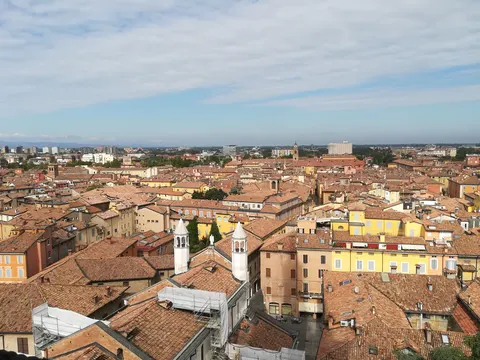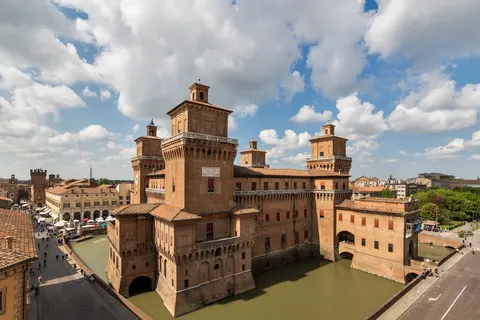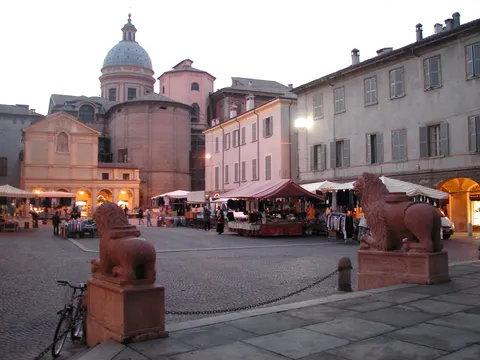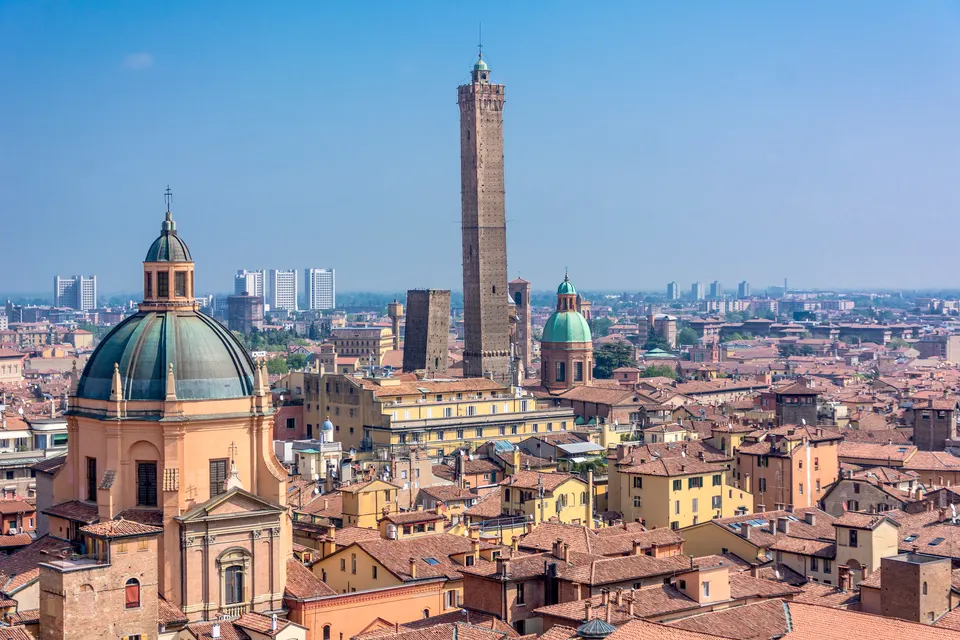

Bologna is a city of porticoes, the covered walkways that line its streets and make the centre feel sheltered. It is famous for its university, which has been in continuous operation for centuries, and its churches and palaces give the centre a dense, layered look. The city is the capital of the Emilia-Romagna region, and its old streets lead from one tower or basilica to the next.
Bologna is in Emilia-Romagna, Italy, and has a population of about 395,000; it is also a rail hub.
Why go to Bologna?
Go to Bologna for the porticoes and the churches that stand under them. The porticoes of Bologna are a UNESCO listing, and the Sanctuary of the Madonna di San Luca sits at the end of a long route out of the centre. San Petronio Basilica and the Basilica of San Domenico are among the city's major churches. The Palazzo d'Accursio and the Palazzo Re Enzo are the civic buildings, and the Fountain of Neptune is a monument in the middle of town. Bologna Cathedral and the Santo Stefano Church complete the City & Culture picture. Visit with a plan for the churches, and let the porticoes do much of the walking for you.
When is the best time to visit Bologna?
July is the warmest, with highs of about 31 °C, and January is the coolest, at about 8 °C. Any month suits city breaks.
How do I get to Bologna without flying?
From 42 destinations you can travel to Bologna directly by bus or train. Counting connections, 2,172 destinations can reach it within 14 hours without flying. Travelling from Siena, allow 2h 16m by bus with FlixBus-eu; that is about 3.5 kg of CO₂ per person. From Rome, it takes 4h 52m by bus with FlixBus-eu, with about 8.2 kg of CO₂ per person against 69 kg for the flight, 88% less. The train from Milan with Trenitalia takes 1h 00m; that is about 1 kg of CO₂ per person, 98% less than the 46 kg of a flight.
What to do in Bologna
San Petronio Basilica
San Petronio Basilica is one of the city's major churches, and it sets the tone for the centre. Go inside, then walk the porticoes around it.
Fountain of Neptune
The Fountain of Neptune is one of the city's monuments, and it makes a good stop between the churches and the palaces. Look at it from a few sides before you move on.
Palazzo d'Accursio
Palazzo d'Accursio is one of the city's palaces, and it stands among the buildings that give the centre its layered look. Take a look at the outside, then move on to the next church.
Madonna di San Luca sanctuary
The Sanctuary of the Madonna di San Luca is one of the city's UNESCO sites, and the route up to it is part of the visit. Its porticoes lead the way and give the walk its character.
Bologna Cathedral
Bologna Cathedral is the city's cathedral, a church to see on the way between the other sights in the centre. Step in and look at the interior.