
Honfleur is a commune in the Calvados department of northwestern France. It lies on the southern bank of the Seine estuary, across from Le Havre and close to the exit of the Pont de Normandie. The town sits at the eastern end of the Côte Fleurie, the flowery coast, in the traditional district of the Pays d'Auge. Its old port is the feature the town is best known for.
About 8,148 people live in Honfleur, in Normandy, France.
Why go to Honfleur?
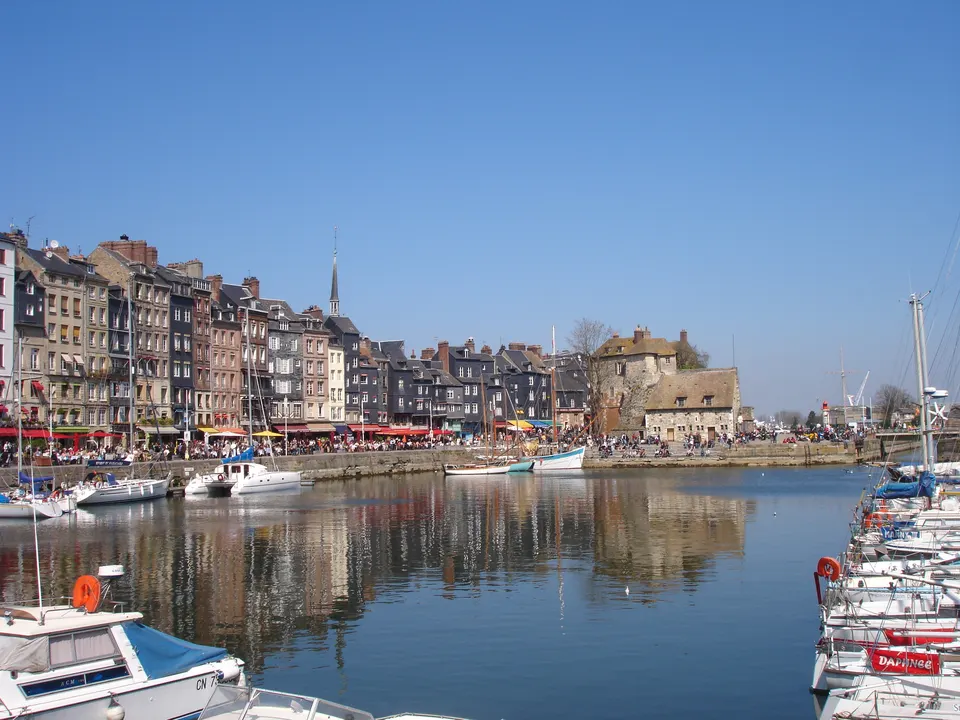
The old port is what draws people. Its houses have slate-covered frontages, and painters came here often, among them Gustave Courbet, Eugène Boudin, Claude Monet and Johan Jongkind. They met at La Ferme Saint Siméon, which is now a five-star hotel, and their gatherings helped shape the Impressionist movement. The Sainte-Catherine church, with its bell tower separate from the main building, is the largest wooden church in France. The Eugène Boudin museum is the main museum in town, and the Naturospace lepidopterarium is home to about 150 species of butterfly. Honfleur was also a departure point for explorers, and in 1608 an expedition organised by Samuel de Champlain founded the city of Quebec.
When is the best time to visit Honfleur?
Expect daytime highs of about 21 °C in July and August, falling to 7 °C in January.
How do I get to Honfleur without flying?
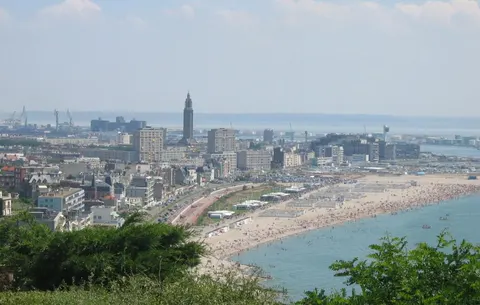
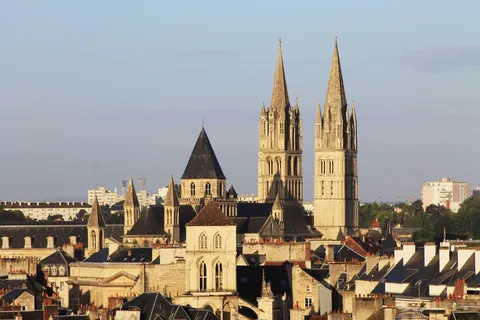
You can get to Honfleur without changing from 2 destinations, by bus. With changes, Honfleur is within 14 hours of 1,713 destinations without flying. From Le Havre, it takes 40 min by bus with FlixBus-eu, with about 0.3 kg of CO₂ per person. Travelling from Caen, allow 1h 36m by bus with Bus Verts; that is about 1.4 kg of CO₂ per person.
What to do in Honfleur
The old port
The harbour with slate-fronted houses that artists such as Monet and Boudin painted.
Sainte-Catherine church
The largest wooden church in France, with its bell tower standing apart from the main building.
Eugène Boudin Museum
The main museum in the town, which guides visitors through art history and the painters who worked here.
Église Saint-Étienne
An old Gothic parish church, built partly in the 14th and 15th centuries, that now houses the Maritime Museum.