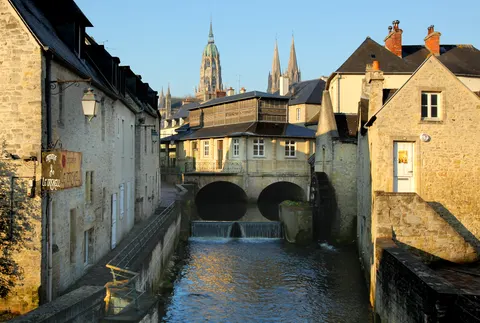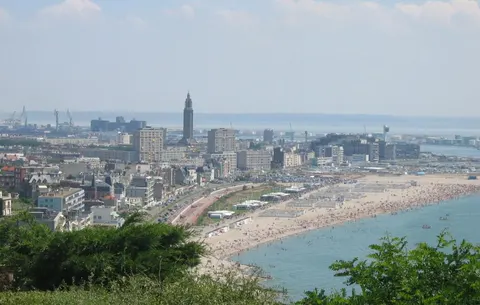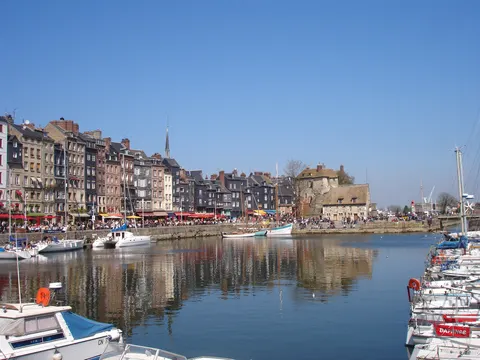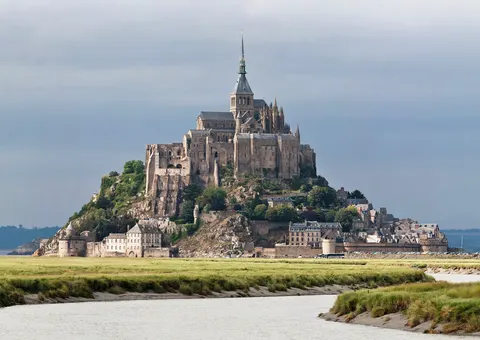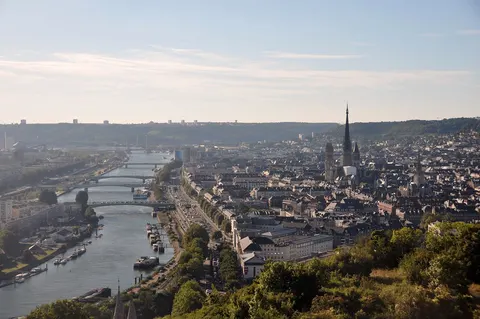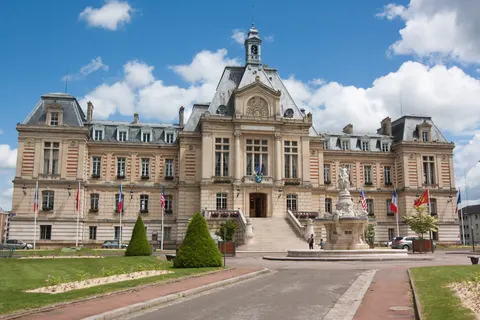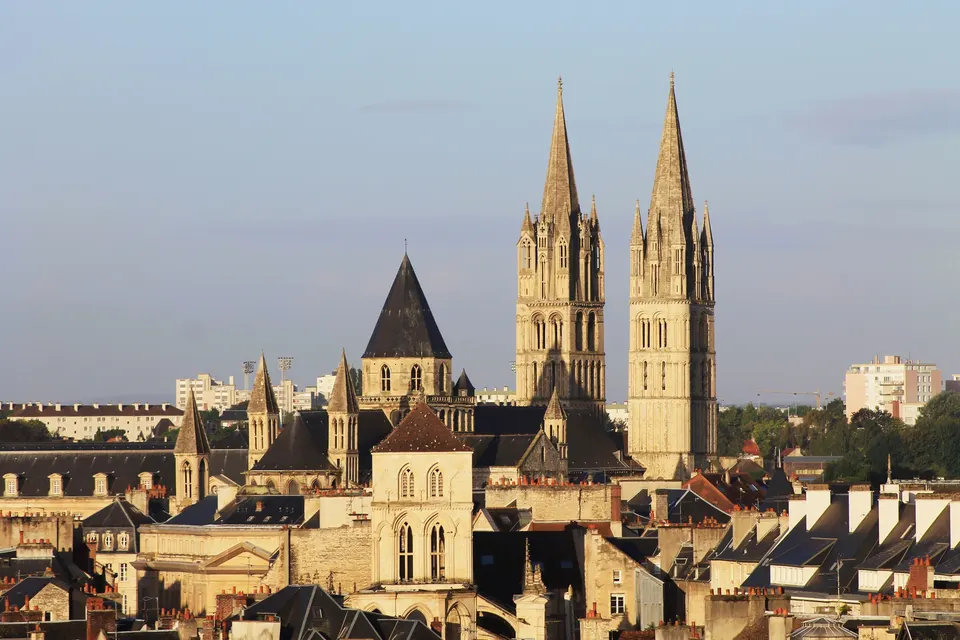

Caen is a city and commune in Normandy, about 15 km inland from the north-west coast of France, and the prefecture of the Calvados department. It lies about 200 km north-west of Paris and is linked to the south of England by a ferry route from Ouistreham to Portsmouth. Caen is often considered the archetype of Normandy, with many historical buildings from the reign of William the Conqueror.
With about 111,000 inhabitants, Caen lies in Normandy, France, and is a rail hub.
Why go to Caen?
Caen is known for its historical buildings from the reign of William the Conqueror, the Duke of Normandy who was buried there. Its castle, the Château de Caen, was begun around 1060 and became the centre of the ducal court. The city was badly damaged in the heavy fighting of the Battle for Caen in 1944, during the Battle of Normandy, and the Mémorial de Caen now preserves that memory. The Benedictine Abbey of Sainte-Trinité, founded by Duchess Matilda of Flanders, is where she was buried. A canal runs from Caen to the sea, letting large ships reach the freshwater harbours.
When is the best time to visit Caen?
Average highs range from 8 °C in January and December to 23 °C in July and August. For city breaks, any month of the year works.
How do I get to Caen without flying?
Direct bus, ferry or train services link Caen with 12 destinations. Allowing for changes, 2,031 destinations are no more than 14 hours away without flying. Paris is 1h 54m away by train with SNCF VOYAGEURS, with about 0.5 kg of CO₂ per person against 46 kg for the flight, 99% less. The bus from Brussels with FlixBus-eu takes 9h 11m; that is about 10 kg of CO₂ per person, 80% less than the 49 kg of a flight. From Rennes, it takes 2h 16m by bus with FlixBus-eu, with about 4.1 kg of CO₂ per person against 35 kg for the flight, 88% less.
What to do in Caen
Château de Caen
Begun by William the Conqueror, it became the centre of the ducal court and remains one of the historical buildings of the city.
Abbey of Sainte-Trinité
A Benedictine abbey founded by Duchess Matilda of Flanders, in which she was eventually buried.
Mémorial de Caen
A memorial and museum dedicated to peace, which preserves the memory of the 1944 fighting that destroyed much of the city.