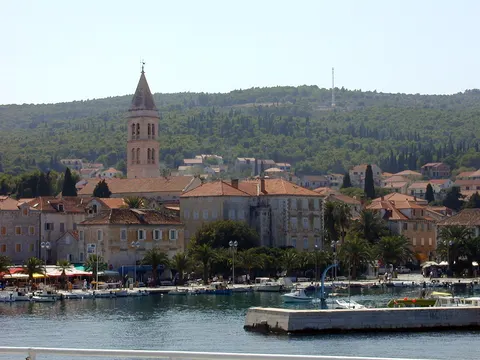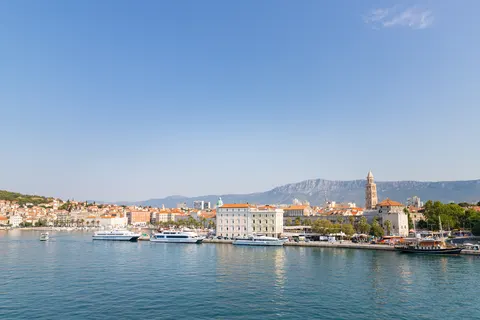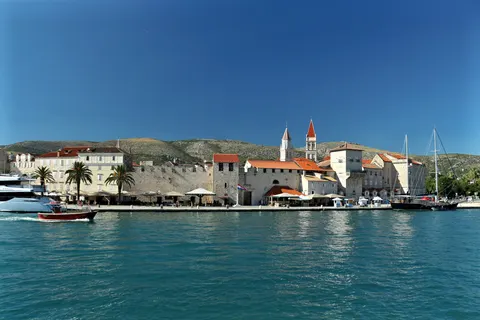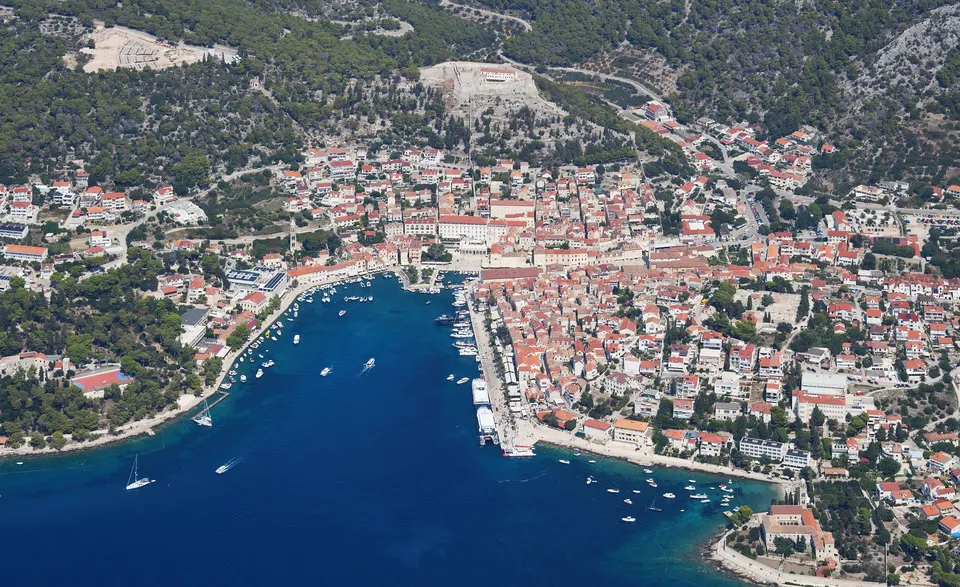

Hvar is a town and port on the south coast of the island of the same name, in Split-Dalmatia County, Croatia. In the Middle Ages it was part of the Venetian Empire and an important naval base with a strong fortress above it. The town is set in a sheltered bay, with the Pakleni Otoci island chain protecting the port to the south. It is a common port of call for yachts sailing the Adriatic in summer.
About 3,519 people live in Hvar, in Split-Dalmatia, Croatia.
Why go to Hvar?
Hvar's theatre, opened in 1612, is one of the oldest in Europe, and a lively theatrical tradition carried on here for centuries. The Hvar Summer Festival runs from late June to late September, with classical concerts and amateur groups performing in venues across the town on most days. The town walls, begun in the 13th century, still enclose the old centre, and the Spanish Fortress above it offers a view over the town and its surroundings. The Hvar Heritage Museum and the Gallery of Modern Art add art and archaeology to the cultural life. Catamaran ferries link the port with Split, Brač, Korčula, Lastovo and Vis.
When is the best time to visit Hvar?
Expect daytime highs of about 25 °C in July and August, falling to 11 °C in January and February. If you are after beach holidays, aim for June, July and August.
How do I get to Hvar without flying?
Only one direct ferry link serves Hvar. With changes, Hvar is within 14 hours of 389 destinations without flying. From Split, it takes 1h 06m by ferry with Jadrolinija, with about 0.7 kg of CO₂ per person.
What to do in Hvar
Hvar Theatre
Built in 1612 and among the oldest theatres in Europe, it is still used for performances.
Spanish Fortress (Fortica)
A fortress above the town, built after a gunpowder explosion, with a modern tourist complex and a wide view over the town.
Town walls
Dating from the 13th century, the walls have patrician houses built into them.
Hvar Heritage Museum
Holds the art and archaeological collections of the town.