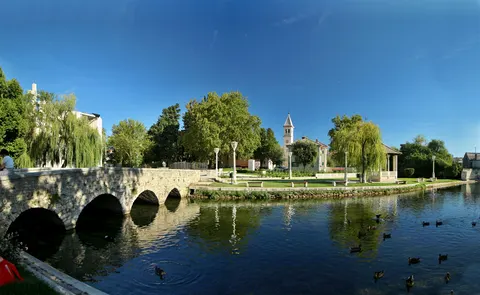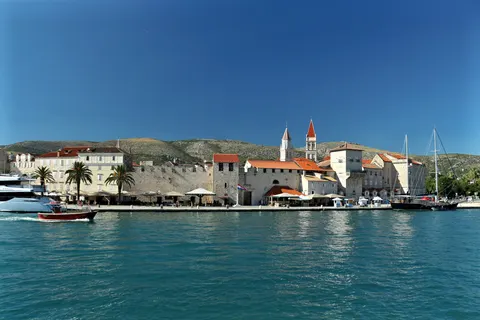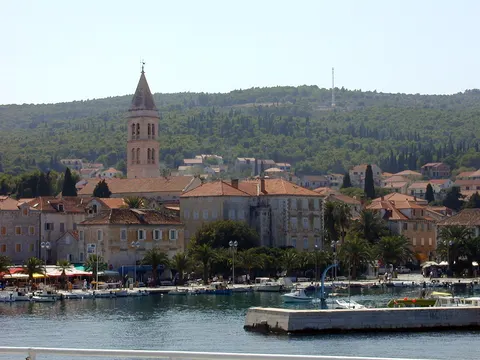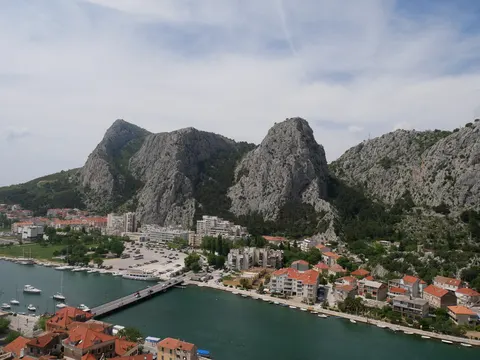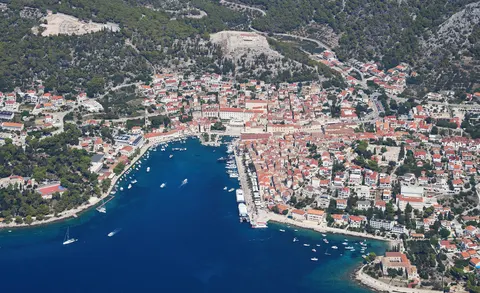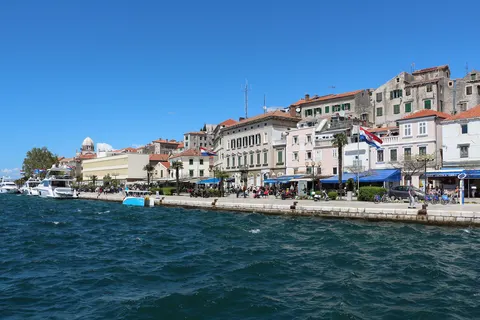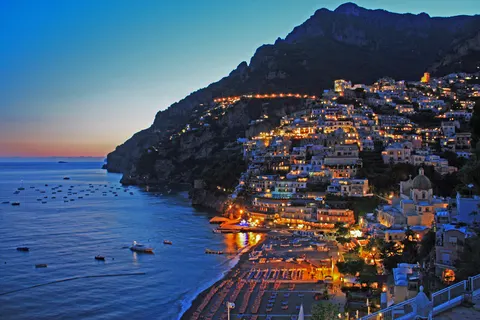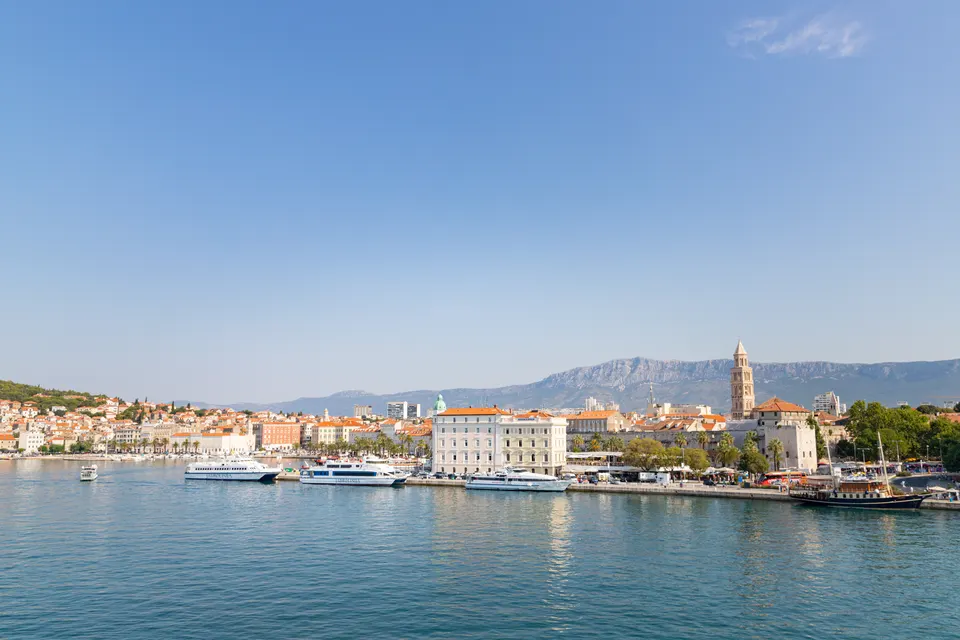

Split developed around the core of Diocletian's Palace, and that old core is still part of the everyday city. Alleys run between the palace walls and the houses built against them, and the seafront sits a few steps away. The modern town spreads out from the old heart onto the hills and the peninsula behind it, and the coast on either side of the city brings a steady flow of visitors through the year.
Split, in Split-Dalmatia, Croatia, is home to about 150,000 people and works as a rail hub.
Why go to Split?
Go to Split for the palace, the cathedral and the sea. Diocletian's Palace is the reason many people come, and the UNESCO listing covers the old quarter. The Cathedral of Saint Domnius and the Co-Cathedral of St. Peter give the town its churches, while the Archaeological Museum and the Museum of Fine Arts add a City & Culture side. Marjan is the park on the hill above the old town, and it gives Nature & Hiking walks. The beaches make the Sun & Beach side of the trip, so the town serves sea and stone on one visit. Many visitors combine the walls with a swim.
When is the best time to visit Split?
In July and August the average high reaches 27 °C; in January and February it is closer to 10 °C. Beach holidays work best in June, July and August. Any month suits city breaks.
How do I get to Split without flying?
Split has direct bus, ferry or train links to 20 destinations. Within 14 hours, travellers from 561 destinations can get here without flying. The bus from Zagreb with FlixBus-eu takes 5h 05m; that is about 7 kg of CO₂ per person, 88% less than the 59 kg of a flight. Dubrovnik is 3h 50m away by bus with FlixBus-eu, with about 4.5 kg of CO₂ per person against 38 kg for the flight, 88% less. Travelling from Zadar, allow 2h 35m by bus with FlixBus-eu; that is about 3.2 kg of CO₂ per person.
What to do in Split
Diocletian's Palace
Walk into Diocletian's Palace through the old gates and let the streets lead you through the remains. The palace is the heart of the UNESCO listing and the reason the old town looks the way it does.
Cathedral of Saint Domnius
The Cathedral of Saint Domnius stands inside the palace walls, and its tower is a landmark from many points in the old town. Go in for the interior, then walk out into the nearby squares.
Marjan hill
Marjan is the park on the hill above the old town, and its paths give Nature & Hiking walks with views back over the town. Walk the ridge and come down through the pine trees.
Museums of the old town
The Archaeological Museum, the Museum of Croatian Archaeological Monuments and the Museum of Fine Arts give the City & Culture side of Split. Choose one that matches your interests and walk on from there.