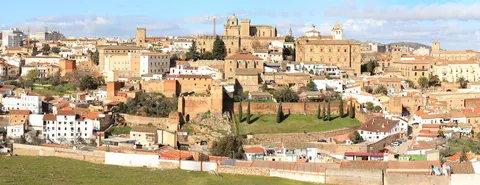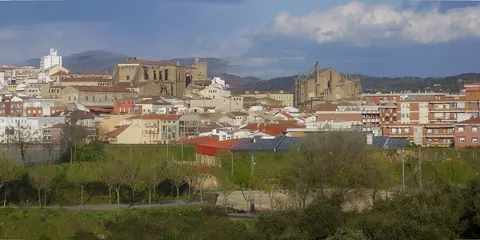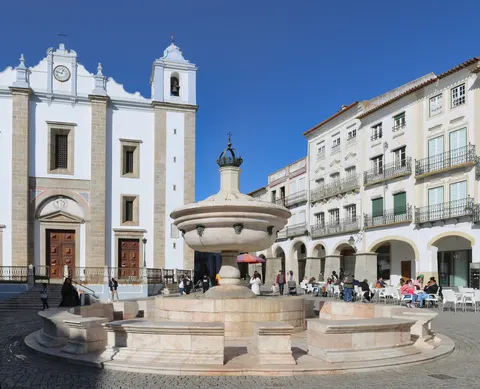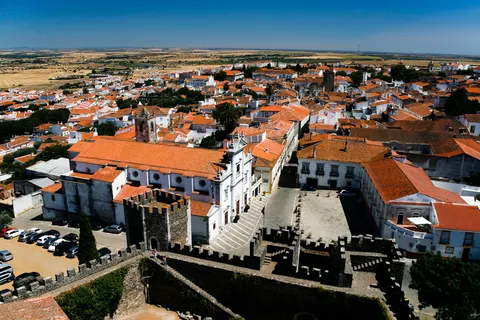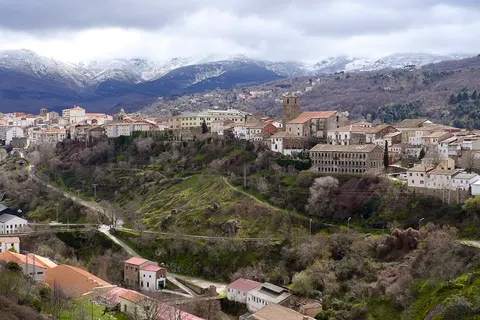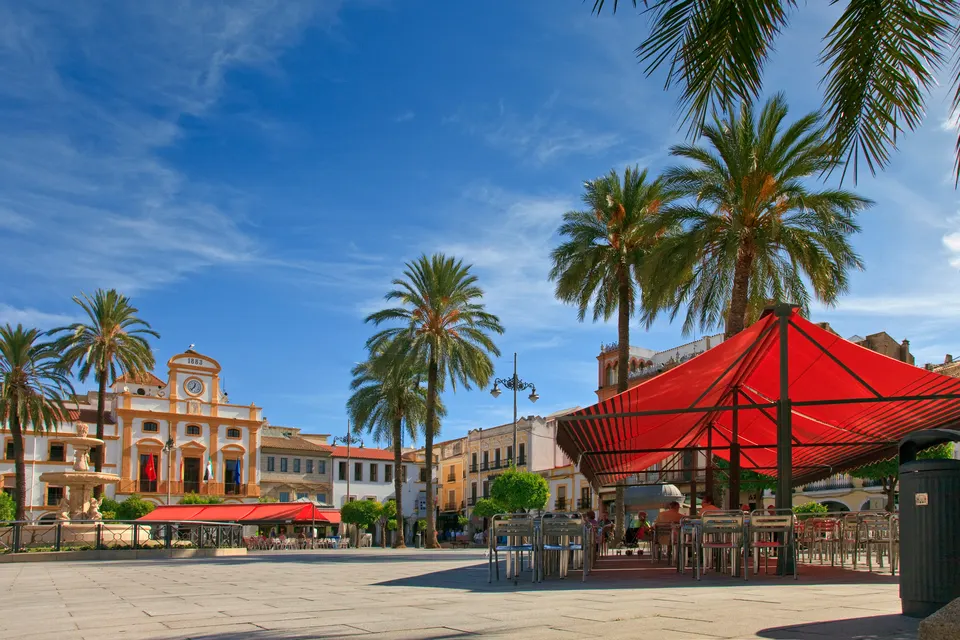

Mérida holds two eras side by side, and the contrast is what gives the town its character. The Roman sites that the UNESCO listing singles out sit beside the Alcazaba, a castle that stands in the same town. The city is the capital of Extremadura, crossed by the Guadiana and the Albarregas, and its bridges and aqueducts carry the older layers into the present.
Mérida is in Extremadura, Spain, and has a population of about 60,000; it is also a rail hub.
Why go to Mérida?
Go to Mérida for City & Culture built around Roman remains and a castle. The Roman amphitheatre of Mérida and the Roman Circus Maximus of Mérida are the two monuments that carry the most weight, and the National Museum of Roman Art gathers the finds in one place. The Acueducto de los Milagros, the Puente Romano and the Lusitania Bridge show how the town crossed its rivers. The Alcazaba of Mérida gives the castle side of the story, and the Co-cathedral of Saint Mary Major of Mérida and the basilica of Saint Eulalia of Mérida keep the church layer in view. The Archaeological Ensemble of Mérida ties the sites together.
When is the best time to visit Mérida?
July is the warmest, with highs of about 34 °C, and January is the coolest, at about 13 °C. City breaks work best in March, April and November.
How do I get to Mérida without flying?
From 5 destinations you can travel to Mérida directly by bus or train. Counting connections, 312 destinations can reach it within 14 hours without flying. Travelling from Seville, allow 3h 46m by train with RENFE OPERADORA; that is about 1.6 kg of CO₂ per person, 96% less than the 40 kg of a flight. From Zaragoza, it takes 8h 21m by bus with FlixBus-eu, with about 15 kg of CO₂ per person against 127 kg for the flight, 88% less. The train from Cáceres with RENFE OPERADORA takes 35 min; that is about 0.6 kg of CO₂ per person.
What to do in Mérida
Roman amphitheatre of Mérida
The amphitheatre sets the scale for the whole visit, and it is the first sight most people go to. Walk the stone and then move on to the circus nearby.
Roman Circus Maximus of Mérida
The circus is a monument from the same period, and it sits within the wider archaeological site. Take time to see how the ground plan is laid out.
Alcazaba of Mérida
The castle stands apart from the ancient sites and gives the town a different kind of stone. Walk around its walls, then continue to the Co-cathedral of Saint Mary Major of Mérida.
National Museum of Roman Art
The museum gathers the finds from the sites into one building, and it is the place to see how the monuments fit together. Visit it after the amphitheatre for the full story.